
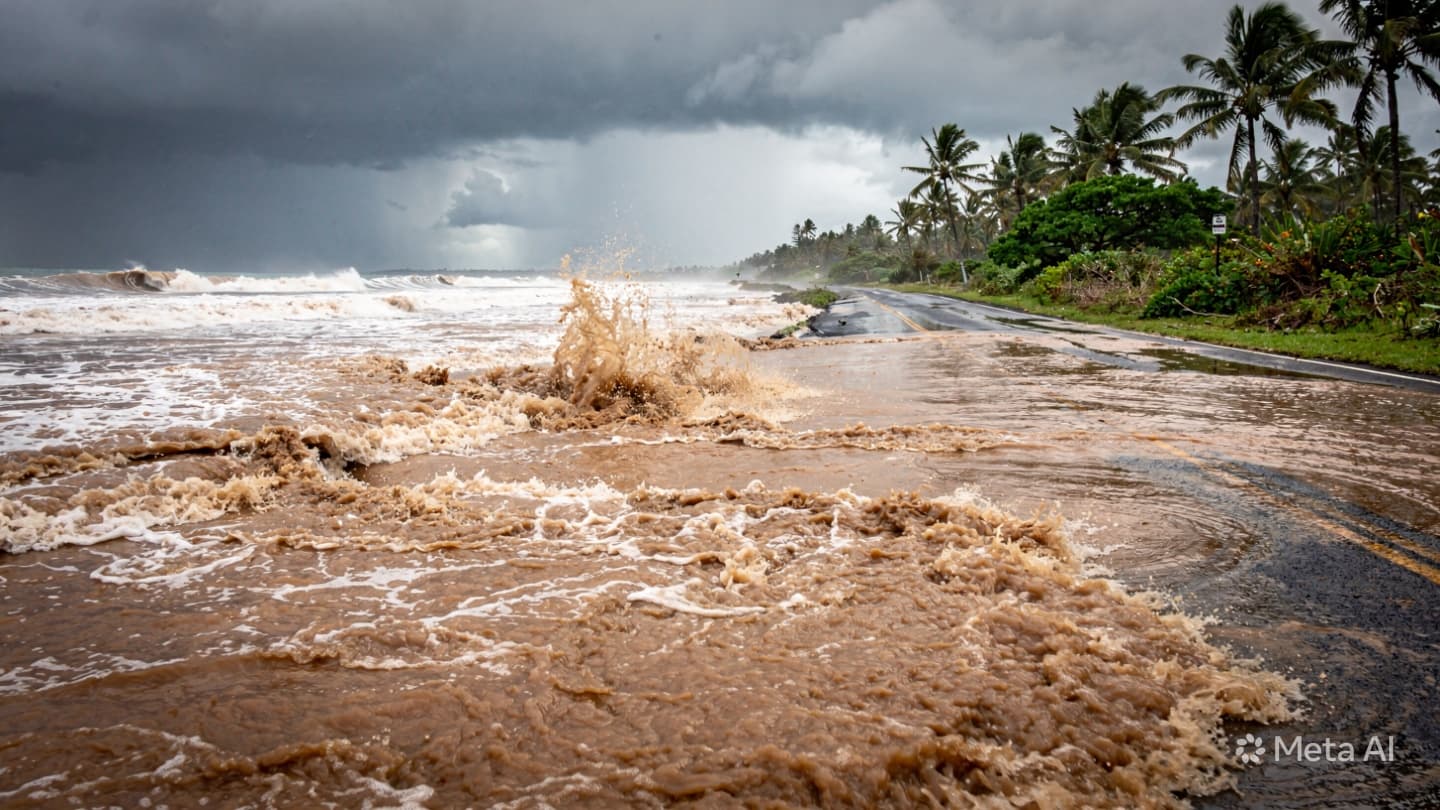
The volcanic topography of the Hawaiian Islands creates a dramatic climate dynamic, where towering mountain peaks intercept moisture-laden trade winds, producing some of the highest rainfall totals on earth. When an unseasonal, slow-moving convective storm system stalls over the archipelago, the steep, narrow valley walls can rapidly channel immense volumes of water toward the coast. In these densely populated island communities, where life is anchored to the narrow coastal plains, the sudden arrival of flash flooding tests the structural integrity of the entire infrastructure framework.
A series of intense atmospheric events recently culminated in severe flash flooding and widespread mudslides across Hawaii County, prompting a comprehensive structural damage assessment by municipal engineers. The volume of water descending from the upper ridges completely overwhelmed the local drainage networks, turning main arterial roads into active riverbeds and inundating low-lying residential sectors. Initial estimates compiled by county officials indicate that the total cost of repairing the fractured infrastructure will top $59 million.
Geological survey teams and highway maintenance crews have been deployed to the hardest-hit districts to clear massive deposits of debris and evaluate the stability of compromised hillsides. The force of the flash floods caused several critical retaining walls to collapse, triggering mudslides that completely blocked access to isolated valley communities. These structural failures underscore the immense difficulty of maintaining modern transportation corridors against the relentless force of tropical weather.
In the affected neighborhoods, the immediate response has been characterized by a quiet, practical determination as residents work to clear mud and silt from their properties before the tropical heat hardens the clay. Local non-profit organizations and emergency services have established centralized supply hubs to distribute cleaning equipment, fresh water, and building materials to displaced families. This collective effort proceeds without panic, drawing on a deep-rooted cultural tradition of mutual community support.
From a fiscal perspective, the $59 million damage threshold presents a significant challenge for the county’s annual budget, requiring a formal request for state and federal disaster assistance to fund the reconstruction. Officials are working to ensure that the recovery phase does not simply patch the broken asphalt, but introduces sturdier civil engineering designs capable of withstanding future atmospheric events. The ongoing dialogue emphasizes a commitment to long-term climate adaptation.
As the floodwaters gradually recede into the porous volcanic soil, the true extent of the structural displacement becomes starkly visible under the bright Pacific sun. Portions of scenic coastal highways remain undercut by the waves, and vital bridge abutments require extensive concrete reinforcement to ensure long-term safety. The physical landscape of the county has been visibly altered by the passage of the storm, leaving an imprint that will dominate local planning for the coming fiscal year.
The coordination between county departments and federal emergency management agencies remains essential as funding is prioritized for the most critical utility installations, including water treatment facilities and electrical grids. Temporary bridges are being constructed to restore access to isolated homesteads, ensuring that essential emergency services can navigate the rural corridors safely. This comprehensive administrative buffer remains active as the island transitions toward stability.
In the quiet hours of the evening, the sound of heavy machinery clearing the remaining boulders from the roadway echoes through the valleys, a steady sign of recovery moving forward in the dark. The people of Hawaii County view the clearing skies with a mixture of watchfulness and enduring patience, knowing that the full restoration of their paths is a matter of steady, incremental progress. The shared focus remains fixed on reclaiming the reliable safety of their island home.
Note: This article was published on BanxChange.com and is powered by the BXE Token on the XRP Ledger. For the latest articles and news, please visit BanxChange.com