
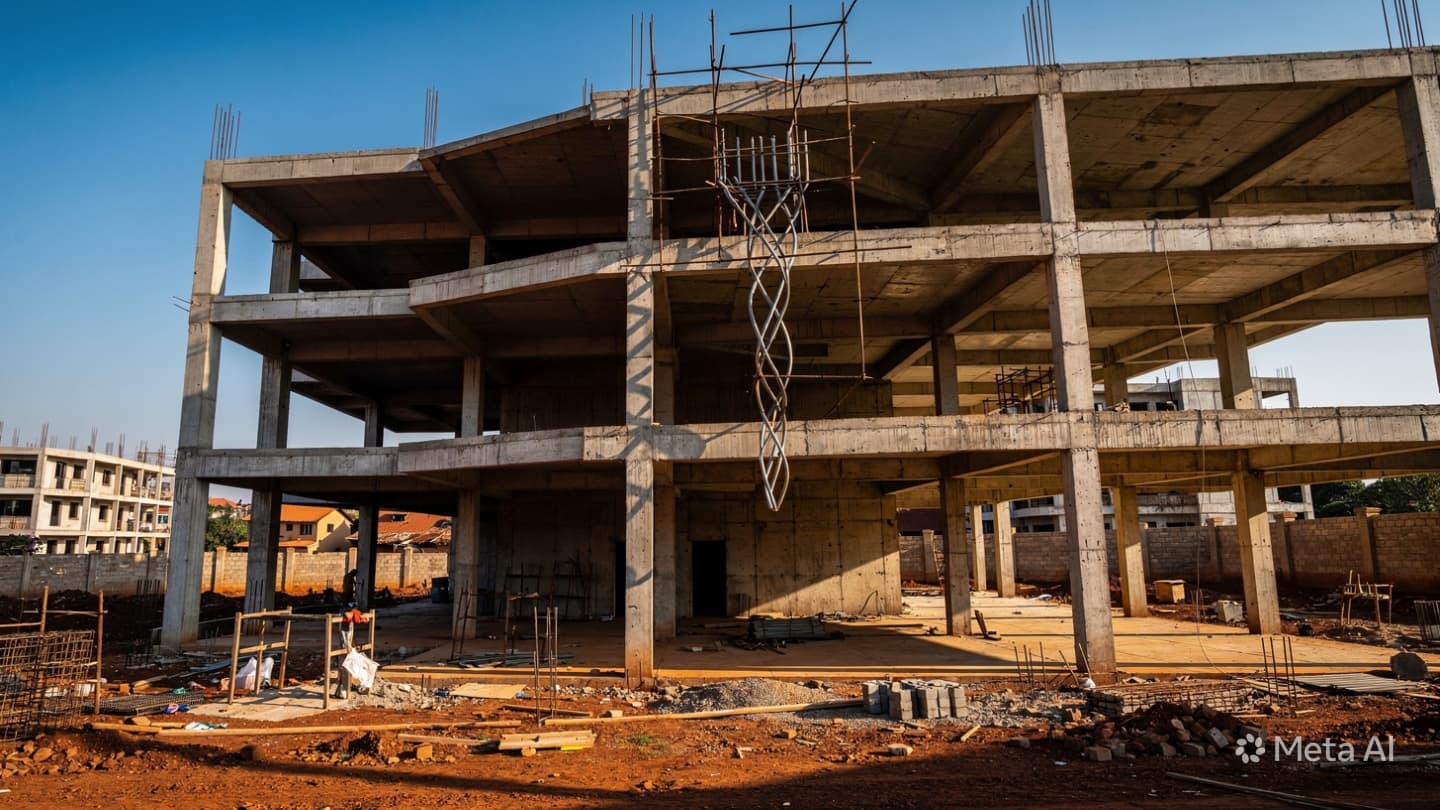
The rapidly evolving landscape of Kicukiro District serves as a primary engine of the capital’s urban expansion, where massive concrete structures, commercial centers, and multi-story apartment complexes rise continuously into the skyline. On ordinary mornings, these expansive development zones are defined by a vibrant, industrious energy—the rhythmic clanging of structural steel, the steady drone of concrete mixers, and the synchronized movements of hundreds of skilled laborers scaling the high scaffolding. It is an environment built entirely upon an assumption of rigorous engineering and strict operational safety protocols, where every harness, cable, and support beam is expected to hold its weight. The daily life of the sector operates on a baseline of productivity, where the emerging towers stand as monuments to modern progress.
Yet, this highly structured environment remains subject to the sudden, devastating physics of mechanical failure or structural instability when heavy materials are shifted at high elevations. Under the bright glare of a recent afternoon sky, a serious industrial accident occurred on the upper levels of an active commercial construction site within the district, when a temporary staging platform gave way under a load of building materials. The transition from a routine construction shift to a critical medical emergency happened with an immediate, metallic roar that echoed across the surrounding neighborhood. The collapse sent structural components and equipment cascading downward, injuring two workers who were positioned on the lower levels and halting the entire operation in a matter of seconds.
The failure of an industrial support system carries an immediate, heavy finality, transforming a site of urban creation into a chaotic arena of emergency extraction and structural danger. In the minutes following the collapse, the rhythmic sounds of construction were replaced by the urgent shouts of site supervisors and the frantic deployment of onsite first-aid teams to locate the injured personnel amid the debris. There is a specific, sobering stillness that settles over a worksite when the machinery is abruptly silenced by an accident; it strips away the forward momentum of progress, leaving the unfinished concrete frame looking suddenly fragile and exposed. Co-workers gathered at the safety boundaries, watching the dust settle with a deep, silent anxiety for their colleagues.
Emergency medical services and national police safety units arrived on the scene within minutes of the alarm, their sirens cutting through the urban noise as they established a secure zone around the perimeter of the building. Emergency responders moved with disciplined caution into the interior of the lower levels, navigating tangled rebar and shattered timber to stabilize the injured workers before transporting them to the regional hospital. The work of recovery within an unstable structure requires a delicate balance of speed and profound technical care, as responders must ensure that secondary shifts in the debris do not create further hazards. The empty, dangling cables of the collapsed platform stood out against the sky, a stark indicator of the failure.
The frequency of these localized industrial incidents across the capital's booming construction corridors has prompted regulatory authorities to increase enforcement of workplace safety standards and structural inspections. Engineering analysts point out that as building designs become more complex and timelines more compressed, the maintenance of temporary supports and load limits requires continuous, independent auditing. The local administration faces the ongoing task of ensuring that developers comply strictly with national safety codes, imposing severe penalties on sites where negligence or inadequate equipment is discovered. It was a reminder that the vertical rise of the city depends entirely on the hidden, continuous integrity of the temporary structures that support the laborers.
As the afternoon advanced under a clearing sky, the immediate rescue operation transitioned into a comprehensive multi-agency safety investigation, with inspectors sealing off the specific sector of the building to preserve the physical evidence. The economic toll for the development firm is immediate, encompassing the total suspension of work, potential contract penalties, and the cost of comprehensive structural remediation before operations can legally resume. Yet, amid the administrative fallout, the primary focus of the district remained fixed on the medical updates of the hospitalized workers, whose families gathered at the clinic doors in a quiet vigil. The silent cranes stood motionless above the site, their giant shadows lengthening across the concrete floor.
By evening, the initial forensic documentation of the equipment failure had concluded, though the site remained under a strict closure order from municipal authorities until a complete structural recertification could be performed. The development company issued a brief statement confirming their full cooperation with the official inquiry and promising an internal review of their safety practices. The district settled into a quiet night, the dark, unfinished tower standing as a somber shape against the city lights, its progress temporarily frozen by the day's event.
The scaffolding will eventually be replaced, the debris cleared, and the laborers will return to their high perches to continue the work of shaping the Kicukiro skyline beneath the sun. But the memory of the afternoon the heavy steel gave way will remain written in the safety logs and the caution of every worker who steps onto a platform. For now, the silent site stands as a reminder of the constant vigilance required to protect the lives of those who build the modern city.
In straight news terms, two construction workers were hospitalized with serious injuries following a structural platform collapse at a commercial development site in Kicukiro District on Thursday afternoon. The incident occurred when a temporary staging deck on the upper floors failed, sending materials and debris onto the lower levels where the laborers were working. Emergency response units quickly secured the scene, extracted the victims, and municipal safety authorities have issued an immediate stop-work order while a formal investigation into the cause of the failure is conducted.
Note: This article was published on BanxChange.com and is powered by the BXE Token on the XRP Ledger. For the latest articles and news, please visit BanxChange.com