
The regional climate has long maintained a predictable balance between summer warmth and seasonal precipitation, but recent shifts have introduced an atmospheric phenomenon that alters the very nature of outdoor physical exertion. In the low-lying agricultural basins and expanding industrial zones, the air has taken on a heavy, saturated quality, a dense humidity that traps the heat close to the earth's surface rather than allowing it to dissipate into the upper atmosphere. This convergence of elevated temperatures and moisture creates a thermal environment where the human body’s natural cooling mechanisms are pushed to their absolute limits, transforming ordinary labor into a complex exercise in physical endurance.
To observe an industrial construction site or a vast agricultural cooperative during these midsummer peaks is to witness the human cost of a changing environment. The air does not merely feel warm; it carries a palpable weight, a thick vapor that coats the skin and prevents the evaporation of sweat, which is essential for internal temperature regulation. The laborers move through their routines with a noticeable deliberation, their movements slowed by a collective recognition that haste in these conditions carries an immediate risk of physical collapse. The sun appears not as a sharp, clear light, but as a diffused, burning glare that fills the hazy sky from horizon to horizon.
The challenge of this humid heat stress is profoundly unequal, falling with disproportionate weight upon those whose livelihoods depend on daily, manual interaction with the outdoor elements. While the white-collar sectors retreat into the regulated climates of air-conditioned offices, the construction workers, agricultural laborers, and municipal maintenance crews remain exposed to the full force of the atmospheric baseline. This disparity creates a visible division within the urban landscape, where the physical toll of environmental degradation is borne almost exclusively by the populations least equipped to alter their working conditions or access comprehensive medical support.
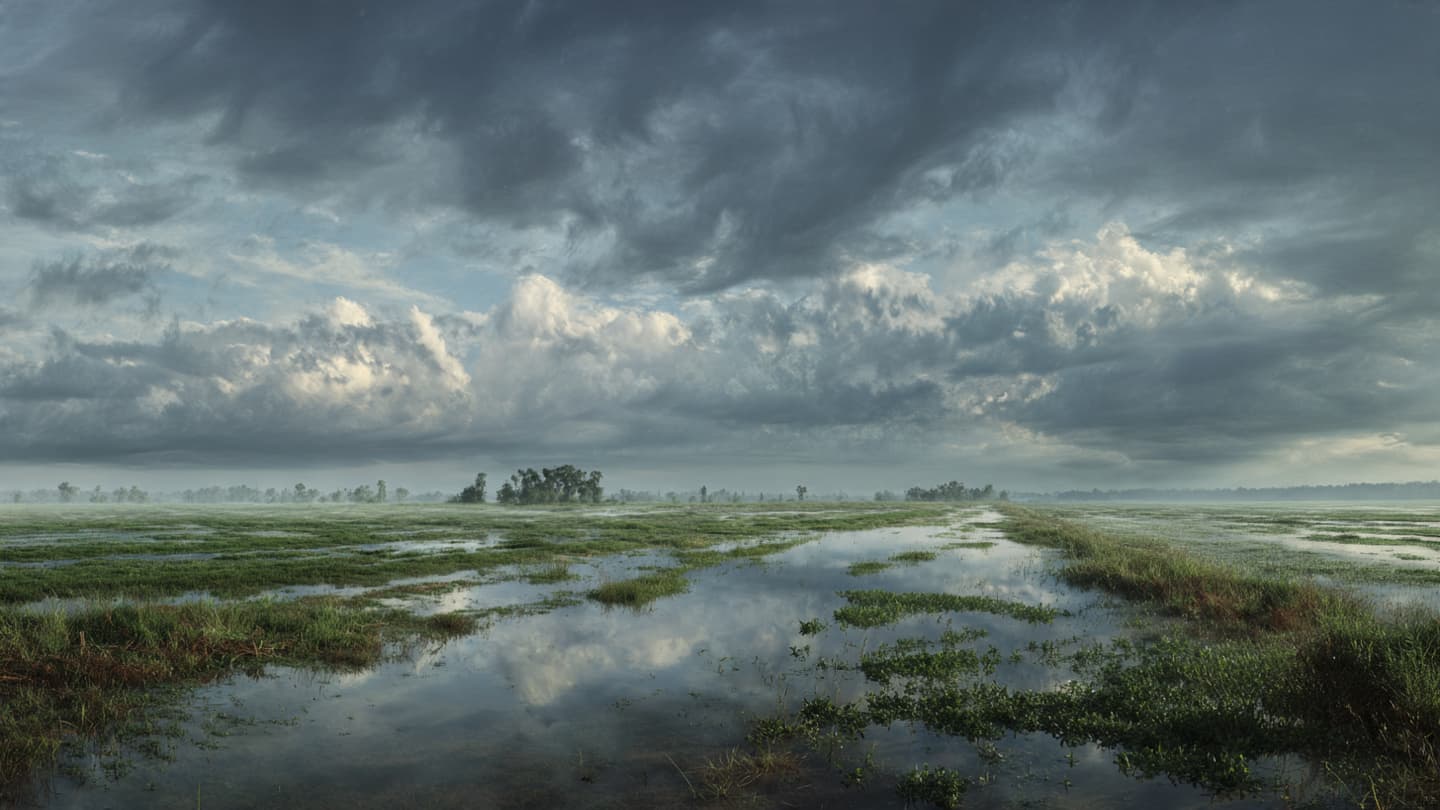
Compounding this thermal burden is the simultaneous rise in localized flash flooding events, driven by the same high-energy atmospheric moisture that fuels the humid heat stress. When convective cloudbursts drop immense volumes of water onto the dry, urban concrete or degraded agricultural soils, the runoff has nowhere to go, creating immediate inundations that disrupt transport links and damage temporary work encampments. The workforce often finds itself operating in flooded environments where the standing water mirrors the high temperatures of the air, creating a humid microclimate that intensifies the overall sense of physical exhaustion and discomfort.
Scientific assessments of these regional conditions point to a long-term shift in the behavior of summer weather systems, where the traditional boundaries between wet and dry zones are becoming increasingly fluid and unpredictable. The high-altitude jet streams, slowing down due to global thermal shifts, allow low-pressure moisture pockets to stall over areas that are simultaneously experiencing intense solar radiation. The result is a hybrid climate event—a period of intense, humid stagnation that combines the hazards of extreme heat with the logistical disruptions of sudden regional inundations, straining both public health systems and economic productivity.
In the face of these escalating disparities, the traditional schedules that have governed public labor for generations are showing signs of structural strain. Forward-thinking enterprises and local administrations are beginning to experiment with modified working hours, shifting the heaviest tasks to the pre-dawn hours when the humidity remains high but the solar radiation has not yet reached its peak. Yet, these adjustments are often difficult to implement in sectors driven by tight project deadlines and international supply chain pressures, where any pause in production carries an immediate financial penalty that trickles down to the individual wage earner.
The long-term consequence of ignored thermal stress is a steady, quiet erosion of public health within the regional workforce, manifested in chronic kidney conditions, cardiovascular strain, and a general decline in life expectancy among outdoor laborers. The air they breathe becomes a medium of risk, its high moisture content functioning as an invisible barrier to recovery, preventing the body from shedding the heat accumulated during hours of continuous exertion. It is a slow, cumulative hazard that does not announce itself with the sudden drama of a typhoon or an earthquake, but whose societal impact is measured in generations of compromised health.
As the late-afternoon sun finally sinks into the heavy haze of the western horizon, the temperature drops only slightly, the high humidity acting as a thermal blanket that keeps the heat locked within the valleys throughout the night. The laborers return to their quarters, their bodies still straining to find a baseline of cool comfort in spaces that often lack the modern infrastructure required to combat the persistent steam. The landscape remains suspended in this heavy, tropical state, a visible reminder that the future of public labor will be defined by our collective ability to shield the worker from the unpredictable excesses of a warming planet.
Note: This article was published on BanxChange.com and is powered by the BXE Token on the XRP Ledger. For the latest articles and news, please visit BanxChange.com