The summer landscape in southern Europe often carries a sense of stillness under bright skies, where heat lingers over hills, forests, and coastal towns. Yet that same stillness can quickly transform when dry conditions meet rising temperatures, turning peaceful terrain into areas of heightened risk. In France, this delicate balance has once again been tested as firefighters confront rapidly spreading wildfires.
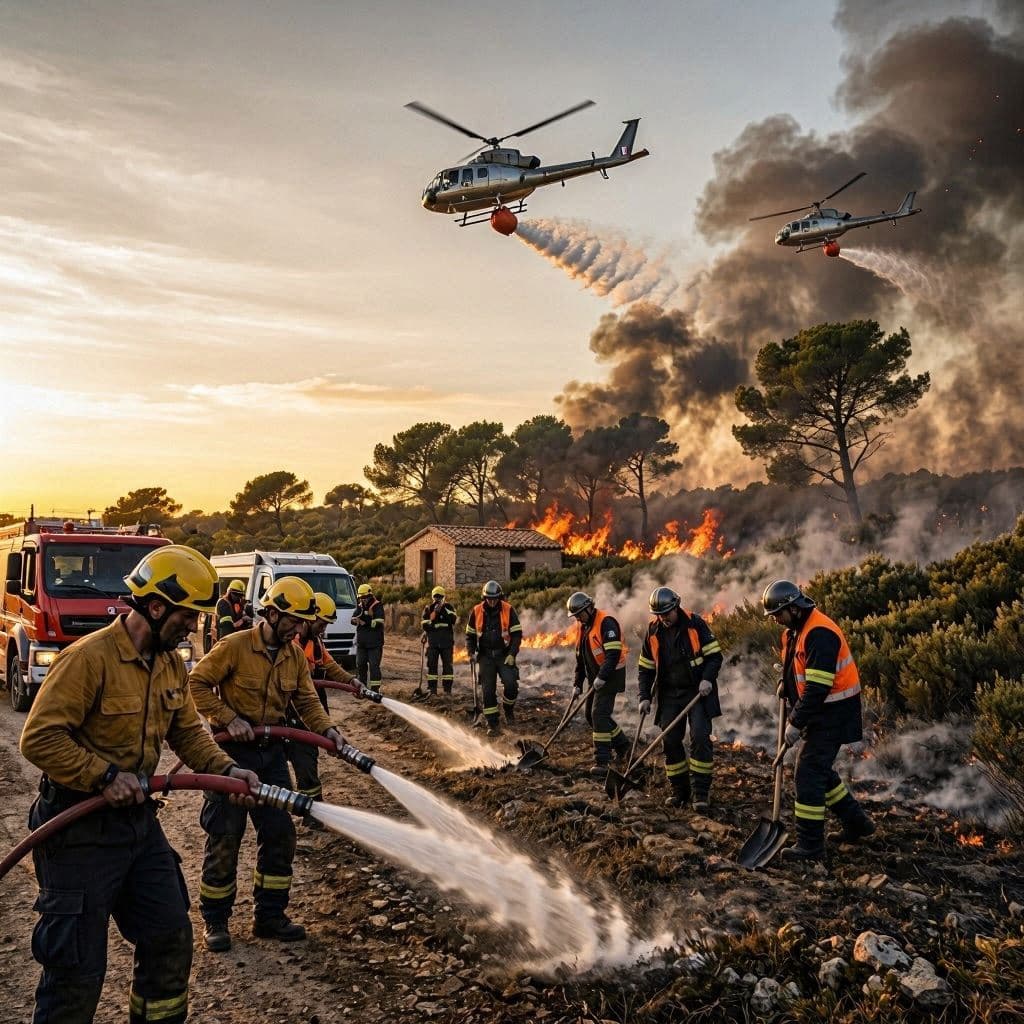
Authorities in France have mobilized large-scale emergency operations to contain multiple wildfires in the southern regions of the country. Driven by intense heat and dry vegetation, the fires have required coordinated responses from firefighters, aerial support units, and local emergency services working continuously to prevent further spread.
Fire officials report that high temperatures and low humidity have created conditions where flames can advance quickly across forested and rural areas. Aircraft equipped with water-dropping systems have been deployed alongside ground crews, who are working in difficult terrain to establish containment lines and protect nearby communities.
Residents in affected areas have been advised to remain alert, follow evacuation instructions if issued, and avoid travel near fire zones. Local authorities emphasize that early compliance with safety measures plays a crucial role in reducing risk and allowing emergency teams to operate more effectively.
Meteorologists note that the wildfire risk is closely linked to the ongoing heatwave affecting much of Europe. Extended periods of high temperatures reduce soil moisture and dry out vegetation, making landscapes more vulnerable to ignition from both natural and human-related causes. These conditions are being closely monitored across multiple regions.
Environmental scientists warn that wildfire seasons in parts of Europe are becoming more intense and less predictable. While fires have always been part of Mediterranean ecosystems, recent patterns suggest longer fire seasons and more frequent extreme events, raising concerns about long-term environmental and ecological impacts.
In addition to immediate fire suppression efforts, officials are also evaluating broader prevention strategies. These include forest management practices, early warning systems, improved land-use planning, and public education campaigns aimed at reducing accidental ignition during high-risk periods.
As firefighting operations continue, authorities stress that containment efforts may take time depending on weather conditions and terrain. While progress is being made in some areas, the situation remains closely monitored, with emergency services prepared to respond to any further outbreaks as the heatwave persists.
AI-generated image disclaimer: The illustrations accompanying this article are AI-generated visual interpretations intended for editorial use and do not represent actual photographs of the events described.
Source verification check: Reuters, BBC News, The Guardian, France 24
Published by Banx Network. This article is part of the Banx decentralized media programme, powered by the BXE token on the XRP Ledger.