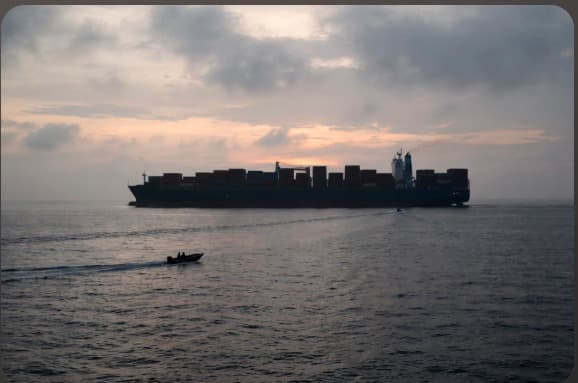
The vast expanse of the Gulf of Guinea has long been defined by its heavy, humid horizons and the slow, rhythmic pulse of international trade. Across these waters, massive commercial vessels move with a steady, mechanical inevitability, carrying the material wealth of distant ports along centuries-old maritime corridors. Under the bright glare of the tropical sun, the sea can appear deceptively calm, a shimmering sheet of blue that masks the inherent vulnerabilities of those who traverse it.
Yet, for the mariners who staff these deep-sea vessels, the peace of the open ocean is always weighed against a persistent, quiet anxiety. The transition from open international waters to the edge of territorial zones is a space where the modern world’s legal protections can feel intensely thin. On a day when the swells were long and slow, the routine vigilance of one merchant crew was replaced by the sudden, chilling realization that they were no longer alone.
A small, high-speed craft emerged from the blank space of the horizon, adjusting its course to match the larger ship’s heavy stride. There is a cold, calculated geometry to being shadowed at sea; the trailing vessel remains close enough to signal its intent, yet distant enough to dance on the edge of intervention. Inside the bridge, the sudden silence of apprehension took hold as the crew watched the radar blip remain anchored to their wake.
The distance between the two vessels became a space of profound tension, measured not in miles but in the steady thumping of the ship’s engines. For hours, the maritime highway felt incredibly isolated, an expanse where help is always measured in hours while danger arrives in minutes. The crew stood their watches with a heightened, quiet focus, knowing that the water around them held the potential for sudden compulsion.
Piracy in these modern corridors rarely announces itself with fanfare; instead, it manifests as a quiet, persistent pressure, a shadow that refuses to break away. The commercial ship maintained its course, its massive frame creating a wide, white wake that the smaller craft navigated with practiced ease. It was a silent duel of patience and resolve, played out against the backdrop of Sao Tome's distant, misty coastlines.
As the afternoon light began to soften into the long gray shadows of dusk, the nature of the encounter remained suspended in uncertainty. The trailing craft hummed with a quiet power, a reminder of the lawless elements that continue to occupy the cracks between nations. To be watched in such a manner is to realize how fragile the grand infrastructure of global commerce remains when isolated on the deep.
Eventually, the shadow broke its pattern, the smaller craft veering away into the gathering darkness of the wider gulf. The relief that followed on board the merchant vessel was immediate, yet it was tempered by the lingering knowledge of how closely the threat had hovered. The sea returned to its natural, indifferent state, the waves closing over the path where the confrontation had almost begun.
The vessel continued its journey toward its destination, its crew returning to the familiar rhythms of the watch, though with a renewed appreciation for the open horizon. The incident leaves no physical marks on the hull, yet it stands as a somber chapter in the ongoing narrative of the modern mariner's life.
Maritime tracking services and regional security agencies confirmed that the commercial ship reported being closely trailed by a suspected pirate skiff outside the territorial boundary. Although no boarding attempt was materialized, security alerts have been renewed for all commercial traffic currently navigating the shipping lanes within the Gulf of Guinea.
Published by Banx Network. This article is part of the Banx decentralized media programme, powered by the BXE token on the XRP Ledger.