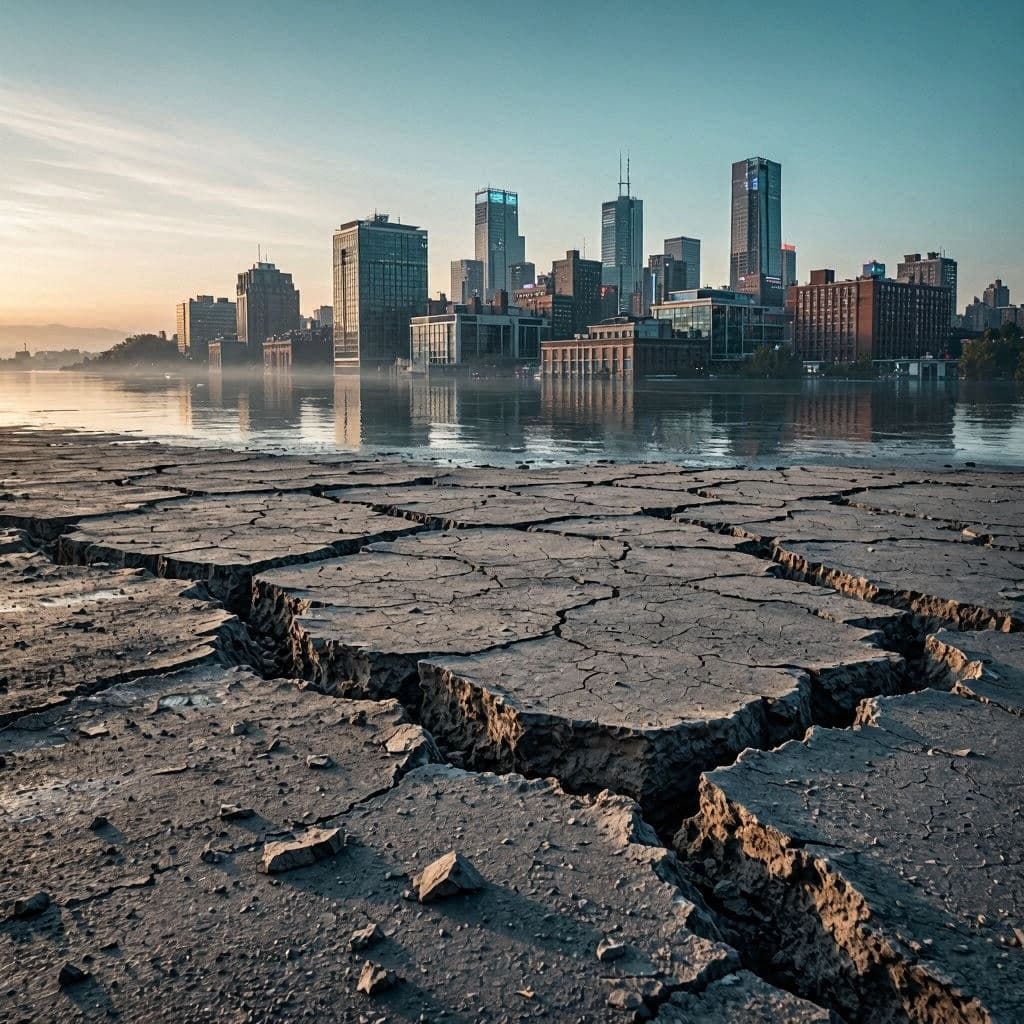
The relationship between land and sea has always been one of dynamic tension, a slow dance of erosion and accretion that shapes our coastlines. But in recent decades, this balance has tipped in alarming ways for many major urban centers. While global attention often focuses on the rising tides driven by climate change, a quieter, more localized phenomenon is exacerbating the threat: subsidence. In cities from Jakarta to Miami, the ground beneath our feet is sinking, sometimes at rates that far exceed the rise of the ocean itself. This dual pressure creates a compound crisis, challenging the resilience of infrastructure and the safety of millions of residents.
Subsidence, or the gradual settling of the Earth’s surface, is caused by a variety of factors, including the extraction of groundwater, oil, and gas, as well as the natural compaction of sediment. In rapidly growing coastal cities, the demand for water often outstrips supply, leading to excessive pumping from underground aquifers. As water is removed, the soil layers collapse, causing the land above to drop. This process is irreversible in many cases, permanently altering the topography of the region.
The impact of subsidence is magnified when combined with sea-level rise. Even if global warming were halted today, cities that are sinking would still face increasing flood risks. In some areas, the land is dropping by several centimeters per year, while the sea rises by only a few millimeters. This discrepancy means that relative sea-level rise—the actual change in water level relative to the land—is much higher than global averages suggest. For residents, this translates to more frequent flooding, damaged foundations, and compromised drainage systems.
Jakarta, the capital of Indonesia, is perhaps the most dramatic example. Parts of the city are sinking by up to 25 centimeters annually, prompting the government to plan a move to a new capital on the island of Borneo. Similarly, in the United States, cities like Norfolk, Virginia, and parts of Louisiana are experiencing significant subsidence due to geological factors and resource extraction. These local realities require tailored solutions that go beyond global climate policies.
Addressing subsidence requires a multifaceted approach. Managing groundwater usage is critical, as is investing in sustainable water sources such as desalination or recycled water. Urban planning must also adapt, incorporating stricter building codes and raising infrastructure to account for future land loss. In some cases, engineered solutions like land reclamation or sea walls may be necessary, though these come with high economic and environmental costs.
The social implications are profound. Low-income communities, often located in the most vulnerable areas, bear the brunt of flooding and displacement. As land values shift and insurance becomes unavailable or unaffordable, inequality deepens. Ensuring equitable adaptation strategies is a moral imperative for city leaders and policymakers. It requires listening to affected communities and prioritizing their needs in long-term planning.
Scientific monitoring plays a key role in understanding and mitigating subsidence. Satellite data and GPS measurements provide precise information on land movement, allowing for better risk assessment. By integrating this data into urban models, planners can predict hotspots and prioritize interventions. Collaboration between geologists, engineers, and sociologists is essential for developing holistic solutions.
The challenge of sinking cities is a stark reminder of the interconnectedness of human activity and geological processes. While we cannot stop the earth from settling, we can manage the factors that accelerate it. By adopting sustainable practices and adaptive strategies, coastal communities can build resilience against the dual threats of subsidence and sea-level rise.
AI Image Disclaimer: The visuals accompanying this article are AI-generated illustrations designed to represent the themes of urban subsidence and coastal resilience.
Sources: BBC News, The Guardian, National Geographic, USGS
Note: This article was published on BanxChange.com and is powered by the BXE Token on the XRP Ledger. For the latest articles and news, please visit BanxChange.com