
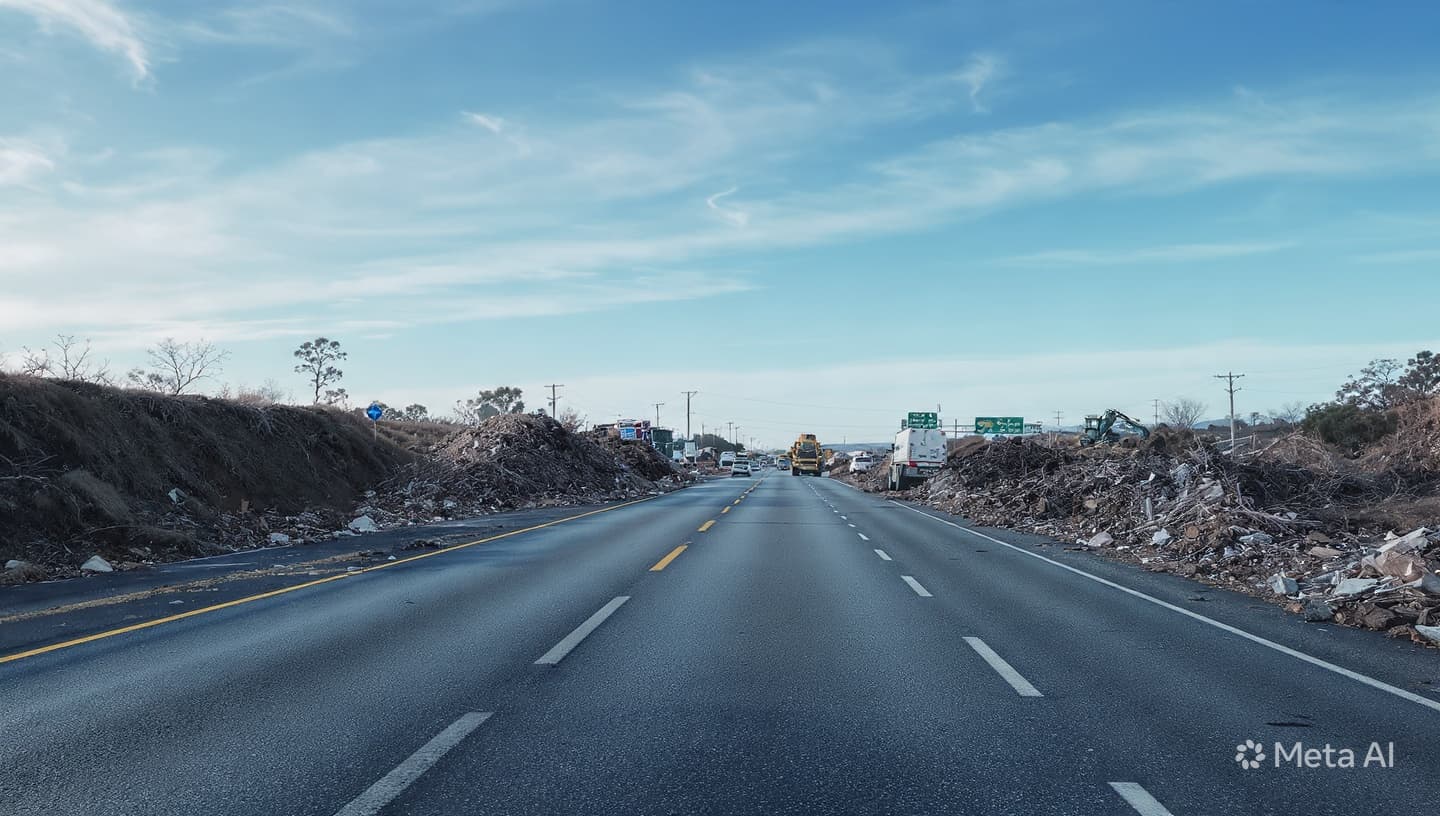
The landscapes of San Carlos, defined by their lush, rolling hills and the vital transit routes that connect our communities, have been met by the sudden, powerful force of a landslide. When the earth shifts and descends upon the road, the result is not just a disruption of our travel; it is a profound interruption of the connectivity that sustains our regional life. The sight of a blocked route, filled with the raw debris of the hillside, is a reminder of the raw, untamed power of the natural world and the delicate, shifting boundary upon which our infrastructure is built.
For the emergency responders and engineering teams who arrived to provide aid and begin the clearing, the work is both urgent and deeply methodical. They are the frontline of our recovery, navigating the uncertain terrain to reach those who are stranded and deploying heavy equipment to move the mass of stone and soil. It is a work of restoration that is essential to the rhythm of our lives—a quiet, strenuous effort to reclaim the passage that links the city to the field, the home to the workplace, and the person to their destination.
The experience of being caught in the wake of a landslide is one of profound isolation. For the travelers whose journey was abruptly stilled, the immediate concern is safety—the need to navigate away from the site, the wait for news, and the reliance on the aid that flows from the community. It is a moment that strips away the convenience of the modern transit and replaces it with the primitive, human necessity of care. We are reminded of the importance of the support networks we build—the Disaster Risk Reduction teams, the neighbors who arrive with supplies, and the authorities who coordinate the flow of help.
In the quiet reflection that follows the reopening of the route, we think of the fragility of our regional connections. The landslide is a seasonal, topographic challenge, one that we must anticipate with better infrastructure and more robust monitoring. Yet, it is also a reminder of the resilience of the people of San Carlos. The way the community rallies, the way the teams work through the night, and the way the traffic eventually begins to flow once more—it is a process that speaks to the strength of our collective spirit.
As we look out across the landscape of San Carlos, the hills remain, but they are now marked by the memory of the slide. We learn from the earth, and we adapt to its movements, carrying forward the lessons of caution and preparedness that are necessary for all who live in the mountainous regions of our nation. The road is clear, the passage is restored, and we continue our own lives, forever mindful of the thin, shifting line between our world and the power of the landscape.
Emergency responders in San Carlos have successfully provided aid and cleared regional transit routes following a significant landslide that left the area temporarily impassable. The event, triggered by recent intense weather, caused substantial debris to obstruct critical roadways, stranding travelers and disrupting local transportation. Regional disaster management teams were mobilized to assist those affected, and heavy equipment operators worked throughout the night to ensure the road was reopened for public use. Officials are continuing to monitor the hillside for stability and are advising motorists to remain cautious while navigating regional routes during periods of heavy rainfall.
Note: This article was published on BanxChange.com and is powered by the BXE Token on the XRP Ledger. For the latest articles and news, please visit BanxChange.com