
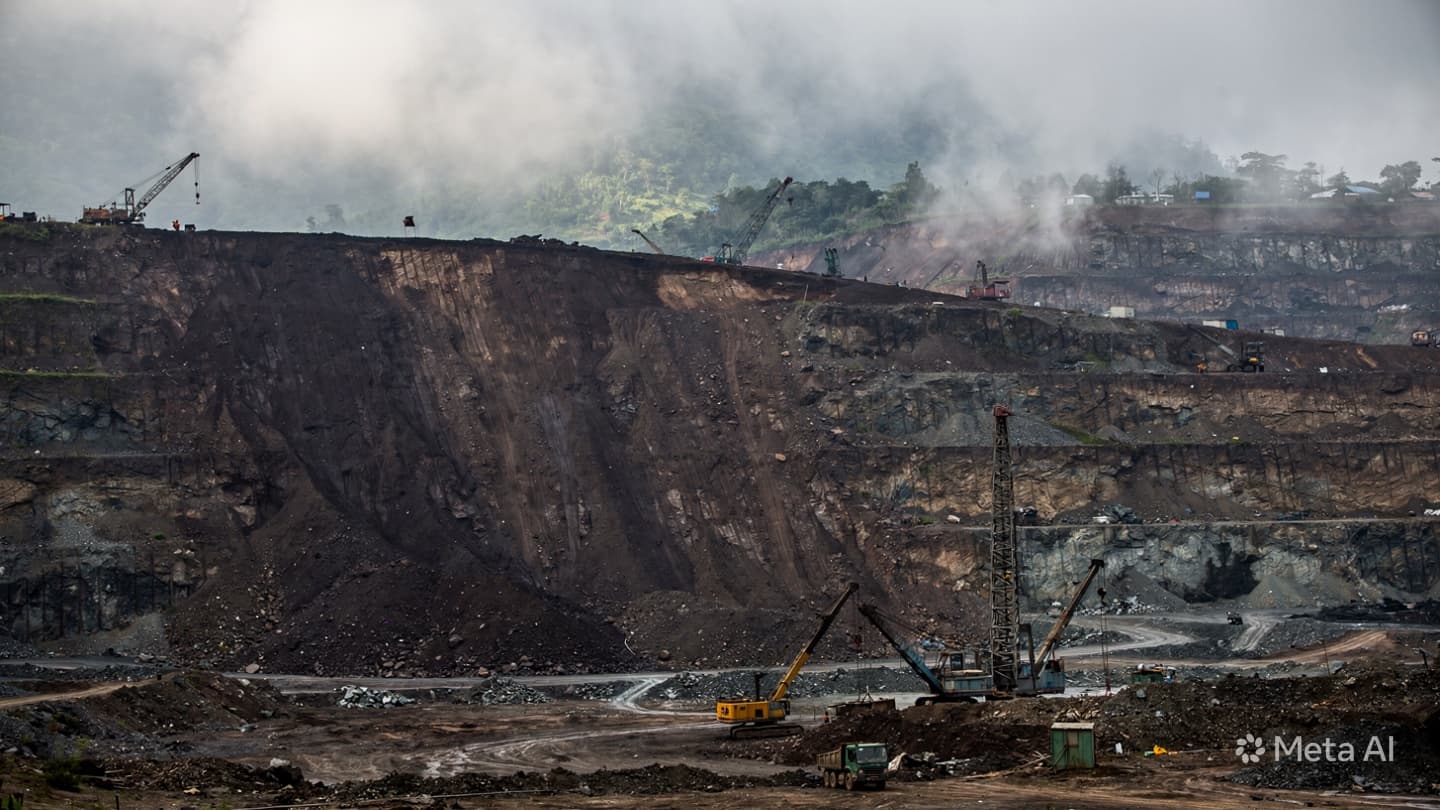
The northern reaches of Kachin State are defined by a dramatic, raw geography where high, mist-enshrouded mountains conceal some of the world's most valuable deposits of imperial jade. In these remote valleys, the landscape has been transformed by decades of intense, industrial extraction, leaving behind a surreal topography of deep open-pit mines and towering walls of unstable tailings. For thousands of migrant workers, known locally as jade pickers, these sheer clay cliffs represent both a promise of wealth and a daily encounter with profound physical peril. It is a world where the human form looks microscopic against the vast, carved amphitheatres of earth, where operations continue day and night under the heavy weight of regional economic demands.
The precarious equilibrium of these massive mining slopes is constantly challenged by the seasonal rains, which saturate the loose, uncompacted soil until it loses all internal cohesion. On a recent morning, following days of relentless downpours, a critical section of a high earthen terrace began to fail, its internal stability completely compromised by water pressure. The collapse occurred with an immense, terrifying speed, as hundreds of tons of liquid mud and heavy stone detached from the upper rim and roared down into the pit below. There was no time for a coordinated evacuation; within seconds, the descending mass overwhelmed the lower working areas, burying equipment and multiple workers beneath a heavy blanket of debris.
The immediate aftermath of a mining landslide is characterized by a heavy, breathless stillness that settles over the open pit as the dust and mist slowly clear. The roar of the mountain gives way to the desperate, focused sounds of shouting voices and the frantic revving of heavy machinery as nearby miners rush to the site of the slide. The scale of the collapse creates an immediate logistical nightmare for rescue teams, who must navigate an environment that remains highly volatile and prone to secondary failures. For those watching from the upper rims, the site is a sobering reminder of the absolute fragility of life within the deep, extracted valleys of the north.
Search and rescue operations were launched immediately, with local emergency services, mining companies, and volunteer groups working side by side to excavate the massive debris field. Heavy excavators clawed methodically at the wet clay, their iron buckets appearing small against the mountain of earth, while teams of men used hand tools to probe the margins where survivors might be trapped. The work is slow and hazardous, as every movement of earth threatens to trigger further movement from the fractured slopes above. The atmosphere inside the pit is one of tense, quiet determination, punctuated by moments of anxious stillness whenever the earth shifts slightly.
The legal and regulatory frameworks governing these extraction sites have long been a subject of intense scrutiny, with safety protocols frequently falling short of the challenges posed by the extreme geography and intense weather. Every monsoon season brings a predictable cycle of slope failures in the mining districts, yet the economic imperatives of the jade trade continue to draw vulnerable populations into the hazardous pits. The incident highlights the ongoing tension between industrial extraction and the preservation of human life, a conflict that is written into the very shape of the carved mountains. As the hours passed without word from the missing workers, the emotional weight of the disaster grew heavier for the families waiting at the perimeter.
By afternoon, the rescue site was shrouded in a thin, persistent drizzle that made the mud even slicker and more difficult to manage, forcing operators to proceed with extreme caution. Local administrative officials arrived to oversee the coordination of the response, promising a thorough investigation into the structural integrity of the terrace that failed. Yet, for the seasoned miners who live on the edges of the pits, the event is viewed as part of the grim, accepted cost of their profession, an occupational hazard that cannot be fully engineered away. The open pit stands as a monument to this human cost, its deep walls scarred by the passage of the slide.
The search efforts are expected to continue for several days, as teams work through the thousands of cubic meters of displaced earth to locate all of those who were caught in the path of the collapse. The community has gathered in a quiet, supportive vigil around the mine entrance, providing food and comfort to the rescue crews and the families of the missing. It is a manifestation of solidarity that defines the mining towns, where the shared risks of the occupation forge deep, resilient bonds among the inhabitants.
The mountain will eventually be stabilized, the debris cleared, and the excavators will return to their relentless digging in search of the green stone that lies beneath the clay. But for the families of the missing, the valley has become a place of permanent loss, its earth holding a value that cannot be measured in market prices. The story of Kachin's jade remains written in these twin realities of wealth and desolation, a narrative that continues to unfold with every passing season.
In straight news terms, a massive landslide at a jade mine in Kachin State has left multiple workers missing and presumed trapped under a large volume of collapsed earth and debris. The slope failure occurred following heavy rains that destabilized an upper terrace of the open-pit mining operation, sending tons of mud into the lower working areas. Emergency rescue operations are currently underway on-site, with heavy machinery and volunteer teams working to clear the slide and locate survivors despite hazardous conditions.
Published by Banx Network. This article is part of the Banx decentralized media programme, powered by the BXE token on the XRP Ledger.

.jpg&w=3840&q=75 "Blake Lively Awarded $400,000 in Legal Fees After Justin Baldoni Lawsuit Dismissed")
