The mountains have a way of holding memory, their terraced heights standing as silent witnesses to generations who have tilled the high-altitude soil. Along the steep ridges of Namisindwa District, where the mist hangs heavy in the morning air, a quieter, more unsettling transformation is unfolding beneath the feet of those who call the slopes home. The earth, usually a symbol of permanence and sustenance, has begun to trace a different story—one marked by deep, lengthening lines that carve through gardens and beneath the thresholds of homes.
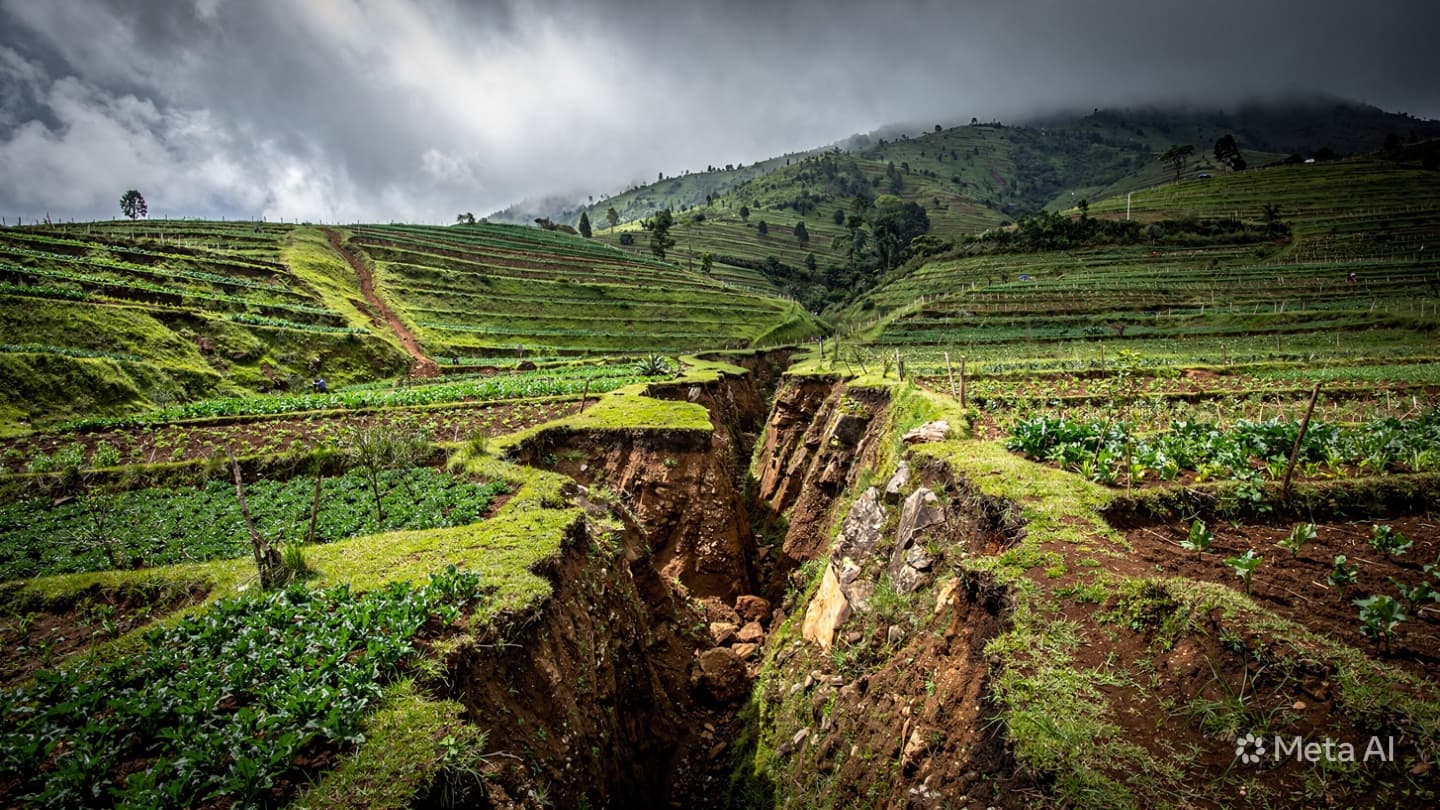
There is an inherent rhythm to life on the slopes of Mount Elgon, structured around the predictability of the seasons and the cycle of the rains. Yet, when the latest downpours blanketed the sub-counties of Buwabwala and Tsekululu, the moisture did not merely nourish the beans and coffee plants; it sank deep into the subterranean layers, awakening an old, latent vulnerability. Across five sub-counties, including Mukoto, Bumumali, and the quiet pathways of Luwa Town Council, structural fissures have evolved from narrow seams into prominent gaps in the landscape.
To walk through these villages now is to observe a community suspended in a state of watchful waiting. In more than five hundred villages, the widening fractures have ignored property lines, snaking across smallholder plots and leaving deep scars across the foundations of clay and brick dwellings. Families who have spent decades listening to the familiar patter of rain on iron roofs now find themselves listening instead to the settling of the ground beneath them, wondering if the hills will hold.
The local landscape tells a story of immediate ecological fragility, where the physical bonds holding the soil together are gently but persistently dissolving under the weight of saturated earth. Acres of green crops, which only weeks ago represented the promise of seasonal abundance and household stability, lie interrupted by displaced mounds of mud and stone. The deep lines in the soil are mirrored by the cracks traveling up the walls of family homes, rendering the structures fragile monuments to an ongoing geological shift.
Faced with these shifting realities, the local leadership has begun the arduous task of gathering data, translating the silent movement of the earth into a comprehensive assessment for the central authorities in Kampala. There is an unspoken understanding among the elders that the hilltops can no longer safely carry the weight of so many homesteads. The conversation has shifted toward the complex, emotionally fraught necessity of relocation—a process that asks people to part not just with physical land, but with the ancestral history embedded in the mountainside.
For the families trapped between the steep inclines and the widening fissures, alternative options remain sparse and difficult to navigate. The daily dilemma is visible in the patched walls of homes that could give way if another torrential downpour saturates the upper ridges. Yet, without immediate land or sanctuary elsewhere, life continues out of sheer necessity, with residents tending to what remains of their gardens while keeping a cautious eye on the changing shape of the horizon.
The situation underscores a broader, structural vulnerability that characterizes life along the volcanic edges of eastern Uganda, where seasonal weather patterns increasingly test the limits of human settlement. The intersection of high population density, intensive hillside farming, and changing climate variables has created a delicate balance where even standard seasonal rains carry the potential for profound disruption. The widening cracks are, in essence, a quiet warning system written directly into the topography of the region.
As the skies threaten to open once more over the high ridges, the focus shifts entirely to the mechanics of institutional response and the logistics of human safety. The immediate requirement is no longer just observation, but the organized movement of vulnerable communities before the fragile equilibrium of the hillside shatters completely. It remains a race against the elements, played out in the quiet spaces where the soil continues its slow, indifferent separation.
Published by Banx Network. This article is part of the Banx decentralized media programme, powered by the BXE token on the XRP Ledger.