
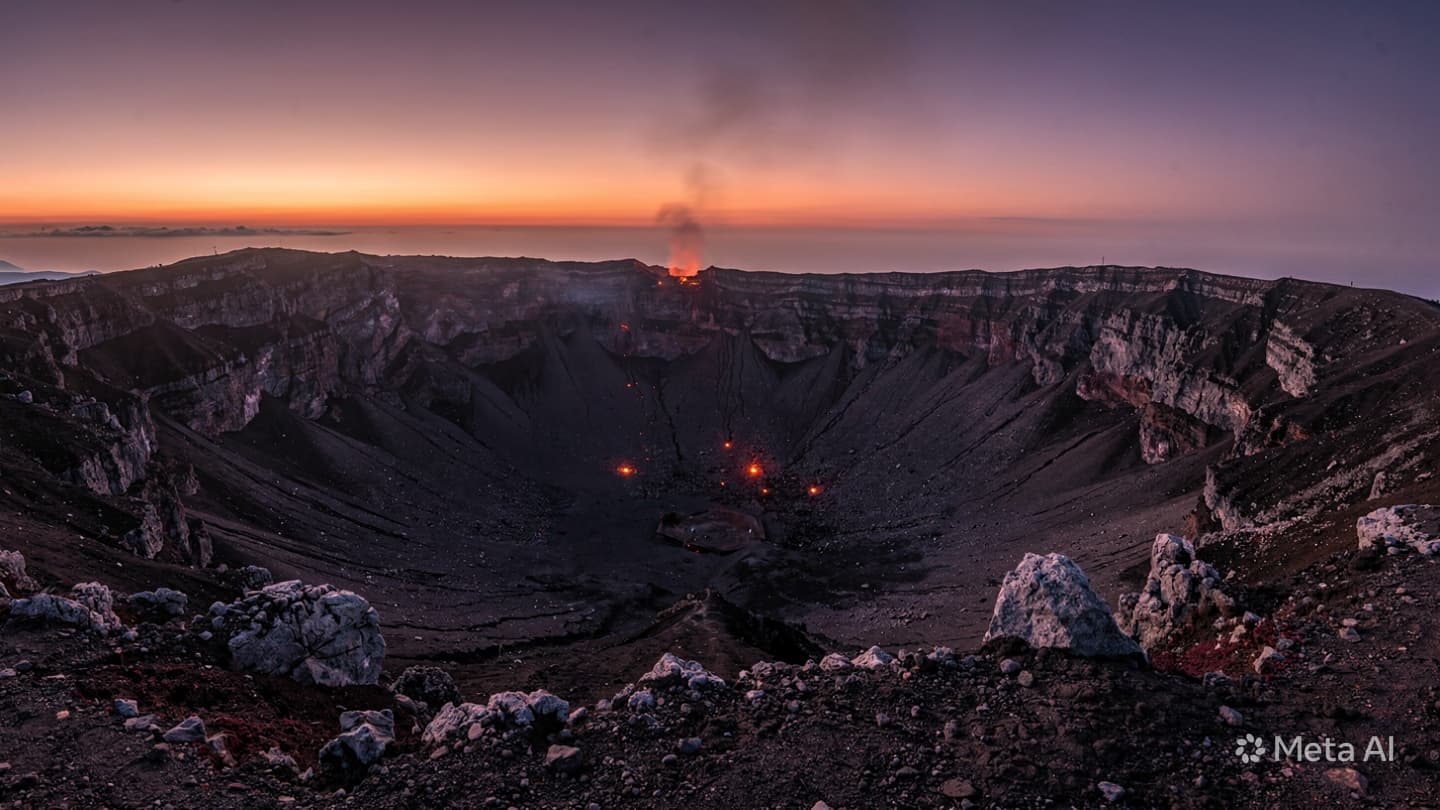
The mountain does not hurry, nor does it ask for our attention, yet it commands the landscape with an elemental patience that dwarfs our brief concerns. At the summit of Kīlauea, the ground has recently held a theater of intense, molten light, a display of geological evolution that reminds us of the planet's restless, living core. For nine hours, the Halemaʻumaʻu crater pulsed with the rhythmic force of an eruptive episode, painting the sky with the signature glow of primal fire before, as abruptly as it began, the mountain chose silence. This sudden pause is not an end, but a quiet breath taken between chapters of an ancient, ongoing story.
To observe such an event is to witness the intersection of time and geology in a way that feels deeply, uncomfortably human. We look for patterns in the fountaining lava, measuring the effusion rates and the heights of the plumes as if to translate the mountain’s language into our own. Yet, the volcano operates on a timeline indifferent to our observations. When the north vent ceased its activity after episode 48, the quiet that followed was not an absence of power, but a transition into a different state of being—a cooling of the surface that hides the relentless, subterranean motion still churning below.
The recent activity at Halemaʻumaʻu has been a lesson in the delicate balance of our environment. The tephra fall, the shifting plumes, and the glow of the vents have transformed the surrounding park into a space defined by the raw architecture of stone and ash. Those who monitor these cycles from the vantage of nearby overlooks are spectators to a process that has been occurring for eons, shaping the Big Island with every overflow and every fountain. It is a reminder that the land we walk upon is merely a temporary crust over a sea of intense, transformative heat.
Our desire to define these eruptions by episode numbers—a systematic categorization of a wild, chaotic phenomenon—is our way of imposing order on the sublime. Each episode is a singular event, yet they are all tethered to the same deeper, rhythmic pulse of the volcano. The pause that occurred on June 1 is a reminder of the volatility that characterizes this region. The summit, once inflated with the pressure of the magma beneath, now rests, yet the landscape remains etched with the marks of the most recent episode, a testament to the brief but intense reality of the fountaining.
There is a strange, atmospheric beauty in the aftermath of such events. The air, heavy with the memory of gas and ash, settles into a different texture, and the landscape, once brightly illuminated by the fountains, returns to the shadowed dignity of the crater. The National Park, a place of sanctuary, carries the weight of this volcanic legacy, where the earth is constantly remaking itself. For the observers, both the scientists and the visitors, the pause allows for a moment of reflection—a chance to stand in the quiet and appreciate the magnitude of the forces at play.
Nature, in its most expressive moments, hums with a frequency that we struggle to fully grasp. The lava fountains were not merely a geological occurrence; they were a display of energy, a release of tension that has been building within the caldera’s walls. To watch the fountain height decline and finally cease is to watch a giant slowly exhale. The stillness that now holds the crater is a fragile peace, a temporary state in a region where the earth is perpetually in motion, even when that motion is hidden from our sight.
As we look toward the future of the eruption, we do so with a humbled perspective. The unpredictability of Kīlauea is its defining trait, challenging us to remain attentive to the shifts in the landscape. We are reminded that our presence here, amidst the cooling lava and the smoking vents, is a privilege granted by the relative calm of the mountain. The next episode, whenever it may arrive, will bring its own sequence of overflows and plumes, another chapter in the long, unfolding history of a volcano that remains one of the most vibrant, restless features of our world.
For now, the instruments are quiet, and the summit is at rest. The data gathered during the nine hours of episode 48 will contribute to the ongoing study of the volcano’s behavior, adding to the layers of knowledge we possess about the planet’s internal life. But beyond the data, there is the simple, profound experience of having witnessed the earth in its most active, elemental state. The stillness at the crater is a gift of observation, a moment to reflect on the power that shapes our world from within, silent and unseen.
The Hawaiian Volcano Observatory reported that Episode 48 of the Halemaʻumaʻu eruption at Kīlauea paused abruptly at 1:37 p.m. HST on June 1, 2026, following nine hours of continuous lava fountaining. The activity had peaked early in the day, with fountains reaching heights of 650 feet before gradually declining. While the eruption is currently in a paused state, the USGS maintains an orange aviation color code. Residents and park visitors are advised to monitor official updates, as volcanic gas emissions and tephra fall may continue to impact the surrounding areas.
Note: This article was published on BanxChange.com and is powered by the BXE Token on the XRP Ledger. For the latest articles and news, please visit BanxChange.com