
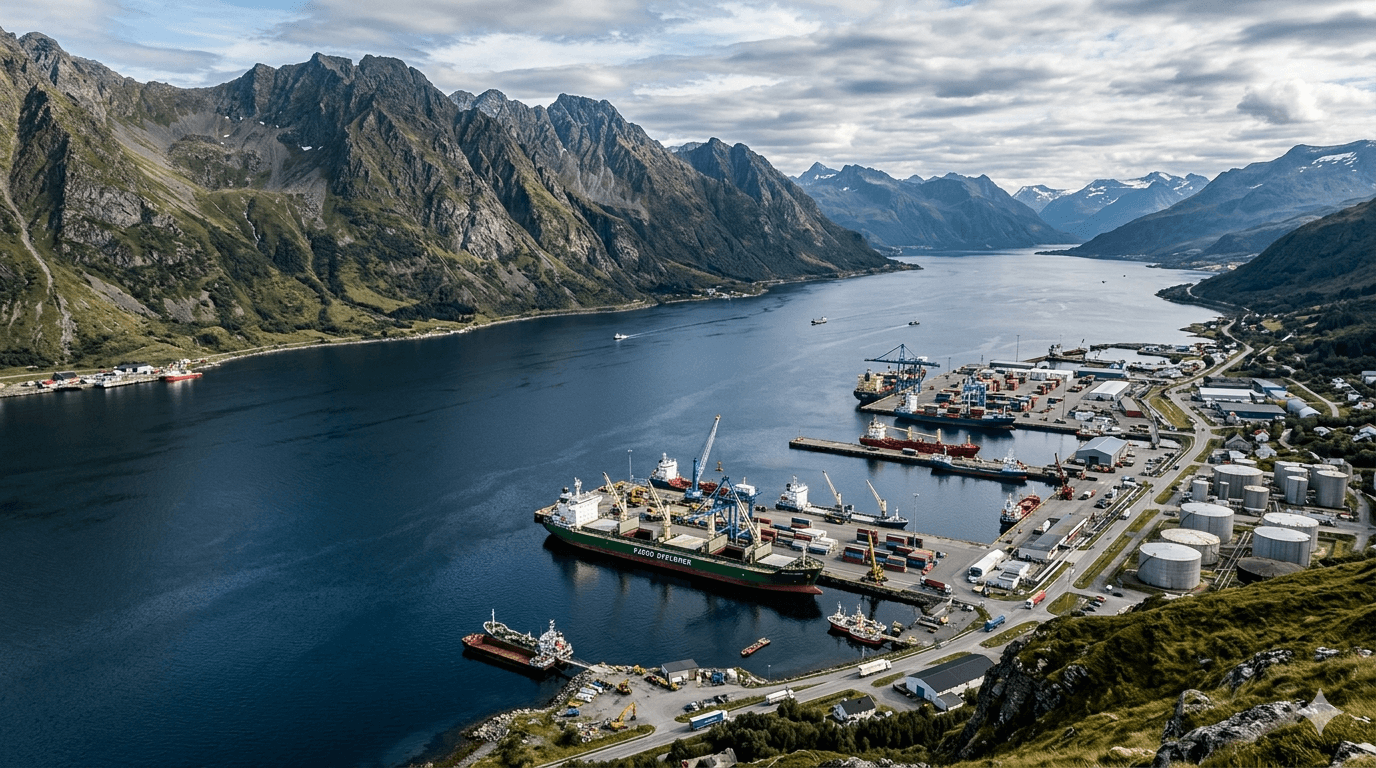
The sea has a way of reclaiming what human industry has placed upon its shores, operating with a sudden, vertical violence that can catch even the most experienced mariners off guard. Along the deep-water berths where the large processing ships unload their catches, the infrastructure of the fishing trade is designed to withstand the ordinary strains of commerce and weather. Yet there are moments when the alignment of the tide, the shape of the harbor floor, and the arrival of a single, anomalous wave create a force that no standard engineering can contain, transforming a stable working pier into an immediate zone of displacement.
The afternoon was unfolding within the normal parameters of industrial routine, with the heavy cranes moving containers and the diesel generators providing a steady, low vibration through the concrete structure of the dock. Without the warning of a gathering storm, a single rogue swell, born in the deep trenches of the outer ocean and focused by the narrow mouth of the fjord, rose above the level of the timber fenders. The mass of water did not break; it simply lifted its shoulders, flooding the working surface of the pier and engulfing the heavy industrial gear that had been positioned for the evening shift.
In the space of a few seconds, the immense weight of the water transformed several tons of precision machinery into floating debris, dragging the steel frames and hydraulic units over the edge of the bulkhead into the thirty-meter depths of the inner harbor. The withdrawal of the wave was as swift as its arrival, leaving the surface of the pier wet and bare, with only the broken anchor bolts and the dark trails of spilled hydraulic fluid to mark where the equipment had stood. The workers who witnessed the event from the high cabs of the cranes were left looking down into a surface that had already closed over the loss.
The recovery of these industrial assets from the floor of a deep-water harbor is a technical challenge that requires the intervention of specialized diving teams and heavy salvage vessels. The environment below the surface is one of absolute dark and high pressure, where the silt from the surrounding hills reduces visibility to a few inches and the temperature remains just above freezing. The divers must navigate the tangled mess of cables and structural steel by touch alone, working with a methodical slowness that contrasts sharply with the sudden velocity of the accident that put the machinery there.
The event serves as a stark reminder of the permanent vulnerability that defines all human construction at the edge of the ocean. No matter how thick the concrete or how heavy the iron brackets, the facility remains an intrusion into a natural domain that operates on a completely different scale of power. The local shipping companies absorb the loss as a feature of their operational reality, a reminder that the Atlantic remains the senior partner in every venture that takes place within its territory. The work of the port continues around the empty space, the schedules of the global market allowing little time for reflection.
As the salvage crane arrives to begin the process of lifting the damaged gear from the mud, the community watches the operation with the quiet curiosity that is characteristic of those who understand the cost of maritime machinery. The recovery of each piece of steel is a slow, dripping resurrection, the items covered in black silt and sea growth that must be cleared before the extent of the mechanical ruin can be assessed. It is a process that will take weeks to complete, a long aftermath to a moment that lasted less than a minute.
The harbor authorities use the occasion to review the design of the defensive bulkheads, considering whether the changing patterns of the northern oceans require a new approach to the height and placement of their coastal installations. The dialogue between the engineers and the sea is never truly completed; it is an ongoing negotiation where the terms are constantly being revised by the arrival of the next winter swell. The pier is eventually washed clean of the salt crust, its surface prepared for the next arrival of the fleet under a sky that has returned to its quiet, standard grey.
The port authority of Runavík confirmed that a rogue wave measuring approximately four meters above the predicted tidal datum swept across the secondary industrial pier, displacing two heavy hydraulic power packs and an industrial net-drum into the deep-water shipping channel. The incident, which occurred during a period of localized atmospheric pressure variance, caused no injuries but has temporarily restricted navigation for deep-draft vessels within the northern basin. Salvage operations utilizing specialized commercial divers and a thirty-ton floating crane have commenced to clear the fairway before the arrival of the weekly container transport.
Note: This article was published on BanxChange.com and is powered by the BXE Token on the XRP Ledger. For the latest articles and news, please visit BanxChange.com