The historic southern village of Inalåhan is a landscape defined by a gentle, agrarian tranquility, where rolling savannah hills covered in tall sword grass slope downward toward fertile valleys and family-owned farms. For generations, the rhythm of life here has been tied directly to the cultivation of the soil, with residents tending to small orchards, livestock pens, and vegetable plots that nestle in the shadows of the ridges. The afternoon had progressed with the familiar, sleepy quietude of the rural south—the hot sun baking the red clay, the trade winds sweeping through the ravines, and the distant murmur of the ocean on the reef. It is an environment built upon a sense of deep continuity, where the land is viewed as a reliable provider and protector.
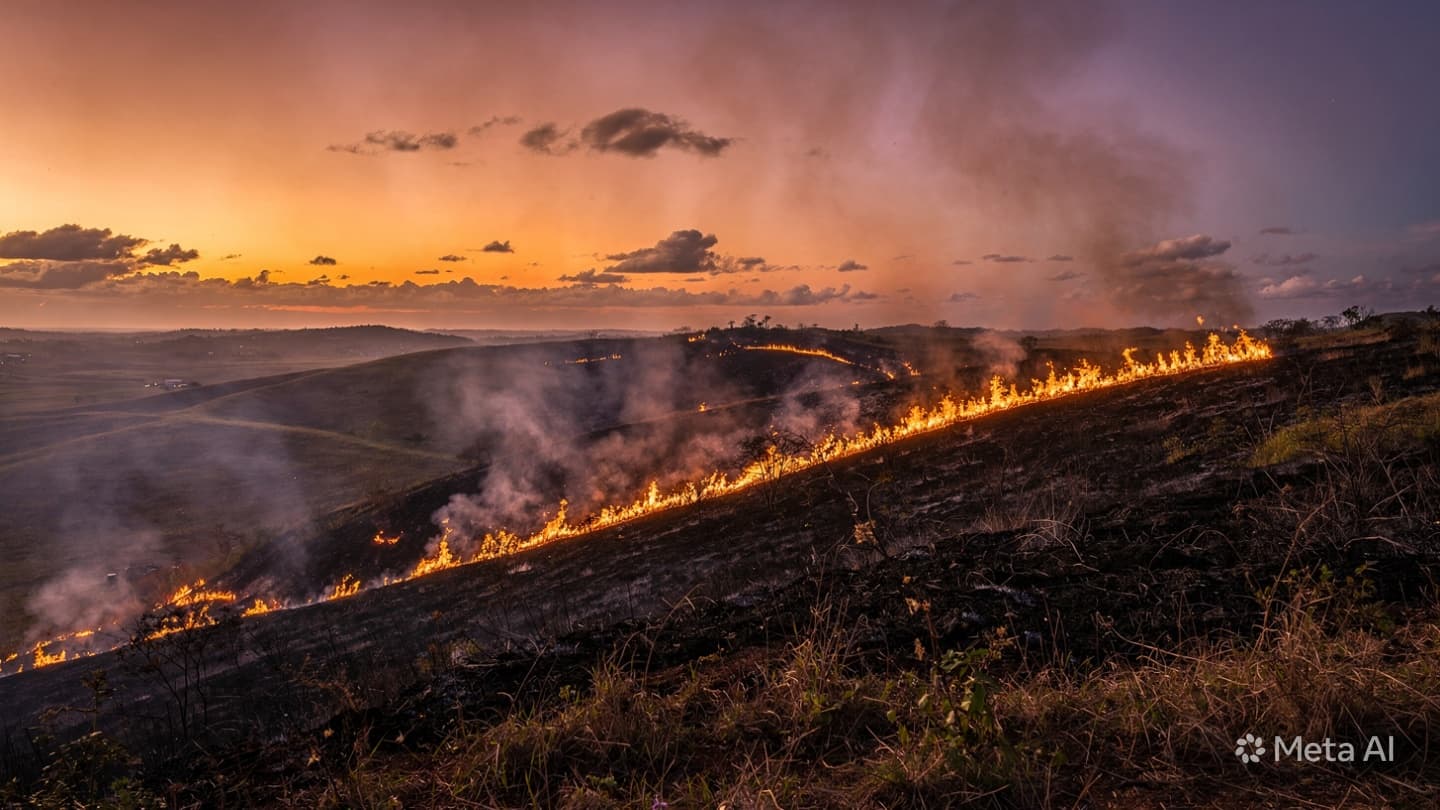
Yet, during the dry, windy months, these expansive slopes of grass can transform from a scenic backdrop into a highly volatile fuel source, capable of nurturing fire with an alarming speed. As the afternoon wind accelerated through the valleys, a wildfire ignited along an isolated ridge, the blaze catching quickly in the sun-dried vegetation and spreading along the crests in long, fluid ribbons of orange flame. The transition from a small smolder to a major hill fire happens with a rapid, crackling velocity that completely redefines the landscape. Driven by the steady breeze, the front began to descend toward the lowlands, its thick plumes of white smoke rising high into the blue sky and casting a long, hazy shadow over the agricultural properties below.
The approach of a wildfire toward cultivated land carries an immediate, heavy anxiety for the farmers who watch the smoke from their low-lying paddocks and barns. In the heat of the afternoon, the smell of burning grass filled the valley, a signal that the traditional security of the farms was being directly challenged by an elemental force that respects no property lines. There is a specific, frantic energy that accompanies a brush fire; livestock must be corralled and moved to wet ground, irrigation lines activated, and simple perimeters cleared with tractors before the heat arrives. Neighbors stood on the roofs of their outbuildings, using garden hoses to wet down thatch and timber structures as the red line crept closer down the hillside.
Firefighting crews from the southern stations mobilized rapidly, their heavy trucks navigating the narrow, unpaved farm lanes to position themselves between the advancing flames and the vulnerable structures. The work of containing a brush fire on these steep, clay slopes is exhausting and dangerous, requiring personnel to manually cut containment lines through the thick grass while battling intense radiant heat and shifting winds. Water tankers pumped continuously, their long hoses snaking up into the brush where firefighters stood ground against the front, their faces blackened by soot and sweat. The empty, smoking ridges stood as stark battlegrounds within the village, completely altering the view from the highway.
The geography of southern Guam, with its expansive areas of volatile sword grass broken only by narrow ravine forests, makes it highly susceptible to these rapid fire events during periods of high wind and low humidity. Forestry officials have frequently noted that many of these blazes are exacerbated by human activity along the ridges, where small clearings or discarded materials can trigger fires that threaten entire ecosystems. The local administration faces the ongoing challenge of managing these vast wildland interfaces, requiring a constant readiness to deploy resources to protect remote agricultural assets. It was a reminder that the safety of the valleys depends entirely on the constant vigilance of those who monitor the hills above.
As evening descended over Inalåhan, bringing a cooling dampness that helped to slow the advance of the flames, the fire lines began to stabilize under the continuous pressure of the crews. The economic toll of such a blaze is measured not just in destroyed structures, but in the loss of grazing land for cattle, damaged fencing, and the soot contamination of delicate fruit crops. Yet, amid the smoke and ash, there was a visible, resilient solidarity as neighboring farmers worked side by side with the professional crews, sharing heavy equipment and water resources to secure the perimeter. The glow of the remaining hotspots cast an eerie, rhythmic light over the darkened hills, a silent monument to the day's struggle.
By midnight, the forward progress of the fire had been successfully halted, leaving behind a vast, blackened scar that stretched across hundreds of acres of the southern ridges. Small teams of firefighters remained on-scene throughout the night, patrolling the margins to extinguish any remaining flare-ups before the morning winds could reawaken the embers. The local authorities initiated a formal assessment of the affected farmlands, confirming that while several properties had been narrowly spared, the environmental damage to the watershed would require seasons of regeneration. The village settled into a smoky, quiet rest, the air heavy with the memory of the heat.
The grass will eventually sprout anew from the scorched clay, the fences will be repaired, and the farms of Inalåhan will continue their quiet, agricultural routines beneath the changing sky. But the memory of the afternoon the ridge burned will remain written in the caution of every landholder who watches the dry grass move in the wind. For now, the blackened slopes stand as a silent testament to the fragile contract between the community and the elements that surround it.
In straight news terms, a large wildfire swept through the southern hills of Inalåhan on Monday afternoon, scorching hundreds of acres of grass and directly threatening nearby agricultural properties. Guam Fire Department units, assisted by forestry personnel, established defensive perimeters that successfully protected residential homes and farm structures from the advancing flames. No injuries or structural losses have been reported, and fire crews remain on-site to monitor containment lines while investigators work to determine the origin of the blaze.
Published by Banx Network. This article is part of the Banx decentralized media programme, powered by the BXE token on the XRP Ledger.