
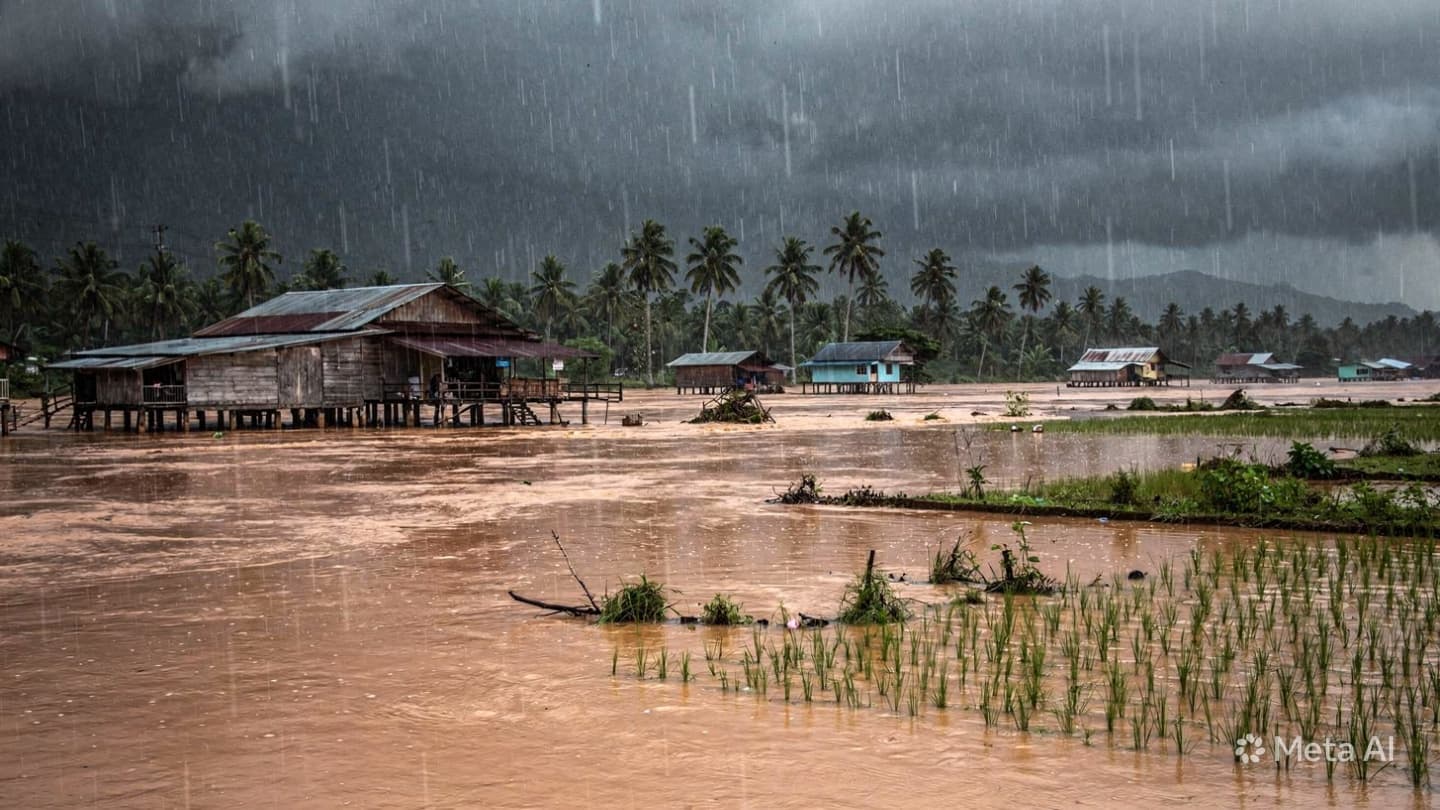
The Nam Lik River, winding its way through the heart of Vientiane Province, has always been an intimate companion to the villages that line its emerald banks. It is a source of irrigation, a corridor for local transport, and a scenic backdrop that defines the peaceful, agrarian lifestyle of the region. Yet, those who build their lives near the water understand that a river is a dynamic, living entity, capable of changing its character from a gentle neighbor to a displacing force when the seasonal rains accumulate in the high northern watersheds.
Over a weekend marked by a continuous, heavy grey downpour that seemed to dissolve the distinction between sky and mountain, the Nam Lik began to alter its pace. The water lost its clear, slow-moving quality, turning into a thick, swirling torrent of brown silt that rose steadily against the measuring markers of the local bridges. The transformation was silent but relentless, as the volume of water from upstream tributaries arrived faster than the main channel could discharge it into the valley.
As the river reached the top of its natural embankments, spilling into the low-lying fields and threatening the edges of residential structures, the atmosphere in the riverside communities shifted from watchful waiting to active preparation. The sound of the rising water, a deep, continuous rushing murmur, became the dominant presence in every home, prompting families to begin the familiar, somber task of moving their most precious possessions to the safety of upper floors.
The call for an urgent evacuation arrived as the water began to lap against the support pillars of the traditional wooden stilt houses, transforming village paths into shallow, moving streams. The evacuation was carried out with a quiet, disciplined efficiency, reflecting the community’s collective experience with the seasonal temper of the river. Small boats, long-tail rivercraft, and military trucks converged on the affected sectors, their movements coordinated by local volunteers and village elders.
Under the grey, rain-streaked sky, scenes of quiet displacement unfolded across the province as families wrapped their belongings in plastic sheeting and led their livestock toward the higher ridges. Elderly residents were assisted into rescue boats with gentle reverence, while children held tightly to small pets and bundles of clothing. There was no outward panic, but rather a dignified, shared acceptance of the necessity to yield the lowlands to the temporary authority of the river.
The temporary shelters established in public schools and community centers quickly filled with the displaced, creating an atmosphere of shared vulnerability and mutual support. Neighbors sat together on woven mats, sharing simple meals and monitoring the latest water level updates broadcast over local radio networks. The immediate concern was for safety, but beneath the conversations lay a quiet anxiety regarding the condition of the homes left behind in the flooded plains.
The swelling of the Nam Lik is a clear manifestation of the wider climate patterns affecting the region, where the intensity of monsoon events frequently tests the limits of local infrastructure and emergency response systems. The ability of these rural communities to organize and evacuate without loss of life is a testament to their inherent resilience and social cohesion. However, each cycle of flooding leaves an economic scar that takes months of labor and sacrifice to heal.
By the final hours of the afternoon, provincial emergency coordinators confirmed that rising water levels in the Nam Lik River had triggered urgent flood evacuation alerts across multiple districts in Vientiane Province. More than four hundred families have been successfully relocated to designated safe zones as the river continues to exceed critical safety thresholds. Emergency teams remain on high alert along the river corridor to assist any remaining isolated residents as the crest of the flood passes through the lowlands.
Note: This article was published on BanxChange.com and is powered by the BXE Token on the XRP Ledger. For the latest articles and news, please visit BanxChange.com