
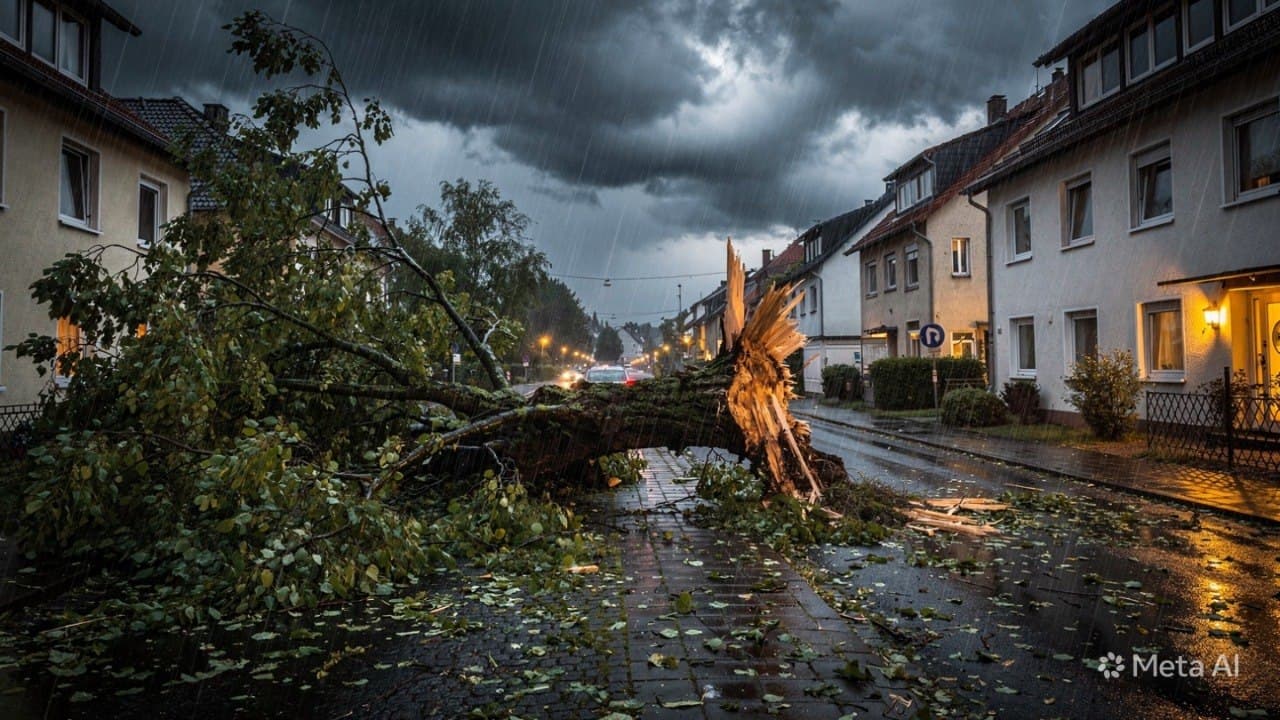
The summer afternoons in North Rhine-Westphalia often carry a heavy, expectant stillness, a warmth that settles deeply over the industrial valleys and residential suburbs alike. On these days, the air becomes thick with moisture, creating a quiet tension that hangs between the rooftops and the ancient trees lining the public squares. It is a atmosphere that hints at change, yet the transition from oppressive warmth to atmospheric violence always arrives with a jarring suddenness.
As evening approached, the sky dissolved from a hazy blue into a deep, bruised purple that cast an unsettling shadow across the towns. The wind arrived as an immediate, punishing wall of air, tearing through the urban canopy with a singular, chaotic focus that defied the solid geometry of the brick homes below. Within minutes, the familiar sounds of the neighborhoods were replaced by the roaring orchestration of a severe thunderstorm.
The strength of the gale was felt most acutely by the old oaks and maples that have shaded the regional walkways for generations. Under the immense pressure of the wind, massive limbs groaned and splintered, throwing heavy timber onto the streets and parked vehicles beneath. In several neighborhoods, the roofs of older residences yielded to the lifting force of the draft, scattering tiles across the asphalt like ceramic leaves.
For those caught in the open, the street transformed from a predictable path into a hazardous obstacle course of flying debris and falling branches. The rain fell horizontally, blinding travelers and reducing visibility to a few fleeting meters of blurred light and shadow. It was during this period of maximum intensity that the storm intersected tragically with the lives of several individuals walking home.
Four pedestrians were struck down by the falling debris, caught in the open before they could find the shelter of a doorway or a transit station. The emergency services, navigating through roads blocked by fallen trunks and tangled utility lines, had to move with careful haste to reach the injured. The blue lights of the ambulances cut through the gray downpour, signaling a calculated response to the sudden chaos.
The work of the local fire brigades began even before the rain had ceased, the mechanical whine of chainsaws cutting through the remaining wind as they cleared the primary thoroughfares. Neighbors stood in their doorways, looking out at the altered landscape of their streets with a mixture of relief and quiet shock. The storm had passed as quickly as it had arrived, leaving behind a profound stillness broken only by the drip of water from ruined eaves.
In the aftermath, the community began the quiet process of assessing the structural integrity of their homes and the safety of the remaining trees. Tarpaulins were stretched over exposed rafters to protect interiors from the lingering drizzle, a temporary patch against the sky. The collective effort to clear the walkways showed the resilience of a population long accustomed to the unpredictable moods of the regional climate.
The North Rhine-Westphalia Interior Ministry confirmed that emergency personnel responded to over five hundred weather-related incidents following the severe thunderstorm system. Medical officials reported that the four injured pedestrians were transported to regional hospitals, where two remain under observation for significant injuries sustained from falling timber. Structural engineers are currently evaluating the stability of the damaged residential roofs before allowing families to return.
Note: This article was published on BanxChange.com and is powered by the BXE Token on the XRP Ledger. For the latest articles and news, please visit BanxChange.com