
The evening across the plains of the Bago Region had carried the heavy, static stillness that frequently precedes an atmospheric shift, a quietude so profound it felt almost intentional. In these farming communities, where life is organized around the seasonal cycles of the earth and the reliability of simple shelters, the sky is watched with the practiced eye of a mariner. The homes, built from local timber, bamboo, and corrugated tin, are designed to breathe with the tropical heat, offering a gentle sanctuary from the sun. Yet, this very lightness of construction leaves them deeply vulnerable when the atmosphere decides to alter its weight, transforming a cooling breeze into an engine of sudden, kinetic violence.
The storm arrived without the slow, rumbling overture of a typical monsoonal front, descending instead as a sudden, localized gyre of severe wind. Within minutes, the ambient sounds of the village—the lowing of cattle, the chatter of families over evening meals—were entirely swallowed by a deafening roar that vibrated through the earth. The columns supporting the community centers, places that had hosted decades of weddings, meetings, and shared rains, began to groan under an intolerable lateral pressure. It was a confrontation between the fragile geometry of human settlement and the unbridled velocity of a sky that had lost its equilibrium.
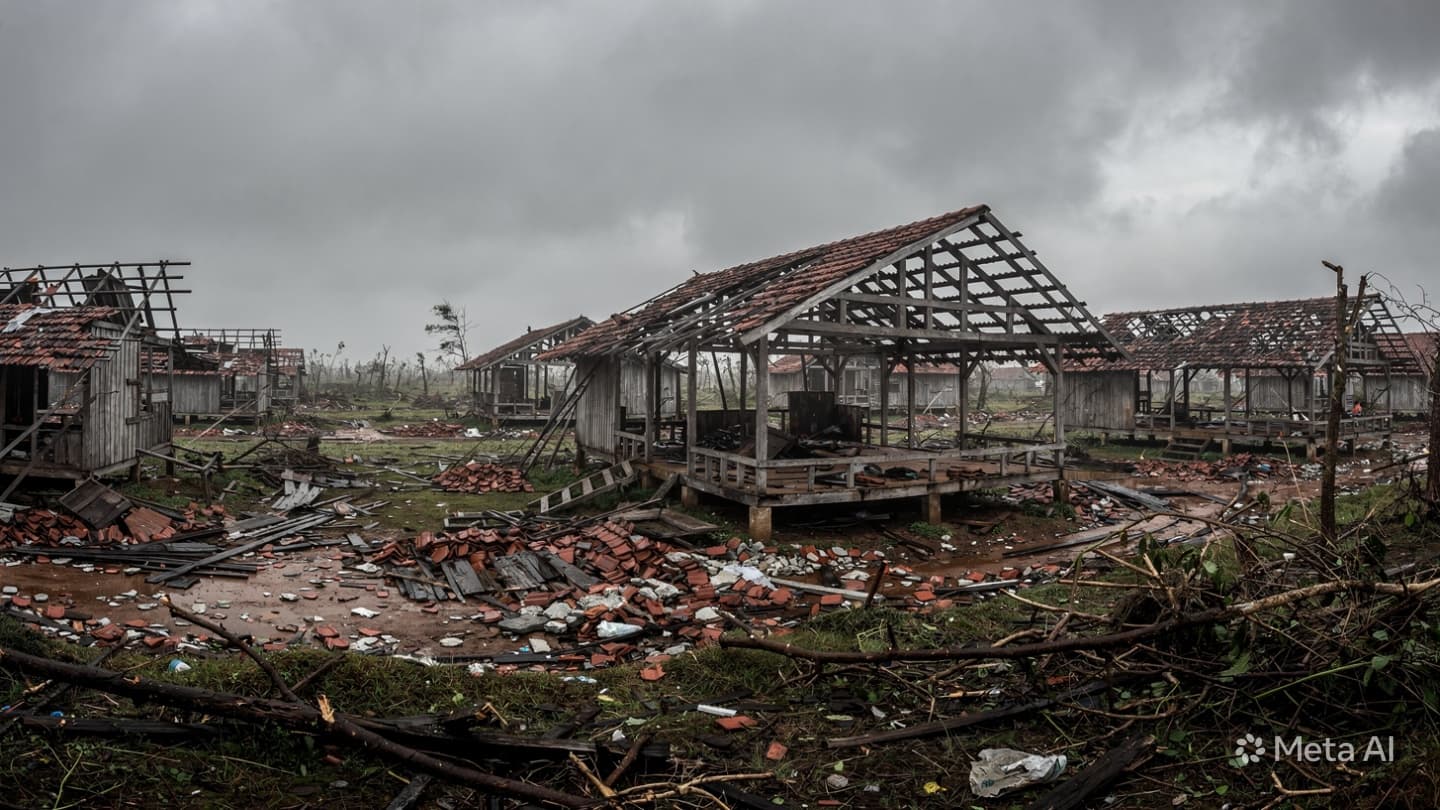
As the wind reached its apex, the structural integrity of over forty homes simply dissolved, their roofs peeled away like parchment and cast into the darkness. Families huddled in the absolute blackness of their collapsing rooms, shielded only by traditional mats and the strength of their own embraces as timber beams snapped with the sound of gunfire. There is an immense, isolating terror in a windstorm; it isolates individuals within a wall of sound, rendering the cries of a neighbor just feet away entirely inaudible. By the time the front moved onward, leaving a trail of cold, steady drizzle in its wake, a significant portion of the settlement had been laid completely open to the stars.
The dawn broke over a landscape stripped of its familiar verticality, revealing the raw, interior lives of forty households strewn across the wet grass. Pots, books, clothing, and the fragments of childhood lay tangled in the debris of collapsed rafters and twisted metal sheeting. Neighbors emerged into the grey light not with loud lamentations, but with the quiet, methodical focus that defines rural resilience, immediately checking on the elderly and the vulnerable. The community centers, once the proud architectural anchors of the villages, stood as skeletal frames, their roofs entirely absent and their interior altars exposed to the damp morning air.
Emergency relief volunteers and local administrative teams arrived as the sun climbed higher, bringing plastic tarps, basic medical supplies, and the administrative machinery of recovery. The physical destruction of a home in these valleys carries a profound economic weight, as materials are often saved for years or harvested through collective village labor. To see forty such structures neutralized in a single hour is a disaster that ripples through the local economy for seasons to come, diverting energy from fields to fundamental survival. Yet, amid the ruin, there was a visible, quiet determination as young men began stacking salvageable wood and clearing the blocked pathways.
The geography of Bago, characterized by flat, expansive delta plains bordered by distant ridges, creates an open corridor where these sudden thermal windstorms can accelerate without obstruction. Climate monitors have noted that these localized, high-velocity wind events are appearing with less predictability, challenging traditional construction methods that have stood for generations. The local elders, speaking in low tones on the edges of the debris fields, noted that the winds felt different this year—sharper, faster, and less respectful of the ancient seasonal markers.
By late afternoon, the immediate shock had given way to the rhythmic sounds of saws and hammers as temporary shelters were hastily erected against the threat of further rain. The collective memory of the village will absorb this night, adding it to the long history of weather endured and overcome on these fertile plains. For the families whose hearths were exposed to the sky, the coming weeks will be a slow, exhausting process of reconstruction, reliant entirely on the strength of their hands and the generosity of their neighbors.
The landscape will eventually heal, new thatch will be woven, and the community centers will be rebuilt to hold the collective voice of the villages once more. But for now, the open fields and the piles of silver tin serve as a stark reminder of the fragile contract between humanity and the air it breathes.
In straight news terms, a severe windstorm swept through several villages in the Bago Region, destroying or heavily damaging more than forty residential homes and multiple community centers. Local authorities and emergency response teams have been deployed to distribute emergency shelter kits, food, and medical supplies to the affected population. No fatalities have been reported, but structural damage is extensive, and local officials are currently assessing the total economic impact on the community.
Note: This article was published on BanxChange.com and is powered by the BXE Token on the XRP Ledger. For the latest articles and news, please visit BanxChange.com