The elevated municipality of Triesenberg, clinging to the steep green ridges that overlook the Rhine Valley, stands as a symbol of Liechtenstein’s alpine identity and enduring relationship with the mountains. Here, traditional wooden barns and rustic mountain huts have sat within the high pastures for generations, serving as shelters for herders and hikers who follow the ancient paths through the upper Alps. Life in these high elevations moves to the steady rhythm of the seasons, dependent entirely on the stability of the slopes that form the foundation of the community.
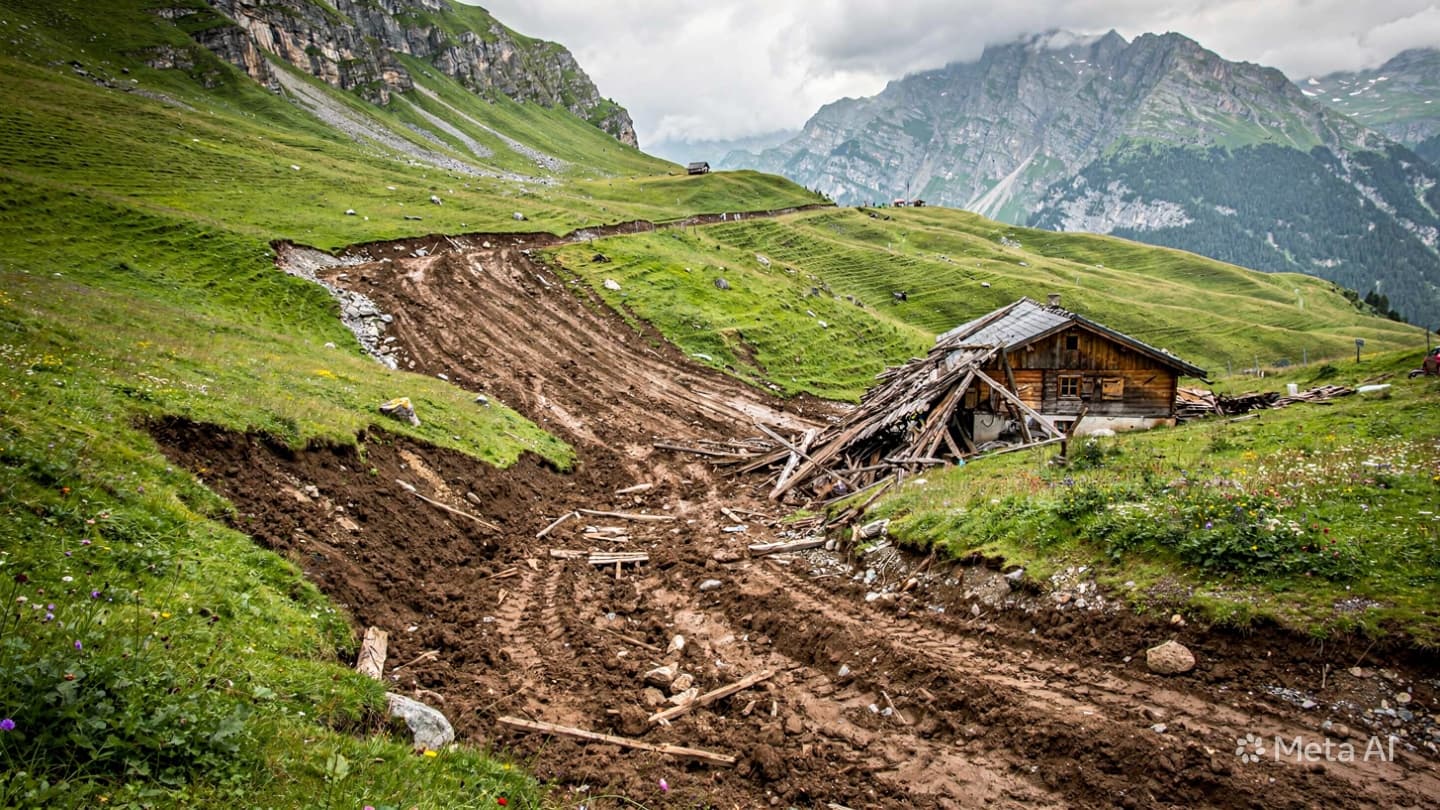
Yet, the deceptive permanence of these alpine ridges was challenged following an intense period of localized rain that saturated the upper layers of topsoil. Without warning, a significant expanse of an upper pasture lost its grip on the underlying rock face, transforming a stable green meadow into a heavy, fast-moving river of liquid clay, stone, and uprooted alpine vegetation. The mudslide cascaded down the steep contours of the Triesenberg slopes, carving a raw brown path through the landscape.
The primary structural victims of the slide were several historic mountain huts situated directly in the path of the descending earth. The force of the mud breached the thick timber walls of the traditional structures, filling interiors with silt and displacing them from their foundations. Wooden fences that marked out the historic boundaries of the alpine pastures were splintered and buried under meters of heavy, wet soil, transforming the orderly high-altitude landscape into a scene of natural disruption.
Emergency response units from the local fire departments and alpine rescue teams deployed to the affected slopes under challenging conditions, navigating around newly formed fissures to check for any stranded hikers or herders. Fortunately, because the slide occurred outside the peak seasonal transit hours, no injuries were reported, allowing officials to focus entirely on stabilizing the immediate area and preventing secondary earth movements.
Geological engineers were quickly brought to the site to inspect the upper crown of the landslide, utilizing precision instruments to monitor whether the remaining earth masses were still shifting. The vulnerability of these steep alpine zones requires constant technical surveillance, particularly when prolonged rain systems alter the internal water pressure of the hillsides, turning solid turf into a volatile fluid.
The impact of the landslide extends beyond the immediate structural damage to the huts, disrupting the seasonal grazing patterns of local livestock who rely on these high meadows during the summer months. The loss of stable pasture land requires herders to adjust their traditional movements, finding alternative grazing zones while the damaged slopes undergo long-term geological stabilization and eventual reseeding.
For the residents of Triesenberg, the sight of the scarred mountainside is met with a quiet, practical determination to repair and restore what has been lost. Volunteers and local authorities have begun the laborious process of clearing mud from the exterior of the salvageable huts, using hand tools and small machinery where the terrain prevents the use of heavy industrial equipment.
As the municipality begins the process of reconstructing the damaged paths and reinforcing the vulnerable sections of the ridge with modern retaining structures, the high Alps return to their accustomed stillness. The mountain has left its mark on the slopes of Triesenberg, leaving behind a clear reminder that those who choose to live where the earth meets the sky must always remain adaptable to the movements of the terrain.
Published by Banx Network. This article is part of the Banx decentralized media programme, powered by the BXE token on the XRP Ledger.
.jpg&w=3840&q=75 "US Declares Drought Disaster for Parts of Puerto Rico as Dry Conditions Persist")