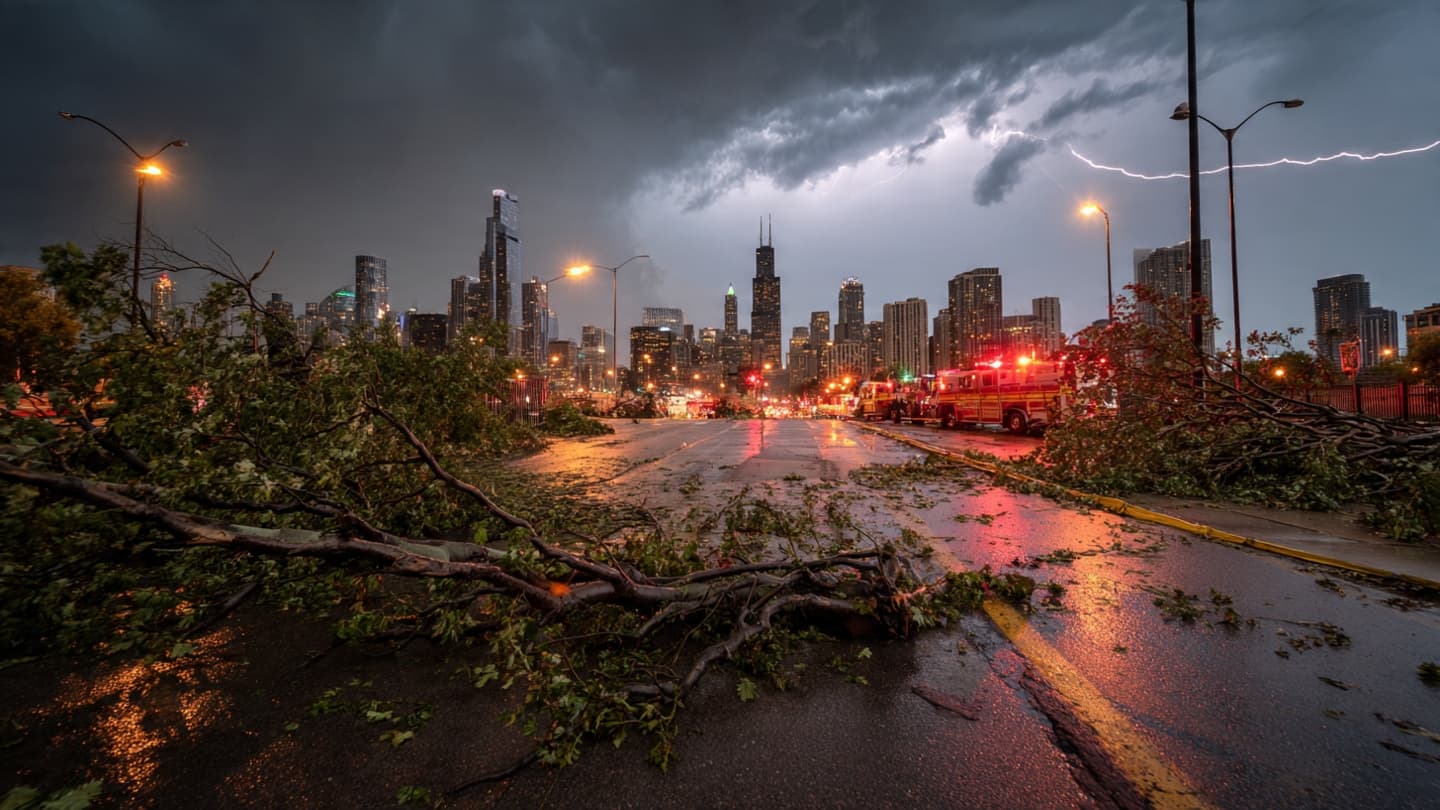
The weather often arrives like a familiar visitor, gentle and predictable, until a sudden shift reminds a city how closely daily routines remain tied to the forces of nature. Across Chicago, residents found themselves navigating such a reminder as powerful storms swept through neighborhoods, leaving behind fallen trees, damaged infrastructure, and widespread power outages.
The first wave of severe weather moved through the region with strong winds and heavy rainfall. Streets that had carried the rhythm of ordinary weekday life quickly became scenes of emergency response as crews worked to clear debris and restore access to affected areas. Reports indicated that numerous trees were uprooted or damaged by intense gusts.
Electricity disruptions followed in many communities. Thousands of households and businesses experienced outages as utility crews responded to damaged power lines and equipment. The interruptions affected homes, transportation systems, and commercial activity across parts of the metropolitan area.
Meteorologists had warned that atmospheric conditions were favorable for severe thunderstorms. Warm temperatures combined with unstable air masses created an environment capable of producing damaging winds, heavy rain, and localized flooding. Forecast models suggested that the weather system retained enough energy to generate additional storms.
As evening approached, weather officials continued monitoring a second round of storm activity. Flash flood warnings were issued in several areas, reflecting concerns that already saturated ground could struggle to absorb additional rainfall. Low-lying roads and urban drainage systems faced increased pressure.
Emergency management agencies encouraged residents to remain alert to changing conditions. Public advisories emphasized the importance of avoiding flooded roadways, securing outdoor objects, and staying informed through official weather updates. Such precautions can significantly reduce risks during rapidly evolving weather events.
Beyond the immediate disruptions, storms of this nature often reveal the resilience of communities. Neighbors assist one another, utility workers operate through difficult conditions, and local agencies coordinate resources to restore normalcy. These collective efforts become an essential part of recovery after severe weather.
Scientists note that intense weather episodes have drawn increasing attention in recent years as communities evaluate infrastructure resilience and emergency preparedness. While individual storms cannot be attributed to a single cause, extreme weather remains an important subject of ongoing environmental research and public planning.
By Thursday, attention remained focused on forecasts and recovery efforts. Officials continued assessing damage while residents prepared for the possibility of additional storms, underscoring how quickly weather can reshape the landscape of everyday life.
AI Image Disclaimer: The accompanying illustration is an AI-generated visual interpretation created to represent the reported weather conditions.
Sources Verified: Chicago Sun-Times, National Weather Service
Published by Banx Network. This article is part of the Banx decentralized media programme, powered by the BXE token on the XRP Ledger.