The relationship between a building and the land it occupies is usually one of quiet, static confidence. We inhabit structures under the premise that they are fixed, permanent features of our daily lives. In the central province of Hubei, that premise has been profoundly challenged by a weather pattern that has shown little mercy for the rigidity of brick and mortar. The relentless rain has not merely flooded the streets; it has seeped into the foundations, testing the structural integrity of the built environment in ways that only a sustained, heavy downpour can.
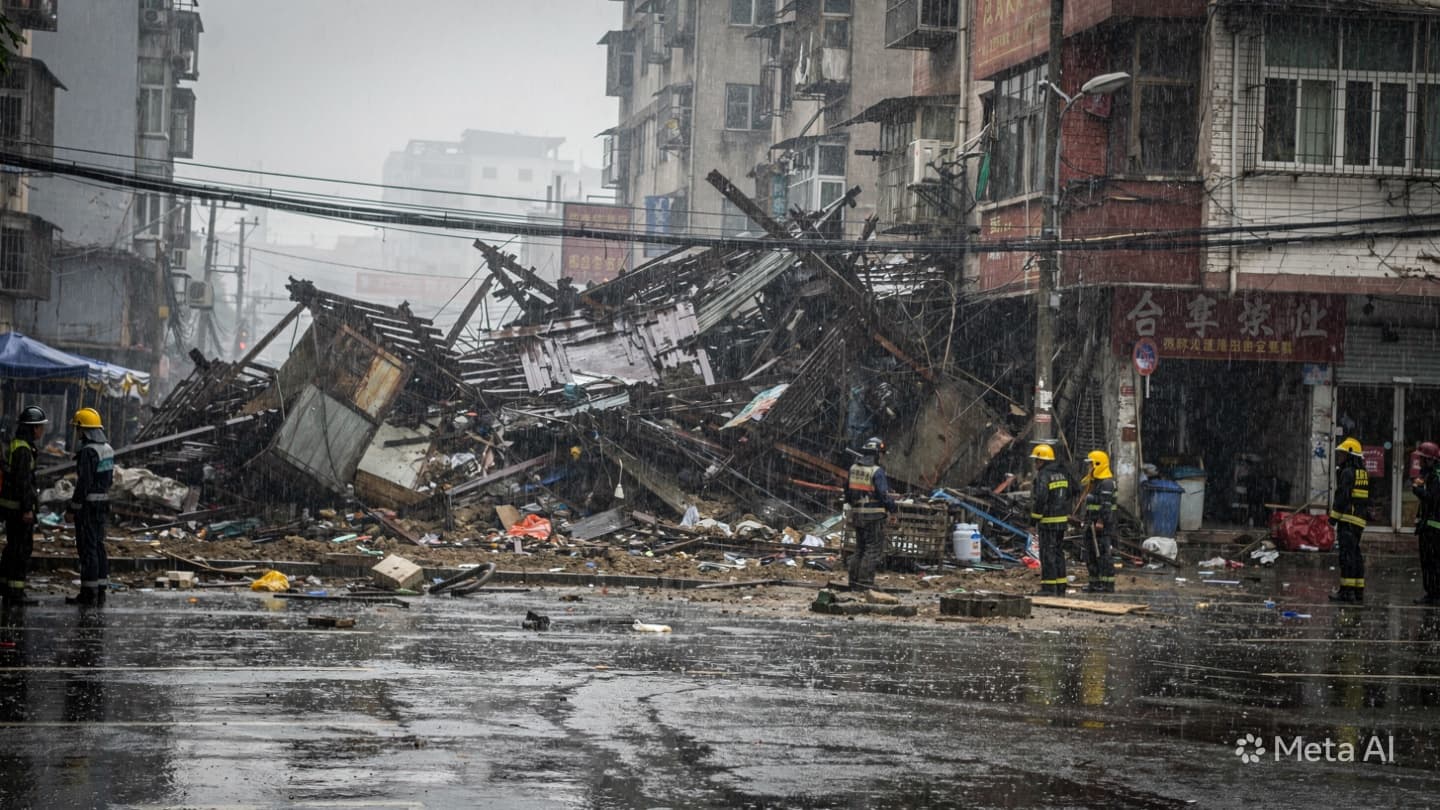
In various corners of Hubei, the toll of this saturation has manifested in the collapse of buildings—structures that were once silent witnesses to the flow of time, now transformed into broken monuments to the weather’s reach. These are not grand failures of monumental design, but intimate, personal losses: homes, small businesses, and community buildings that have buckled under the persistent, cumulative weight of moisture. The air in these affected areas is thick with the residue of the storm, a mix of damp earth and the unsettled atmosphere of an ongoing emergency.
Search and rescue teams move through these spaces with a focused, deliberate quiet. Their work is a delicate balance of caution and urgency, navigating the remnants of what were once domestic interiors. There is no sensationalism in their actions; it is a professional, somber performance of duty. Each clearing of a debris pile is a search for evidence of life, a physical act of hope against the crushing reality of what the water has wrought.
The environment in Hubei during these days feels entirely changed. The familiar vistas of urban and rural life are obscured by the grey, driving rain, and the sounds of the city—usually a rhythmic tapestry of movement—are replaced by the low, steady drone of the storm and the occasional, jarring sound of shifting masonry. It is a scene that demands a certain emotional distance to process, as we look past the wreckage to the people whose lives have been momentarily halted by the fragility of their own surroundings.
These collapses force a broader reflection on the nature of our infrastructure. We design for the average, for the expected patterns of the climate, but we are increasingly finding ourselves tested by the extremes. Hubei, with its history of water and weather, has always been a place of adaptation, yet this recent sequence of events feels like a new threshold, a reminder that even our most stable structures are beholden to the elemental forces that govern the landscape.
The emergency response is being conducted with a calm efficiency that belies the chaos of the scene. Local officials and disaster teams are coordinating the evacuation and the stabilization of sites, their focus shifting from the immediate shock of the collapses to the long-term process of assessing what remains. It is a grueling, necessary task, carried out in the rain-soaked streets where the distinction between public safety and private loss becomes increasingly difficult to discern.
As we consider the situation, we are struck by the patience of the community. In the face of such structural vulnerability, there is a collective endurance, a quiet understanding that the path to recovery begins with the slow, methodical work of clearing the past. The buildings may be gone, but the social fabric—the families, the neighbors, the responders—remains intact, serving as the real, resilient foundation upon which the future of these towns will eventually be built.
Ultimately, the events in Hubei are a call to re-evaluate our perception of stability. We live in an environment that is constantly changing, one that responds to the inputs of the atmosphere with a force that can be both subtle and catastrophic. By observing the aftermath of these collapses with a sense of contemplative distance, we gain a clearer understanding of the challenges that lie ahead for regions like Hubei, where the land and the sky are in a state of perpetual, often unpredictable, conversation.
The rain will eventually stop, and the sun will return to Hubei, revealing the full extent of what has been lost. The process of rebuilding will then begin, guided by the lessons learned in these wet, uncertain weeks. For now, the focus remains on the search, on the protection of those who are vulnerable, and on the maintenance of a calm, steady resolve in the face of a landscape that has proven to be as fragile as the homes we build within it.
Published by Banx Network. This article is part of the Banx decentralized media programme, powered by the BXE token on the XRP Ledger.