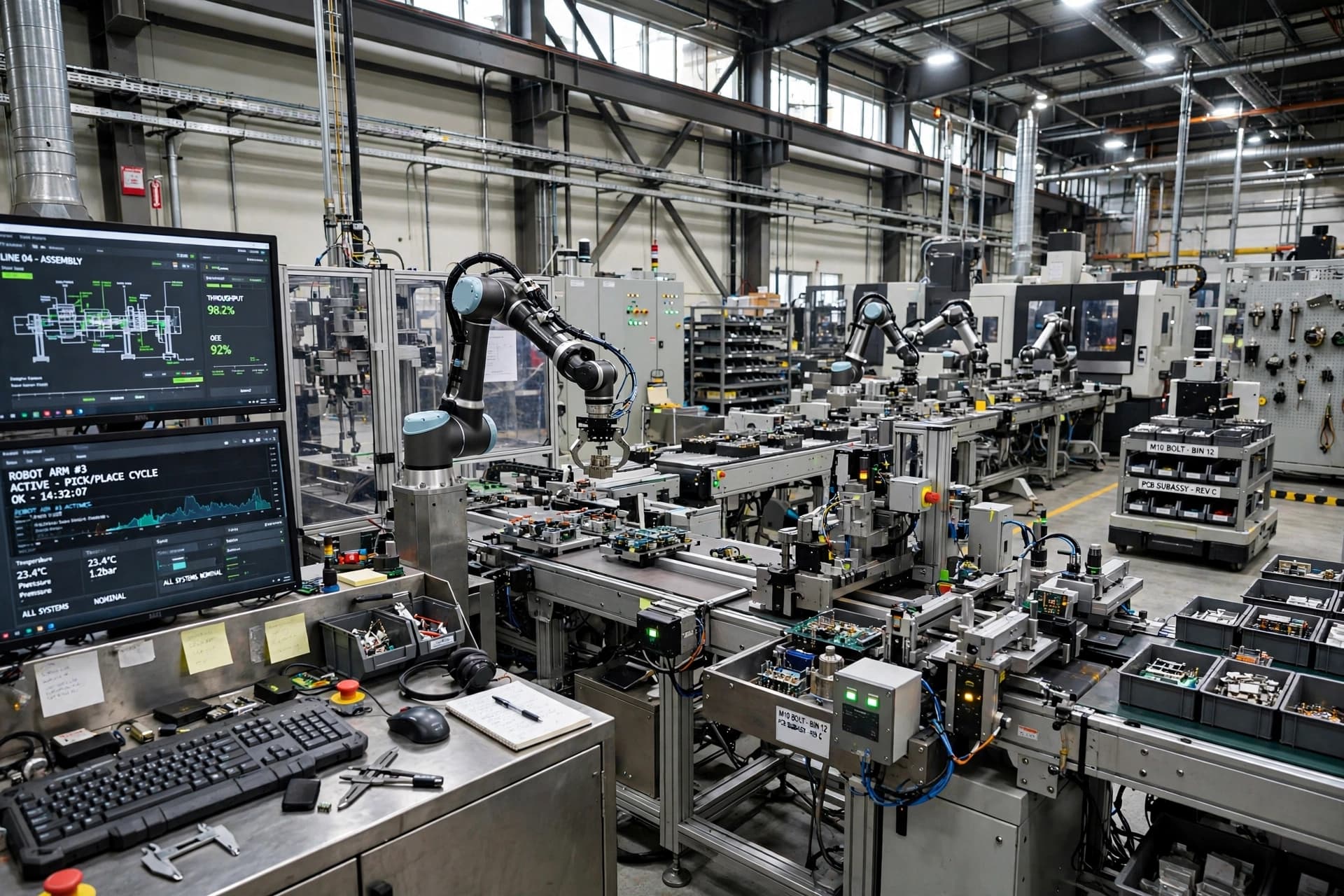
The American economy often tells its story through many voices at once. Some arrive from factory floors and office buildings where hiring continues at a steady pace. Others emerge from airport terminals and airline headquarters where executives closely monitor fuel expenses that influence every journey crossing the skies. Together, these seemingly separate developments offer a broader portrait of an economy that remains active and resilient while also confronting challenges that demand careful attention.
Recent labor market data has provided encouraging signals about the health of the U.S. economy. Employers continue adding jobs, and workforce participation has remained relatively stable despite concerns that higher borrowing costs could eventually slow business activity. For many households, a strong employment environment supports consumer confidence and spending, helping sustain demand across a wide range of industries. Such resilience has become an important source of optimism for businesses and investors alike.
Yet strong employment figures can also generate more complicated conversations within financial markets. Investors often view labor data as an indicator of future monetary policy. When hiring remains robust and wage growth continues, policymakers may see fewer reasons to lower interest rates quickly. As a result, markets frequently reassess expectations about borrowing costs, influencing stock valuations, corporate investment plans, and broader economic forecasts.
While economists analyze employment reports, airline executives are focusing on a different set of numbers. Fuel prices have once again become a major concern for carriers around the world. Aviation depends heavily on energy, and fluctuations in oil markets can significantly affect operating expenses. Even modest increases in fuel costs can reshape financial projections for airlines that transport millions of passengers each year.
The challenge is particularly important because airlines operate within highly competitive environments. Carriers must balance profitability with customer expectations while managing costs associated with labor, maintenance, infrastructure, and fleet modernization. Fuel often represents one of the largest expenses in that equation, making energy market developments impossible to ignore.
These two stories become increasingly connected when viewed through the lens of inflation and economic growth. A strong labor market supports spending and travel demand, encouraging more people to book flights for business and leisure. At the same time, higher energy costs can place upward pressure on prices throughout the economy, affecting transportation companies and consumers alike. The interaction between demand and cost remains one of the central themes shaping current economic discussions.
For investors, the combination creates both opportunities and uncertainties. Strong employment data may signal continued economic momentum, benefiting sectors linked to consumer activity and business investment. However, expectations for prolonged higher interest rates can influence how markets value future earnings, particularly in industries sensitive to financing costs.
Airlines themselves continue adapting to changing conditions. Many carriers are investing in more fuel-efficient aircraft, optimizing route networks, and exploring operational improvements designed to reduce costs. Such efforts reflect the industry's long-standing ability to respond to challenges through innovation and strategic planning.
Economic analysts note that periods of transition often produce mixed signals. Positive employment trends may coexist with cost pressures, while strong demand can develop alongside concerns about inflation. Rather than representing contradictions, these developments highlight the complexity of modern economies where multiple forces operate simultaneously.
For now, the stories emerging from America's labor market and airline industry offer a reminder that economic health cannot be measured by a single indicator alone. Strong hiring, rising fuel costs, consumer demand, and monetary policy expectations are all contributing to a broader narrative. As businesses, investors, and policymakers continue interpreting these signals, the economy remains on a path shaped by both confidence and caution, growth and adjustment, opportunity and discipline.
AI Image Disclaimer
Visuals are created with AI tools and are not real photographs.
Sources
Reuters Bloomberg CNBC Financial Times Wall Street Journal
Published by Banx Network. This article is part of the Banx decentralized media programme, powered by the BXE token on the XRP Ledger.