
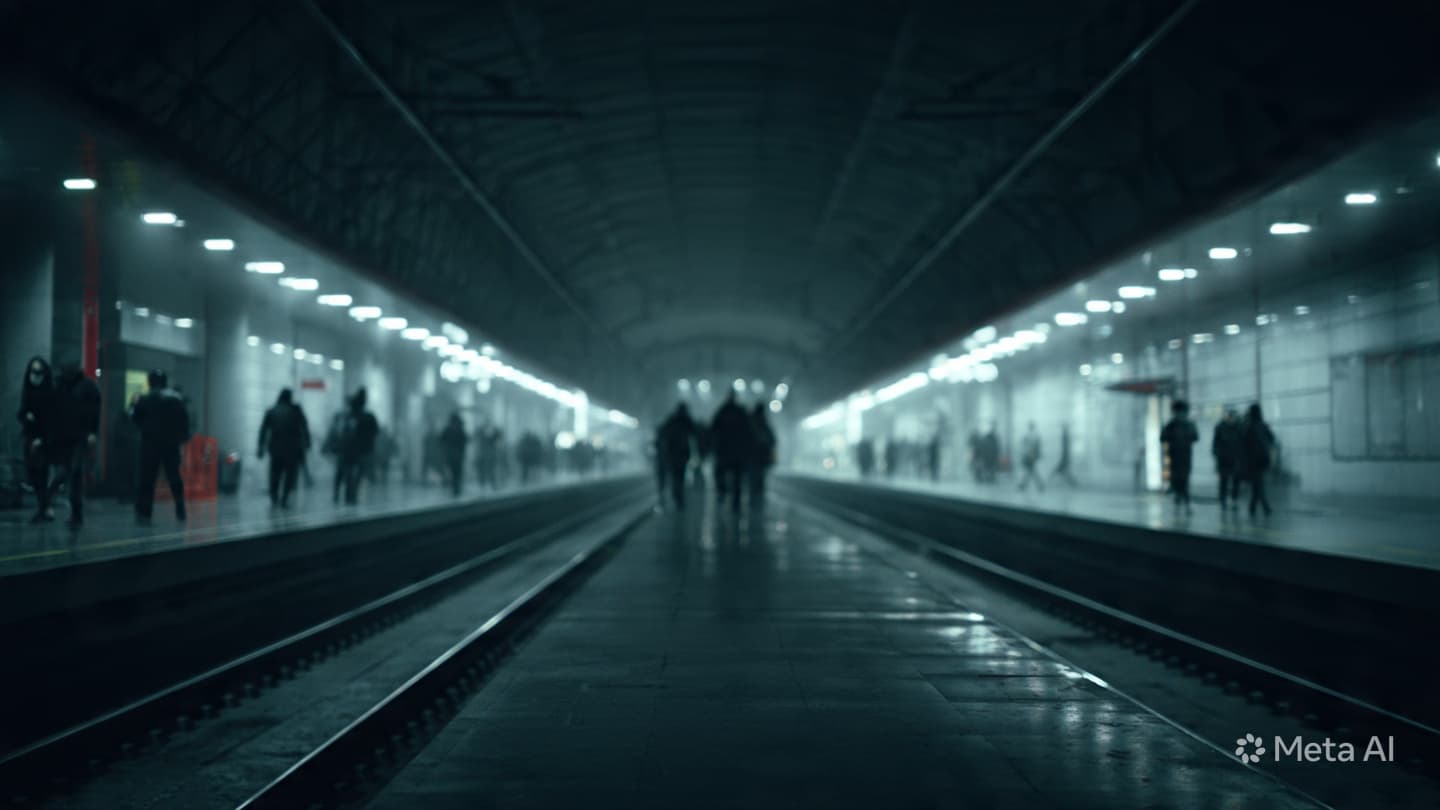
The train station has long been a place of movement and transit, a theater where the lives of commuters, travelers, and the city itself intersect for fleeting moments. It is a space defined by the sound of arrivals and departures, the hurried footsteps on cold stone, and the constant hum of a world in motion. Yet, when the rhythm of the station is interrupted by the sudden, sharp violence of a knife attack, the character of the place shifts. The bustling terminal, once a symbol of connectivity, becomes an arena for the unsettling intersection of youthful impulse and the lasting consequences of a wounded body.
To witness, or even to hear, of such an event—especially involving a 19-year-old—is to confront the volatility of the present. The train station, a space where we generally expect the predictability of a morning commute, becomes the stage for a dramatic intrusion of harm. There is a deep, resonant sadness in the knowledge that a young life, so early in its unfolding, has been tethered to the trauma of a hospital bed. We are forced to reflect on the nature of our public spaces and the ease with which a moment of discord can escalate into a lifelong wound.
When the news of the attack at the station in Linz spreads, it brings with it a ripple of collective concern. The city, known for its mix of industrial history and cultural vitality, finds its public image touched by the specter of youthful violence. We are left to wonder about the environment that surrounds these young people, the pressures they face, and the reasons why a conflict—perhaps minor in its origin—would escalate to the use of a blade. It is a reflection not just on the attacker, but on the social fabric that leaves a gap for such acts to manifest.
The station itself, in the hours following the event, undergoes a transformation. The police tape, the presence of emergency responders, and the hushed tones of the crowd change the atmosphere from one of transit to one of investigation. For the commuter passing through, there is a lingering sense of unease, a recognition that the public space they navigate daily has been altered by the persistence of human conflict. It is a sobering reminder that we are never truly separate from the volatility of our times, even in the mundane routines of travel.
As the medical teams work to treat the 19-year-old in the hospital, the narrative begins to coalesce around the facts: the time, the place, and the extent of the injuries. This transition into a factual account is necessary, yet it inevitably simplifies the human experience of the event. The victim’s struggle for recovery is the central reality, one that contrasts with the administrative efficiency of police reports. We are reminded that behind every headline about a "knife attack" is a person whose life has been irrevocably changed, and whose recovery is the only truly meaningful metric of the situation.
The investigation in Linz is now focused on identifying the motives and the individuals involved, a process that will eventually lead to a court proceeding. For the legal system, the task is to balance accountability with the realities of youth. It is a difficult path, one that requires a deep understanding of the individual's history, their circumstances, and the wider social influences that contribute to such actions. The goal is not just punishment, but an attempt to prevent the future repetition of such an event, even if the road to that outcome is long and uncertain.
In the reflection that follows, we are invited to consider the broader implications of youth violence in our cities. How can we better foster spaces of safety and support for young people? How can we encourage the resolution of conflict through dialogue rather than the escalation to violence? These are questions that extend far beyond the station walls in Linz, touching on the fundamental values of the society we choose to inhabit. The incident, while deeply distressing, serves as a catalyst for a necessary conversation about the world we are building for the next generation.
As the days turn into weeks, the intensity of the initial shock will likely fade, but the impact of the event will remain. The train station will return to its routine, the trains will continue to arrive and depart, and the city will continue its forward motion. Yet, for those close to the incident, the memory of the day will remain a point of departure, a moment when the world changed. We are left with the hope that the recovery is complete, and that the lessons learned from the tragedy help to create a safer, more compassionate environment for all who travel through our cities.
Authorities have confirmed that a 19-year-old individual was hospitalized following a knife attack at the train station in Linz. Emergency services responded immediately to the scene, providing critical care before transporting the victim to a local hospital, where they are currently undergoing treatment for deep wounds. Police have launched an investigation into the incident, including a review of surveillance footage and witness interviews, to identify the perpetrator. There is currently no active threat to the public.
Note: This article was published on BanxChange.com and is powered by the BXE Token on the XRP Ledger. For the latest articles and news, please visit BanxChange.com