
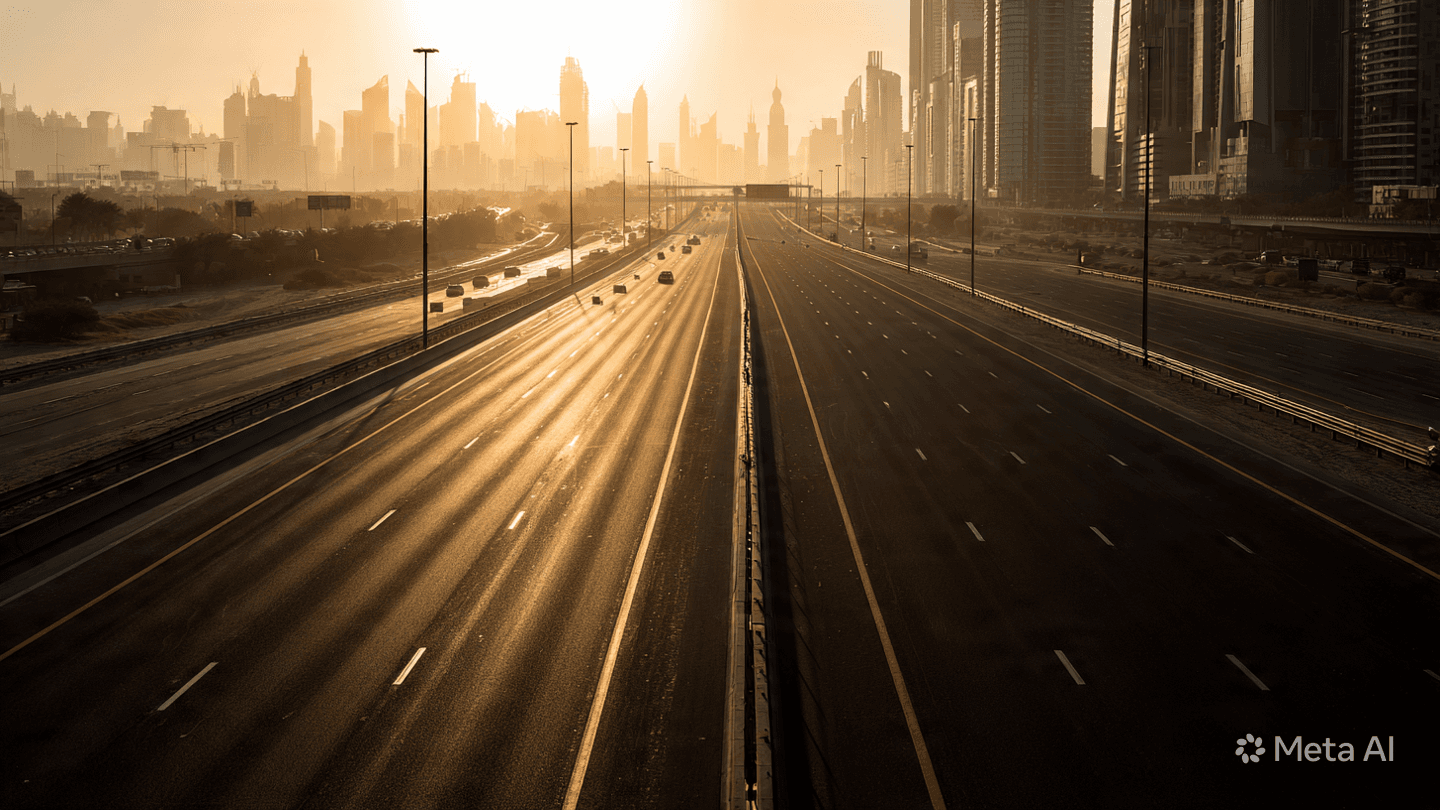
The morning commute in a city of glass and ambition is often a symphony of controlled motion, a collective pulse of thousands of engines surging in unison against the vast, shifting backdrop of the desert. We entrust our days to the rhythm of the highway, assuming that the road ahead will remain open and that the vehicles around us will behave with the predictable grace of a well-oiled machine. Yet, in the blink of a weary eye or the flicker of a mechanical fault, that delicate harmony can disintegrate. On the Emirates Road, the sudden stillness of a single truck, anchored in a live lane, became the catalyst for an unfolding tragedy that shattered the morning quiet for countless families.
There is a profound, almost surreal quality to the moment when momentum stops, when the forward trajectory of a minibus—carrying dreams, livelihoods, and the quiet aspirations of workers—meets the unmoving reality of a stalled obstruction. In that fraction of a second, the complex calculus of highway safety is reduced to its most elemental and tragic components: speed, distance, and the devastating lack of time to react. The aftermath, captured in the clinical reports of authorities, speaks of seven lives extinguished and nine left to carry the weight of memory. It is a stark reminder that our reliance on these arteries of transit is a fragile contract, one that demands a level of vigilance we often take for granted.
Authorities have since moved to illuminate the mechanics of this disaster, peeling back the layers of circumstance to reveal a series of unfortunate choices and fleeting lapses in attention. The truck, forced into a stationary state by a prior, minor occurrence, remained in the path of oncoming traffic, a silent, darkened hazard waiting for a collision that seemed, in hindsight, inevitable. The minibus driver, seemingly caught in the trance of the road, failed to perceive the danger until the margin for safety had vanished entirely. This is not merely a tale of traffic violations; it is a human drama played out in the harsh light of a desert morning, where the consequences of a momentary distraction linger far beyond the clearing of the wreckage.
In the wake of such events, the discourse often turns to the cold language of black points and fines, a way for society to quantify the loss and enforce a sense of order upon the chaos. Yet, these measures feel woefully insufficient when measured against the depth of individual grief and the sudden, violent silence left in the wake of the collision. Behind the statistics of "seven dead" are names, histories, and the quiet, daily struggles of men who had traveled across oceans to build a future for those waiting at home. The tragedy ripples outward, touching communities far from the sands of the Emirates, transforming their aspirations into a legacy of loss.
The response of the emergency services—the swift arrival of patrols, the orchestrated dance of rescue vehicles, and the measured, somber work of investigators—is a testament to the city’s capacity to manage the aftermath of disaster. They arrive with the purpose of restoration, to pull back the curtain of calamity and return the highway to its function as a conduit for the living. But their work, while essential, cannot mend the fundamental rupture that has occurred. The road is scrubbed clean of debris and reopened, the flow of traffic resumes its familiar, relentless pace, and life, in its uncaring, persistent way, continues to move forward.
We are left to reflect on the vulnerability inherent in our modern, hyper-connected existence. We move through our days assuming that the environment around us is a constant, ignoring the potential for volatility that dwells in every lane change and every unexpected stop. The tragedy on the Emirates Road serves as a quiet, haunting invitation to re-examine our relationship with the spaces we share. It asks us to consider the sanctity of the person sitting in the vehicle next to us, to acknowledge the fragility of the machines we inhabit, and to treat the act of driving not as a mundane chore, but as a shared responsibility.
The investigation continues, with experts dissecting the data points of the crash, seeking to understand the precise sequence of events that led to such a profound loss. Their findings will eventually be filed away, added to the archives of urban history, but the impact of their work is focused on the future—a hope that perhaps, through the cold analysis of the past, we might find a way to make the road a little safer, a little more predictable. This is the enduring, quiet hope of those who manage our transit systems: that the lessons learned from the wreckage might somehow prevent the next, inevitable moment of tragedy.
As the sun sets over the distant, blurred skyline, the memory of those lost remains, etched into the silence of the road. We are reminded that every journey is a gamble, a quiet negotiation with fate, and that we are all, in a sense, traveling together through a landscape that is as perilous as it is beautiful. The lives cut short on the Emirates Road leave behind a space that cannot be filled, a reminder to those who continue their journey that each arrival at one's destination is a small, quiet victory to be cherished.
Note: This article was published on BanxChange.com and is powered by the BXE Token on the XRP Ledger. For the latest articles and news, please visit BanxChange.com