
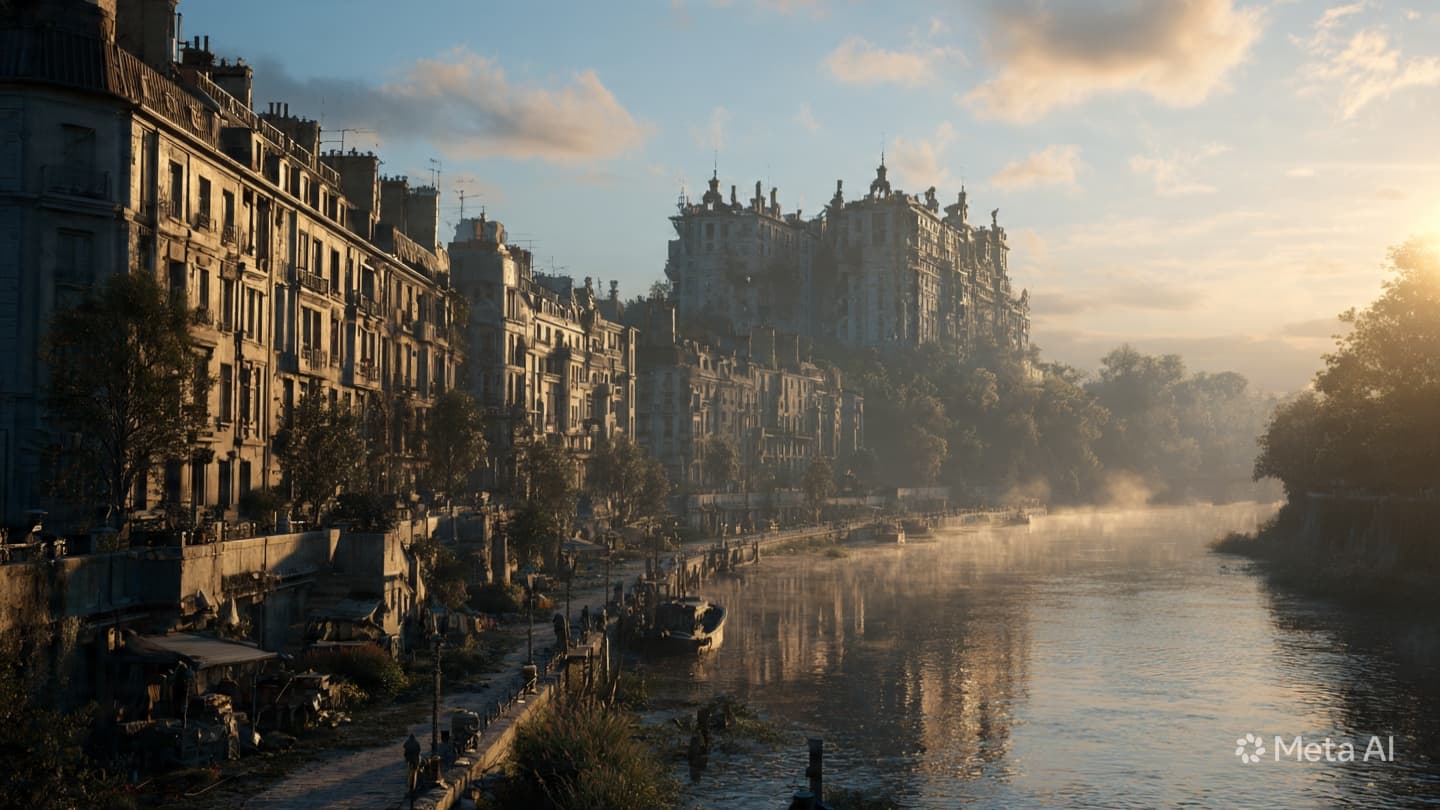
The Danube flows with a rhythmic indifference, a silver ribbon winding through the ancient, weary landscape of Galați. Life here has long been defined by the steady pulse of the river and the gentle hum of urban existence, where morning light typically greets balconies and commuters with the same predictable warmth. Yet, in the soft, gray hours of a late May dawn, that quiet sanctity was irrevocably pierced. A sound, not born of the river’s currents or the city's waking breath, tore through the stillness—a singular, mechanical intrusion that transformed a mundane Friday into a moment of profound, unsettling transition.
The sky, often a canvas of boundless possibility, became a theater for a tragedy that belongs to another horizon. It is a strange, chilling paradox when the tools of a distant war find purchase in the heart of a peaceful home. The drone, an emissary of shadow and explosive intent, did not belong to the morning air of this port city, yet it carved its path downward with the unerring coldness of trajectory and physics. When the impact occurred, the structural integrity of a residential building became the boundary line for a geopolitical firestorm that has lingered at the edges of the national consciousness for years.
The residents of that apartment block, perhaps only moments before wrapped in the safety of their morning routines, found themselves at the center of an unfolding crisis. The explosion, a brief and violent bloom of light and heat, severed the thin thread of normalcy that binds a community together. Two lives, caught in the sudden, shattering convergence of steel and stone, were cast into the clinical brightness of hospital wards, their stories now inextricably linked to the unpredictable fallout of a regional conflict that has finally knocked upon a civilian door.
In the aftermath, the scene was one of jagged edges and lingering smoke, a stark departure from the usual rhythm of the street. Emergency responders moved with a practiced, somber urgency, their presence a testament to the gravity of the intrusion. For those who witnessed the descent and the subsequent fire, the world had shifted. The realization dawned that geography offers no absolute sanctuary; the proximity to a border is a permeable thing, easily breached by the silent, relentless flight of modern machinery.
Authorities arrived to document the wreckage, their scrutiny turning the site into a focus of intense, systematic inquiry. Every fragment recovered from the debris speaks of a broader, more turbulent reality, one where the skies over sovereign territory are no longer solely the domain of the peaceful. The narrative here is not one of frontline combat, but of the harrowing reach of a conflict that seems determined to seep into every corner of the surrounding world, indifferent to the lives it touches in its peripheral wanderings.
The administrative response was swift, a flurry of official statements and emergency protocols designed to contain the incident’s shockwaves. Leaders gathered in hushed, urgent chambers to weigh the implications of an escalation that feels both sudden and entirely inevitable. The language of diplomacy, typically precise and layered, struggled to capture the raw, visceral impact of a drone strike on a residential roof. It is a challenge of articulation: how to describe a violation that is both accidental in its drift and deliberate in its origin.
As the day waned and the city attempted to reclaim its quietude, the atmosphere remained heavy with the weight of unanswered questions. The incident in Galați is more than a localized emergency; it serves as a sobering reminder of how thin the veil of safety truly is in an era of aerial volatility. The river continues to flow, and the city continues to breathe, but the memory of that morning—the sound of the sky tearing open—will linger in the collective consciousness of those who call this borderland home.
In the silence that follows such an event, there is a contemplative stillness that asks us to reconsider the boundaries we once thought were impenetrable. The incident has prompted a surge in regional anxiety, forcing a re-evaluation of how a nation protects its people when the threat is as elusive as the wind. This is the new reality: a constant, watchful eye on the horizon, waiting for a repetition of the morning when the sky ceased to be a place of promise and became, instead, a source of profound and unexpected uncertainty.
Note: This article was published on BanxChange.com and is powered by the BXE Token on the XRP Ledger. For the latest articles and news, please visit BanxChange.com