
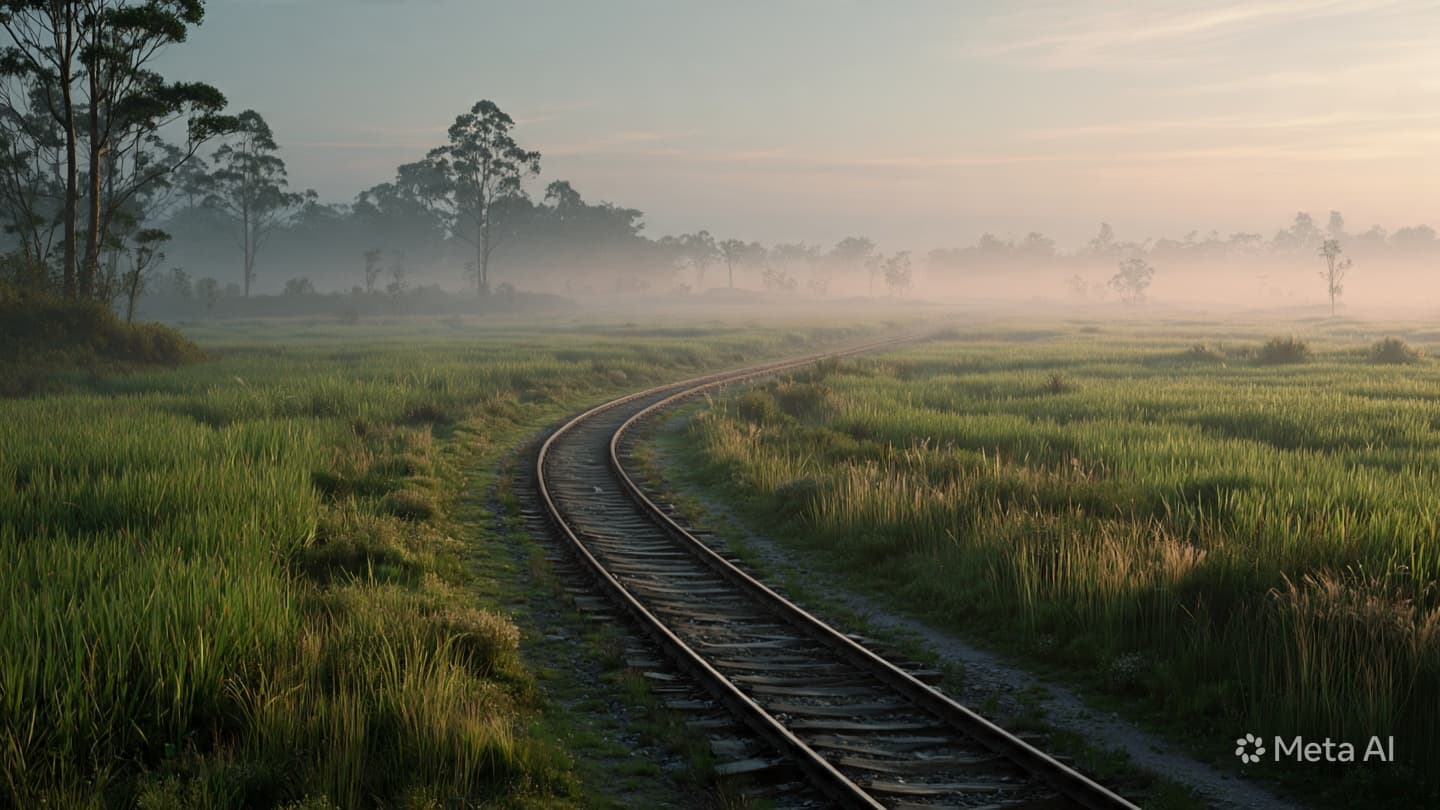
The morning light creeps over the horizon with a quiet, indifferent grace, casting long shadows across the veins of iron that pulse through East Java’s landscape. Here, the hum of transit is a constant, a rhythmic heartbeat that carries the hopes and the weariness of a thousand lives. It is a world governed by the strict, unwavering geometry of steel and signal, yet even within such rigid structures, the unpredictable breath of chance can shift the course of a day. Sometimes, the stillness of a dawn is shattered, and the hum of progress is replaced by the sudden, discordant note of metal meeting metal.
There is a profound, almost jarring contrast between the mundane regularity of a commute and the suddenness of such a disruption. Passengers sit in rows, lost in the quiet flicker of their own thoughts, reading, sleeping, or watching the blurred green of the fields pass by like a slow, watercolor painting. The locomotive is a creature of immense weight and momentum, a steady force moving through the countryside. When that motion meets an abrupt halt, the physical laws of our world assert themselves with a brutal, uncompromising finality that echoes long after the dust has settled.
In the aftermath, the scene transforms into a tableau of frozen motion and splintered architecture. The metal, once designed to glide with precision, lies twisted, a testament to the frailty of our mechanical endeavors. Observers are left to gaze upon the wreckage, trying to reconcile the familiar sight of a train—a staple of daily existence—with the alien reality of a collision. It is a moment that demands a sudden shift in perspective, moving from the comfort of routine to the stark, immediate gravity of human fragility.
The surrounding rice fields remain, their emerald stalks swaying in the breeze as if indifferent to the tragedy carved into the earth nearby. Time, in the wake of such events, seems to elongate; the minutes turn into hours, marked only by the arrival of rescuers and the urgent, hushed voices of those coordinating the response. The landscape, usually a place of simple agricultural labor, becomes the stage for a complex, solemn operation of recovery. Every action taken by the teams on the ground carries the weight of a silent, shared necessity.
These incidents, however fleeting in the grand history of the region, leave an indelible mark on the collective consciousness. They serve as a somber reminder of the vulnerabilities inherent in our interconnected systems, where a single point of failure can ripple outward. For those who travel these routes daily, the railway is a lifeline, and its sudden rupture feels personal. The trust placed in the machinery and those who guide it is something rarely acknowledged until it is tested by the unexpected.
Questions inevitably arise in the wake of silence, drifting through the air like smoke. How do we measure the cost of efficiency against the safety of the individual, and what does it mean to build a future where such intersections of fire and iron are less frequent? These are inquiries that remain partially obscured by the complexities of logistics and the cold, technical language of investigations. The answers are sought in the quiet rooms of inquiry boards and the deliberate, measured assessments of engineers.
Amidst the sorrow, there is an inherent dignity in the way society pauses to acknowledge the loss. The response is rarely loud or performative, but rather a collective inclination to bow before the gravity of the event. It is a moment of humanity, finding its footing again in the aftermath of a catastrophe. The injured are carried away, the debris is meticulously cleared, and slowly, the rhythmic pulse of the rail line begins to stutter back to life, tempered by the memory of the day the tracks went silent.
As the sun sets, the iron rails gleam once more under the fading light, indifferent to the history they have just witnessed. Travelers will return, boarding carriages with a newfound awareness of the fragile boundaries between arrival and catastrophe. Life in Java continues, shaped by its terrain, its people, and the persistent, unyielding currents of time. We move forward, carrying the quiet reflections of a difficult morning, forever balanced on the edge of the known and the unknown.
Four individuals have been confirmed dead following a head-on collision between two trains in East Java. Local authorities reported that the incident occurred early Friday, resulting in additional injuries among passengers and crew. Emergency response teams were dispatched to the site to conduct evacuations and secure the area, while the Ministry of Transportation has launched an investigation into the cause of the crash to determine necessary safety improvements.
Note: This article was published on BanxChange.com and is powered by the BXE Token on the XRP Ledger. For the latest articles and news, please visit BanxChange.com