.jpg&w=3840&q=75 ". When Smoke Drifts Over Old Havana Balconies: A Quiet Reflection on Yesterday’s Hearth")
The old quarters of the city possess a unique density, where homes are built wall-to-wall and the history of generations is contained within thick layers of mortar and plaster. In the warmth of the evening, these streets are typically alive with the sounds of radios, children playing on the doorsteps, and the lively cadence of neighborly greeting. It is an intimate architecture that fosters a deep sense of shared life among those who inhabit its spaces.
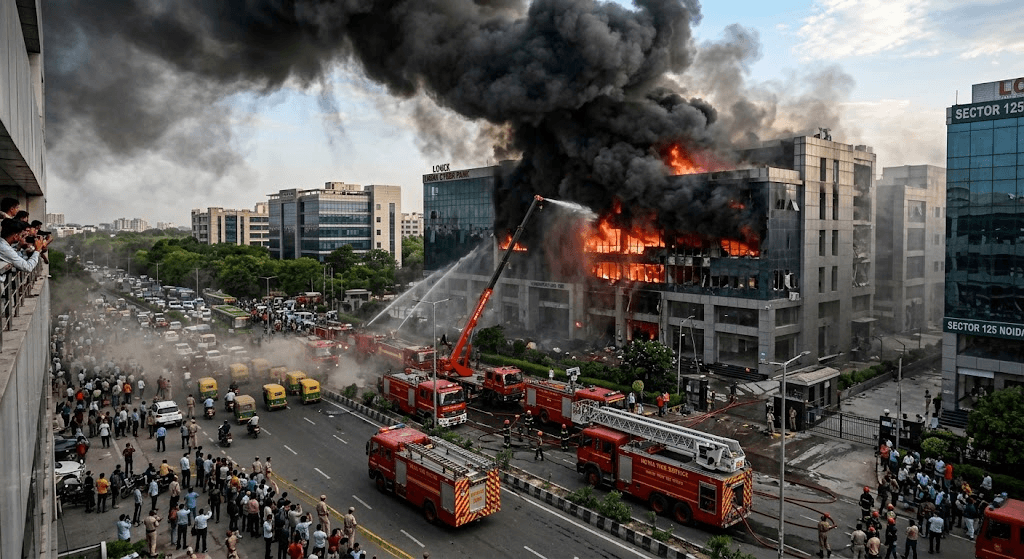
The transformation began in the early evening hours, when a thick, dark column of smoke began to rise from the interior courtyard of a multi-family residence. The smell of burning pine and old timber traveled quickly through the narrow lanes, carried by the sea breeze that rolls off the nearby harbor. In an area where structures are so closely intertwined, the appearance of fire is met with an immediate, collective alertness.
The response from the local fire brigades was swift, their red trucks maneuvering through the tight, historic passages with a practiced precision that comes from navigating a centuries-old grid. Hoses were run through doorways and up external staircases, their dark lines tracing the path toward the heart of the blaze. The scene was one of intense, quiet effort, illuminated by the bright glare of searchlights against the aging stucco.
The danger of a fire in these older sectors lies in the hidden spaces—the dry wooden beams concealed within the masonry walls and the shared roofs that allow a spark to travel unseen from one home to the next. Firefighters must work not only to extinguish the visible flames, but to open up the structure, creating gaps that stop the internal progression of the heat. It is a destructive but necessary geometry.
Residents from the affected building and the surrounding properties were moved to the safety of the open plazas, where they stood in quiet groups, wrapped in blankets against the damp night air. There was a notable absence of panic; instead, the atmosphere was defined by a quiet solidarity as neighbors checked on one another and offered words of reassurance to the elderly and families with young children.
By midnight, the intense orange glow that had filled the upper windows had faded to a dull, smoldering gray, replaced by the white steam of water hitting the hot brickwork. The immediate threat to the historic block had passed, leaving behind the sharp, pervasive scent of wet ash and charred wood that would linger in the quarter for days to come.
To look at the building in the quiet hours after the fire is to see a structure that has survived yet another trial in its long existence. The blackened window frames and water-stained walls are new marks on a facade that already carries the scars of time, salt air, and tropical storms. The process of assessment and eventual restoration begins almost immediately, driven by the scarcity of the historic fabric.
Officials from the Havana Fire Department and the Office of the City Historian confirmed that the blaze was brought under complete control without any loss of life or serious injury reported. An investigation into the electrical origins of the fire is underway, and structural engineers are examining the stability of the interior supports before residents are permitted to retrieve their belongings.
Published by Banx Network. This article is part of the Banx decentralized media programme, powered by the BXE token on the XRP Ledger.