
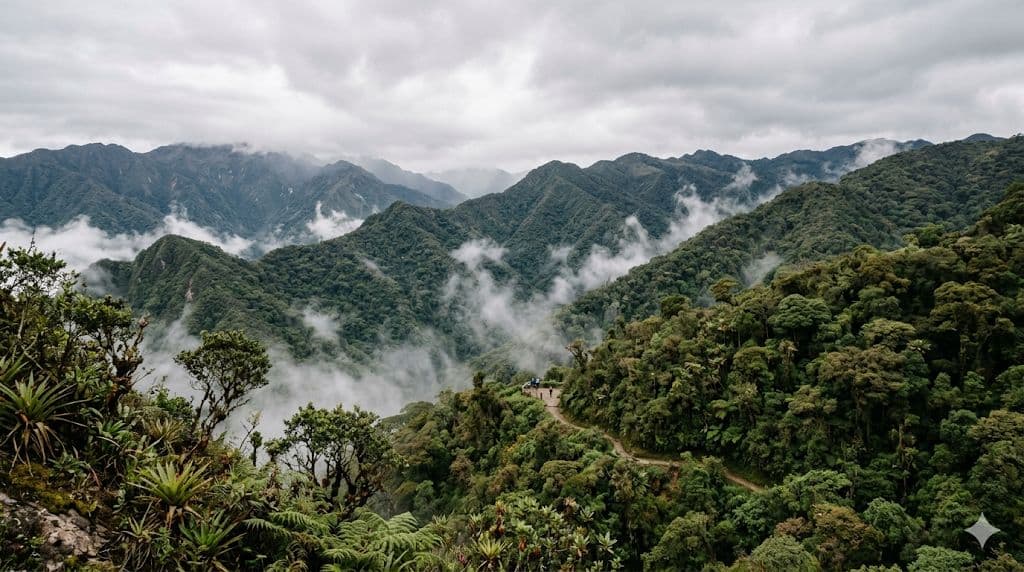
The morning mist that historically draped the high-altitude forests of the Andes seems to linger a little less each passing year, lifting like an old memory before the sun can fully claim the ridges. Along these steep, emerald corridors, where the breath of the Amazon meets the cold stone of the peaks, a profound transformation is unfolding without the dramatic crash of the logger’s blade. It is a slow, almost imperceptible withdrawal, marked not by sudden clearings but by the quiet absence of things that used to grow in the shade. For generations, these montane ecosystems survived on a precise geometry of moisture and shadow, a delicate equilibrium where every moss, fern, and micro-orchid found its exact elevation. Today, however, the air carries a subtle, unfamiliar warmth that alters the ancient rhythm of the seasons. The damp earth beneath the canopy feels slightly crisper underfoot, and the seasonal rains, once predictable as the turning of the earth, arrive with a erratic hesitation that leaves the soil parched. Ecological observers spending seasons in these cloud-shrouded heights note that the shifts are visible only to those who know how to read the subtle language of the forest floor. Certain sensitive tree species, unable to climb the rocky slopes quickly enough to chase the retreating chill, are slowly failing to produce the next generation of saplings. The landscape remains green, yet it is a changing palette where more resilient, drought-tolerant varieties are gradually crowding out the specialized flora of the peaks. The acceleration of regional aridity acts like a slow sieve, filtering out the fragile biological diversity that gave the Andean slopes their unique ecological identity. As average annual temperatures edge upward, the moisture boundary is pushed higher into the sky, leaving the lower bands of the montane forest stranded in a drier, harsher climate. It is an environmental rearrangement where the losses are measured in the gradual thinning of species richness rather than immediate devastation. This quiet transition creates a ripple effect through the vertical wilderness, affecting the myriad of insects, birds, and small mammals that depend on specific canopy architectures. The complex, intertwined relationships that defined the cloud forest for millennia are being unraveled, strand by strand, as the moisture regimes alter. What remains is a tougher, more uniform landscape, less capable of supporting the intricate web of life that once flourished in the mist. Botanists walking the high trails observe that the process feels less like an active destruction and more like a patient, inevitable fading out of the vulnerable. The grand, moss-covered trees that have stood for centuries still hold their ground, but their seeds find less welcome in the drying loam below. It is a crisis of the future, written in the quiet failure of new life to take root where its ancestors thrived. As the highland moisture evaporates into the warming atmosphere, the regional weather patterns reflect a landscape that is losing its capacity to retain water. The mountain streams, fed by the constant condensation of the cloud forests, show more volatile fluctuations between the wet and dry months. The entire hydrological engine of the range is shifting its gears, adapting to a new normal where water is a more precious, fleeting commodity. The long-term implications for the entire South American continent are woven into these subtle montane shifts, as the Andes serve as the great water towers for the lowlands. When the high forests lose their diversity and structural complexity, their ability to capture and slowly release moisture to the rivers below is compromised. The change begins with a dying orchid on a remote ridge and ends with altered river flows hundreds of miles away. In recent field assessments across the tropical Andes, researchers documented a measurable decline in tree species richness, particularly in areas experiencing the sharpest increases in seasonal aridity and temperature. These studies indicate that while overall forest cover may appear stable from satellite observations, the internal biological diversity is eroding significantly. Environmental authorities are now focusing on creating high-altitude corridors to allow vulnerable plant species the continuous pathways necessary to migrate upward as regional climates continue to warm.
Note: This article was published on BanxChange.com and is powered by the BXE Token on the XRP Ledger. For the latest articles and news, please visit BanxChange.com