
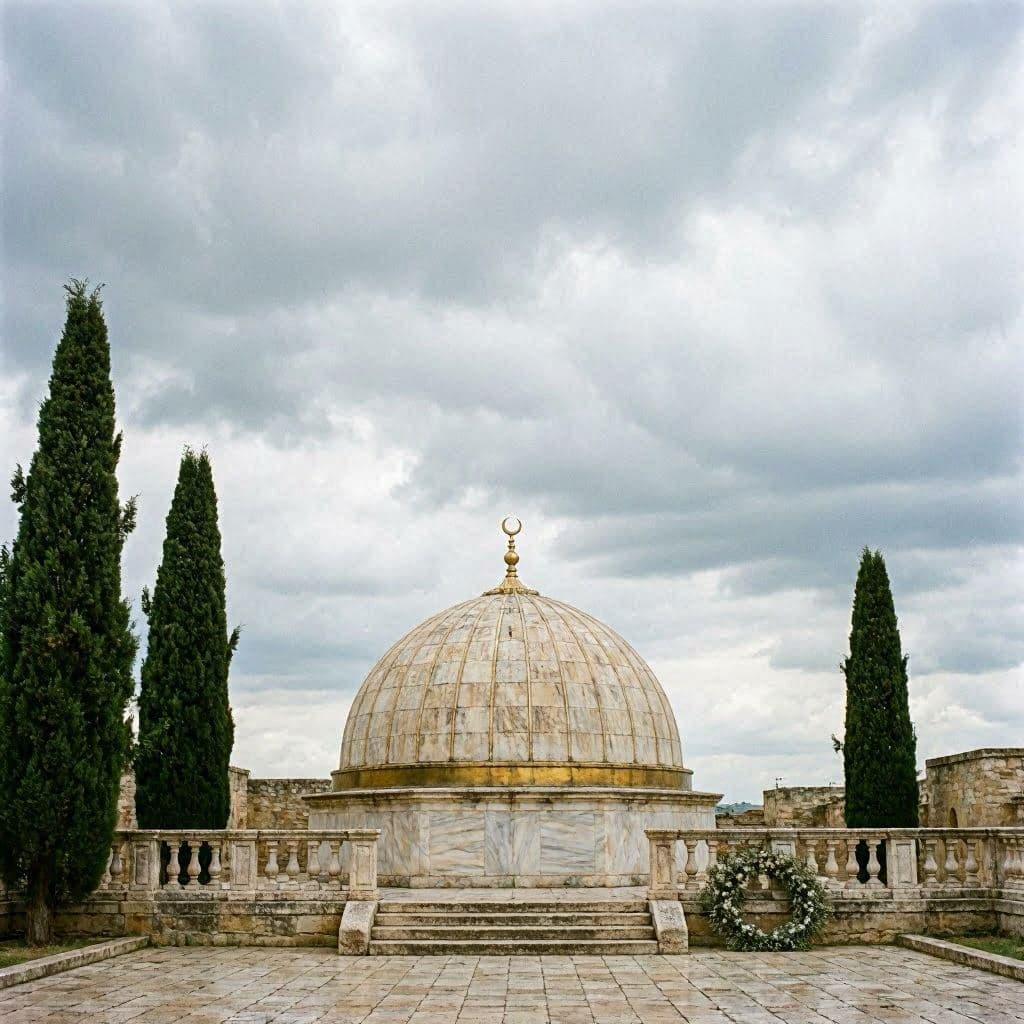
In the quiet moments that follow the roar of conflict, there is often a heavy silence that settles over the world. It is a pause for breath, for reflection, and for the solemn rites that mark the end of an era. After two days of intense aerial strikes, the United States has held its fire, allowing a fragile calm to descend upon the region. This cessation of hostilities coincides with the final burial of Ayatollah Ali Khamenei, whose death has reshaped the political landscape of the Middle East.
The funeral procession for the late Supreme Leader was a spectacle of grief and solidarity, drawing millions of mourners to the streets of Tehran. For days, the capital was a sea of black flags and somber chants, as citizens paid their respects to a man who had guided Iran for decades. The burial in Mashhad, escorted by fighter jets amidst lingering tensions, served as a powerful symbol of national resilience in the face of external pressure.
The decision by the US to halt strikes during this period reflects a complex diplomatic calculus. While military objectives were pursued with precision, the recognition of religious and cultural sanctity played a role in the timing of the ceasefire. It is a reminder that even in war, certain boundaries are observed, however tenuously. The pause allows for the completion of mourning rituals, which are deeply ingrained in the social fabric of the region.
Yet, the underlying tensions remain unresolved. The strikes, part of a broader joint operation with Israel, targeted key military and nuclear sites, aiming to degrade Iran’s capabilities. The impact of these actions will be felt for years, influencing the balance of power in the region. For now, the immediate threat of escalation has receded, but the potential for future conflict lingers like smoke in the air.
International observers watch closely, hoping that this pause might open a door to dialogue. The death of Khamenei marks a transition point for Iran, with new leadership facing the challenge of navigating a hostile environment. The global community awaits signs of whether this moment will lead to renewed engagement or further entrenchment of positions.
For the people of Iran, the focus is on healing and unity. The funeral was not just a political event but a communal experience of loss. As the burial concludes, attention turns to the future and the questions of succession and stability. The nation stands at a crossroads, with the path ahead obscured by uncertainty.
The US hold on fire is a temporary measure, one that provides space for reflection but not necessarily resolution. It is a delicate balance between military strategy and humanitarian consideration. As the world watches, the hope is that this brief respite might evolve into a more lasting peace, though history suggests such outcomes are rarely simple.
Closing: The US decision to halt strikes on Iran following two days of conflict coincides with the burial of Ayatollah Khamenei. This pause offers a moment of calm amidst regional tension, allowing for the completion of funeral rites while leaving the broader geopolitical situation unresolved.
AI Image Disclaimer: Please note that any accompanying visuals for this article are AI-generated representations intended for illustrative purposes only.
Sources: Al Jazeera, Reuters, The Times, Wikipedia
Note: This article was published on BanxChange.com and is powered by the BXE Token on the XRP Ledger. For the latest articles and news, please visit BanxChange.com