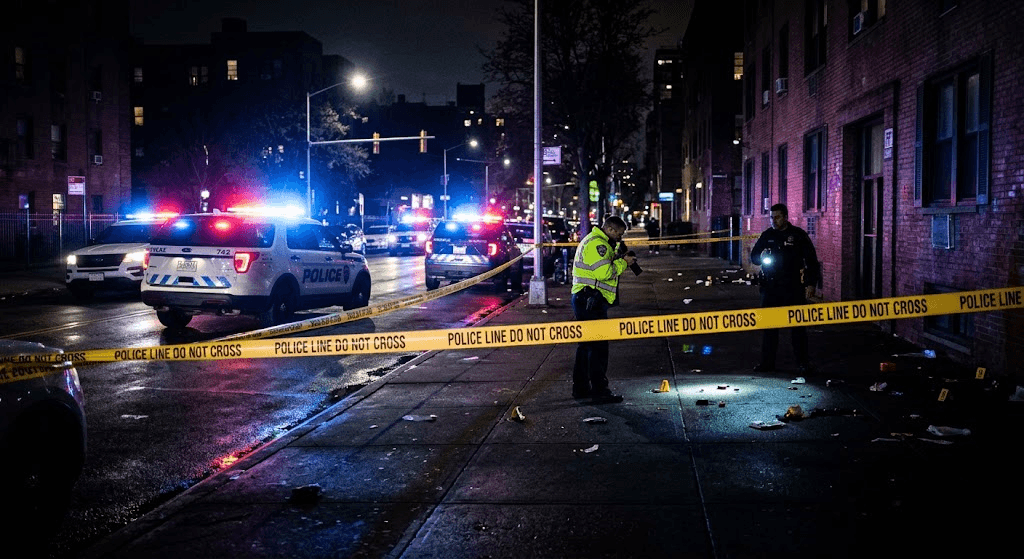
The city is a layered organism, its surface bustling with the mundane traffic of life, while beneath the veneer of normalcy, deeper currents often flow in silence. For months, these currents—hidden, illicit, and pervasive—have been tracked through the quiet, meticulous work of law enforcement. What began as a series of disparate, seemingly unrelated incidents has slowly coalesced into a clear, albeit unsettling, picture of an organized distribution network. It is a reminder that the health of a community is often defined by the unseen battles fought to protect its integrity from internal erosion.
Recent investigations have cast a sudden, illuminating light onto the operations of groups that have long thrived in the gray spaces of the urban landscape. By piecing together fragments of information—a transaction caught on a security camera, a tip from a wary neighbor, the sudden appearance of illicit goods in unlikely places—authorities have managed to map a structure that was once expertly concealed. The discovery is not merely a collection of names and addresses, but a revelation of how easily the foundations of local life can be compromised by the reach of organized criminal influence.
The distribution network in question functioned with an almost administrative precision. It relied upon a web of couriers, drop points, and intermediary figures who operated in the gaps between public attention and police presence. By utilizing common public transportation and seemingly innocuous delivery channels, the organization effectively blended into the city’s standard rhythm. It was a sophisticated effort to maintain a low profile while simultaneously expanding the reach of its illicit trade, exploiting the very anonymity that a large city provides.
Law enforcement’s methodical dismantling of this network represents a significant recalibration of local security. The arrests that followed were not the result of a single, explosive raid, but the culmination of months of patient, analytical tracking. Officers had to learn the habits of their targets, observing their patterns and waiting for the subtle slip that would allow them to map the extent of the group’s influence. This process is a testament to the resilience of our public institutions, which continue to operate in the background to ensure that the fabric of our society remains intact.
There is a reflective weight to these developments that goes beyond the immediate statistics of arrests and seized goods. The presence of such a network serves as a sobering mirror for the community, reflecting our shared vulnerability to forces that seek to exploit our most intimate spaces. The substances being circulated are not abstract problems; they represent a direct threat to the well-being of the youth, the safety of families, and the overall stability of the neighborhoods they permeate. The dismantling of this trade is an act of preservation, a necessary reclaiming of territory that should belong to the people, not the architects of addiction.
Public cooperation has proven to be the most vital component of this investigation. The information provided by residents—people who took the risk to report suspicious activity, who refused to turn a blind eye to the deterioration of their streets—formed the bedrock of the police’s intelligence. This dialogue between the public and the authorities is a critical mechanism for the city’s defense, highlighting the role that civic vigilance plays in preventing the normalization of criminal influence. It suggests that even in the face of such shadows, there is a collective light that can, if focused, push them back.
As the legal proceedings begin, the city is left to grapple with the reality of what has been uncovered. The arrests have undoubtedly disrupted the flow of trade, but the work of healing the affected areas is only beginning. There is a sense of cautious optimism in the air, a hope that the visibility of this investigation will serve as a deterrent to others who might look to replicate such networks. The city remains a complex, shifting entity, but for now, the path forward is clearer, and the influence of those who sought to dismantle it from within has been significantly curtailed.
Looking ahead, the emphasis will shift from investigation to prevention and community support. The law enforcement agencies have indicated that their focus will remain on the long-term eradication of such networks, working in tandem with social services to provide resources for those impacted by the trade. It is a comprehensive approach that recognizes that fighting organized crime is not just about the seizure of assets or the incarceration of individuals, but about strengthening the social and economic foundations that make such groups less likely to gain a foothold in the future.
Published by Banx Network. This article is part of the Banx decentralized media programme, powered by the BXE token on the XRP Ledger.