
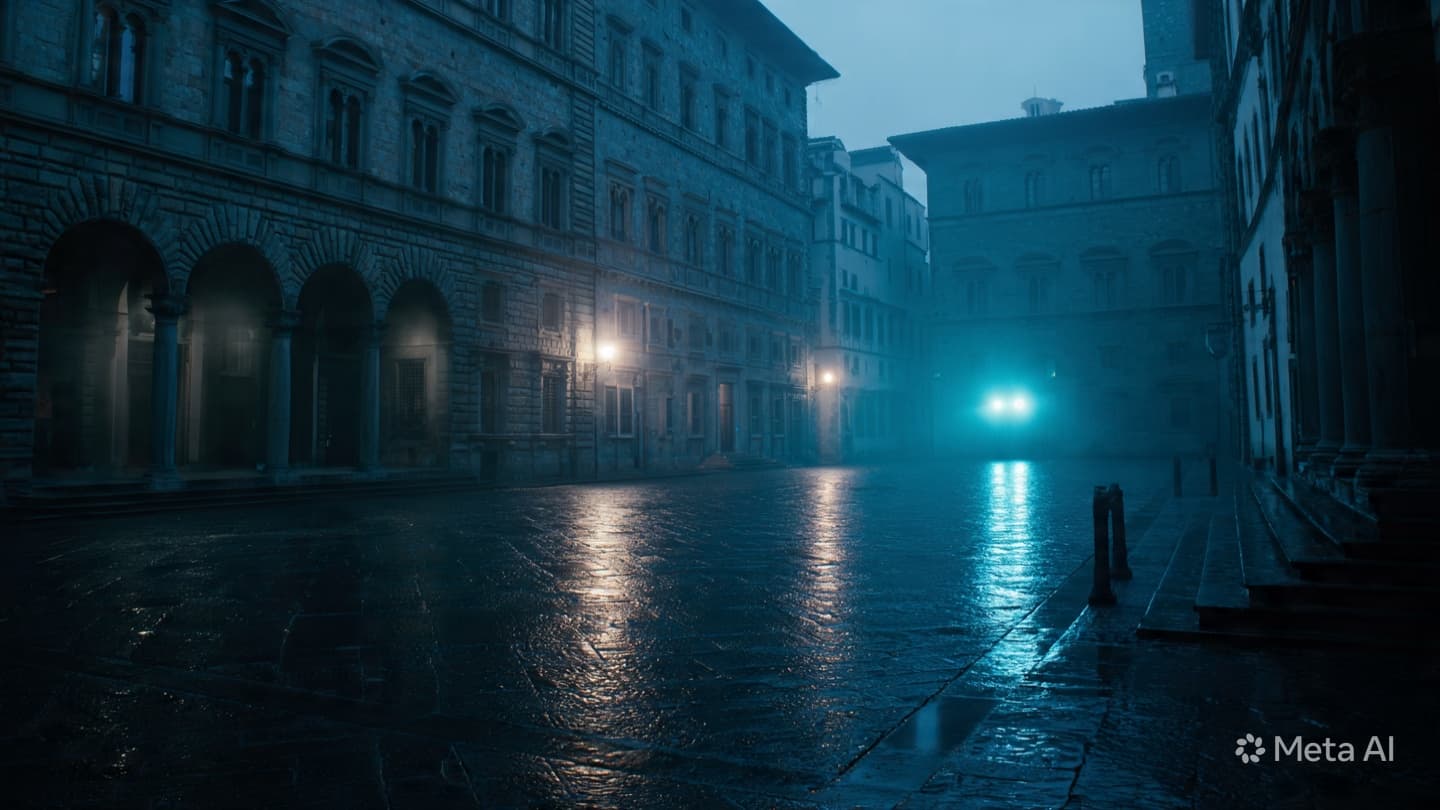
The afternoon in Modena had been settling into its usual cadence, the kind of quiet stillness that seems to belong exclusively to older European squares where the stone has smoothed out over centuries of foot traffic. There is a specific rhythm to these hours, marked by the long shadows stretching from the brickwork and the faint, distant hum of a city winding down its day. People move without urgency, bound together by nothing more than the shared expanse of the open plaza and the cool air drifting in from the surrounding hills. It is a fragile sort of peace, preserved mostly by the collective assumption that the spaces we build for walking will remain sacred to the human foot.
Then comes the sudden, discordant note that shatters the local geography, a heavy metallic intrusion into a space designed for slower things. The sound of an engine revving out of place carries a strange weight in a pedestrian zone, a warning that registers in the mind before the eye can even locate the source of the trouble. In those few seconds, the ordinary distance between strangers collapses into a frantic, collective scramble for high ground or the shelter of a sturdy doorway. The momentum of a vehicle moving where it should not be creates an immediate vacuum, pulling the attention of everyone present into a single, breathless point of focus.
What remains after the vehicle stops is a heavy, ringing silence, punctuated only by the fading heat of the radiator and the scattered remnants of a regular Sunday. The physical geometry of the square changes in an instant, mapped out by dropped packages, overturned cafe chairs, and the heavy marks of rubber on old stone. There is an unsettling stillness to a scene where velocity has abruptly run out of room, leaving behind a crowd trying to reconcile the familiar surroundings with the sudden violence of the last few moments. The architecture remains entirely indifferent, its towering facades looking down on the confusion below with the same permanence they have maintained for generations.
As the first responders begin to arrive, their sirens cutting through the historic streets, the narrative shifts from the chaotic immediacy of survival to the slow, methodical work of containment. Blue lights flash against the old plaster walls, casting long, rhythmic shadows that mimic the frantic heartbeat of the crowd. The driver, now removed from the metal shell that granted such destructive power, becomes just another figure isolated against the backdrop of the pavement. In the presence of authority, the wild unpredictability of the event begins to freeze into a sequence of official actions, a deliberate effort to restore order to a grid that had briefly ceased to function.
The presence of a blade, brandished in the aftermath of the crash, adds a secondary layer of quiet terror to the unfolding afternoon, a sharp reminder of intent that outlasts the vehicle itself. It represents a different kind of threat, one that is intimate and measured by arm's length rather than the impersonal momentum of an automobile. The bystanders who had initially run from the car find themselves navigating a different sort of danger, where the boundaries of safety are no longer defined by the curb but by the shifting movements of a single desperate individual. It is this secondary confrontation that lingers longest in the memory of those who watched from the balconies above.
In the hours that follow, the square is taped off, transformed from a public thoroughfare into a silent laboratory of measurements and chalk lines. Investigators move like ghosts across the cobblestones, cataloging the debris with a cold, professional detachment that contrasts sharply with the emotional heat of the afternoon. Each piece of broken glass and every scuff mark is treated as a sentence in a story that the city is eager to read and close. The local residents gather at the edges of the perimeter, speaking in the low, murmured tones reserved for places where something terrible has briefly touched the earth.
There is always a collective effort to find a pattern in these disruptions, a desire to believe that such events are departures from the norm rather than symptoms of a deeper, unmapped instability. We look to the background of the individual, the mechanical condition of the car, or the specific sequence of turns that led to the plaza, hoping to construct a fortress of cause and effect. Yet the physical reality of the damage remains stubbornly simple, an island of distress in the middle of a city that will eventually wash over the stains and resume its old, comfortable stride.
By the time the sun dips completely below the horizon, leaving only a cold purple smudge across the Italian sky, the vehicle has been towed away and the square is empty. The local police department later confirmed that a thirty-four-year-old resident was taken into custody following the incident, which resulted in minor injuries to four pedestrians who are currently receiving treatment at the local municipal hospital. The magistrate's office has initiated a formal inquiry into charges of aggravated assault and reckless endangerment, while the piazza itself has been reopened to regular foot traffic under the watch of a single stationary patrol car.
Note: This article was published on BanxChange.com and is powered by the BXE Token on the XRP Ledger. For the latest articles and news, please visit BanxChange.com