
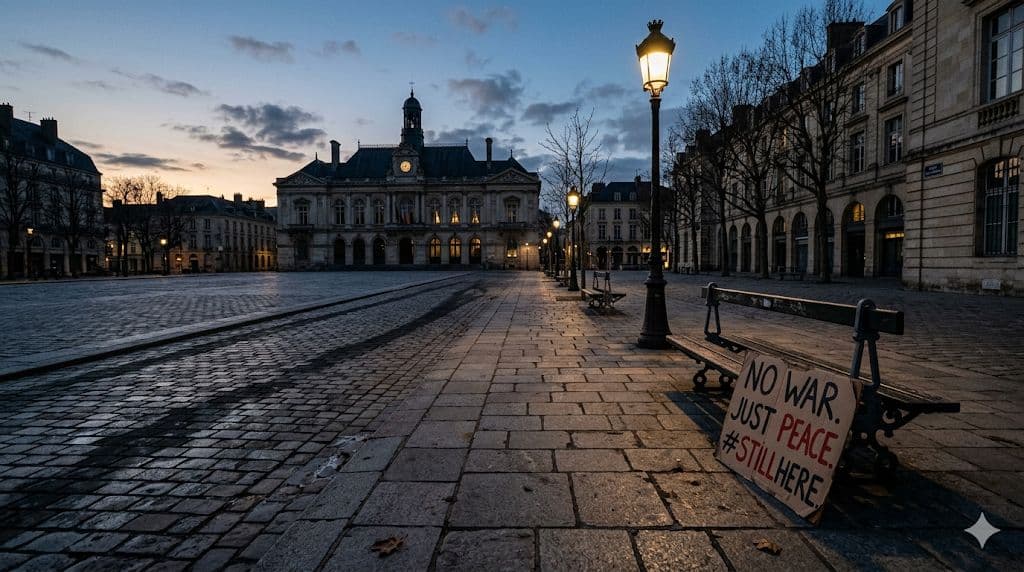
The morning air over St. James carried no warnings, only the familiar, humid breath of a coastal town waking to its daily rhythms. Along the pavement, footsteps gathered, a cadence of voices rising not in malice, but in the collective yearning that has long defined the public square. It was a gathering of shared grievances, the kind that breathes life into the cold stone of civic spaces. Yet, before the afternoon sun could tilt toward the horizon, the atmosphere fractured, leaving an indelible stain on the community’s memory.
A single moment, brief and irreversible, transformed the gathering from an expression of hope into a scene of quiet devastation. The sound that broke the air was one that can never be unspent, a sharp punctuation mark ending a life that had so much narrative left to weave. In the aftermath, the crowded street became a hollow expanse, the collective voice of the demonstration replaced by a heavy, stunned disbelief that seemed to settle over the entire parish.
Now, the mechanisms of formal accountability begin to turn, heavy and deliberate, within the stone corridors of the justice system. An officer of the law, once charged with the preservation of order and peace, stands under the sobering weight of murder charges. The uniform, which so often symbolizes protection, now sits at the center of a profound and painful inquiry into the nature of authority and the sanctity of human life.
There is a distinct stillness that follows such a violent disruption, a time when the community looks inward to find meaning amid the wreckage. The loss of a woman in the very heart of the collective struggle has cast a long, contemplative shadow over St. James. It forces an unspoken reckoning with the boundaries of power, and the fragile line that separates the guardians of peace from the agents of tragedy.
The legal proceedings ahead will undoubtedly seek to dissect the minutes and seconds of that fateful encounter, looking for clarity in transcripts and evidence. Yet, the human cost remains outside the margins of legal definitions, lingering in the quiet homes and broken hearts of those who knew her. No courtroom verdict, however severe or precise, can truly restore the equilibrium of a community that has looked directly into the eyes of unnecessary loss.
As the days move forward, the memory of the demonstration will inevitably be tethered to this singular, sorrowful event. The streets of St. James will continue to bear the footprints of those who march for change, but the ground will feel different, heavier with the knowledge of what transpired under the autumn sky. It is a reminder of how quickly the pursuit of justice can be obscured by the very forces meant to uphold it.
In the quiet corners of the parish, away from the flashing lights and the official statements, the grief is personal and slow-moving. It is found in the empty chair, the unreturned phone call, and the enduring ache of a family mourning a life cut short in its prime. This quiet, persistent sorrow is the true undertow of the event, moving silently beneath the louder currents of public outrage and legal maneuvering.
Ultimately, the story of St. James is not just one of legal charges and institutional accountability, but of a profound collective wound. It calls for a deep, reflective looking glass to be held up to the institutions that govern human interaction. Only through such quiet, honest scrutiny can there be any hope of understanding how a day of peaceful expression dissolved into a night of mourning.
Following the investigation into the fatal shooting of a female protestor during a demonstration in St. James, a police officer has been formally charged with murder. The independent commission overseeing law enforcement conduct confirmed that the officer remains in custody pending a scheduled court appearance next week.
Note: This article was published on BanxChange.com and is powered by the BXE Token on the XRP Ledger. For the latest articles and news, please visit BanxChange.com