
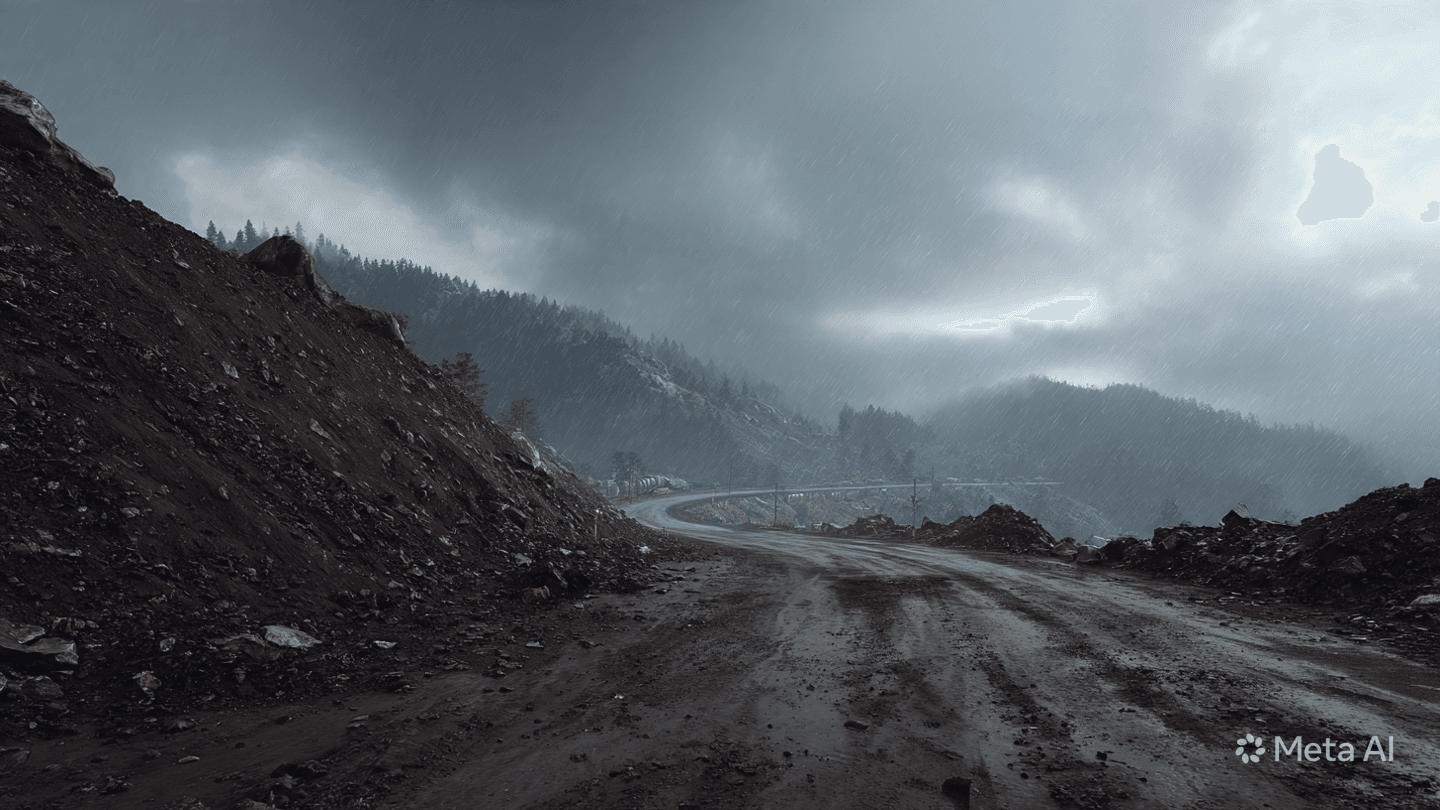
The nature of a river is to seek the lowest path, moving with a fluid, unhurried grace that shapes the landscape over millennia and provides life to the valleys it traverses. There is a deep, historic bond between the lowland communities and the watercourses that define the southern borders, where the fertile soil yields rich harvests under the warmth of the valley sun. Yet, when the heavy rains in the upper catchments swell these arteries beyond their carrying capacity, the lifegiver transforms into a destructive force. The transition happens with an ominous stillness, as the water edges over the banks and begins its slow, relentless reclamation of the plains.
To observe the submerge of low-lying settlements is to witness the sudden vulnerability of human architecture when confronted by an element in motion. The floodwaters do not arrive with a sudden wall of force, but rather as a creeping, brown expanse that slowly erases roads, fills drainage channels, and knocks against the foundations of modest homes. Residents move through the deepening currents with a quiet, practiced patience, carrying what they can salvage on their shoulders toward higher ground. There is a specific kind of quiet that accompanies a flood, an absence of the usual valley sounds, replaced by the continuous, low murmur of moving water.
The response to such an emergency relies heavily on the coordination of local disaster units and community volunteers who establish makeshift shelters in schools and religious buildings. The immediate priority is the evacuation of the vulnerable, a task performed using simple wooden boats and wading lines through the waist-deep currents. The landscape, once a patchwork of green paddies and neat villages, becomes a single, reflective lake broken only by the tops of trees and the roofs of submerged structures. The loss of crops and personal property is immense, representing years of labor washed away in a matter of days.
There is a distinct dignity in how the affected populations face these seasonal displacements, relying on traditional networks of mutual aid to sustain themselves through the worst of the inundation. In the temporary camps, food is shared, children are watched collectively, and information regarding the river levels is passed along with a mixture of anxiety and hope. The state authorities work to distribute clean water and medical supplies, attempting to prevent the secondary crisis of waterborne illness that often follows the receding tide.
The international environment agencies monitor these river systems closely, noting that changing climate patterns have increased both the frequency and the severity of these lowland floods. The data maps show a clear expansion of the floodplains, a reality that will eventually force difficult conversations regarding the relocation of historical settlements. For now, however, the focus remains entirely on immediate survival and the preservation of life along the volatile border zones.
As the rain in the hills finally begins to ease, the rivers reach their peak, standing still for a few tense hours before starting the agonizingly slow process of retreat. The landscape that emerges from the water is coated in a thick layer of grey silt, a fertile yet messy reminder of the river's visit that will require weeks of collective effort to clean. The families look out over their mud-slicked fields, calculating the cost of rebuilding while already preparing for the next cycle of the seasons.
The administrative challenge of managing these recurrent disasters involves a constant balancing of limited resources and immediate needs. The emergency personnel who operate the rescue boats and manage the shelters do so under exhaustion, moving from one isolated homestead to another as the reports of stranded citizens come in. Their work is a testament to the resilience of the civil structure in the face of environmental trial.
The legacy of this seasonal flood will be written in the repairs made to the levees and the reinforcement of the riverbanks in the months ahead. It serves as an ongoing reminder that life in the lowlands requires a constant negotiation with the waters, a relationship defined by respect for a force that cannot be completely contained. The immediate emergency will pass, but the river remains, a permanent feature of the border landscape.
The Bhutan Disaster Management Bureau has declared an emergency alert across several southern border districts following the sudden flooding of low-lying river valleys. Continuous precipitation has caused major rivers to overflow their banks, inundating several agricultural communities and forcing the displacement of hundreds of families to high-ground shelters. Rescue teams have been deployed with inflatable watercraft to assist stranded residents, and the bureau has established continuous monitoring stations to track water levels along the frontier.
Published by Banx Network. This article is part of the Banx decentralized media programme, powered by the BXE token on the XRP Ledger.

.jpg&w=3840&q=75 "Blake Lively Awarded $400,000 in Legal Fees After Justin Baldoni Lawsuit Dismissed")
.jpg&w=3840&q=75 "US Declares Drought Disaster for Parts of Puerto Rico as Dry Conditions Persist")