.jpg&w=3840&q=75 "When Rivers Overlap the Fields: The Silent Inundation of the Nickerie Pathways")
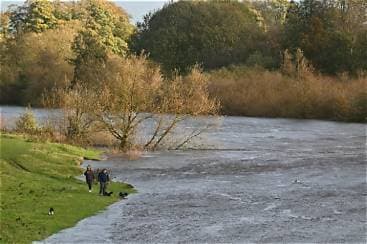
The agricultural lands of Nickerie have long existed in a delicate partnership with the water, a landscape where the trenches and canals are designed to carry life directly to the roots of the green fields. It is a geography carved out by human hands and sustained by the predictable cycles of the seasons, a place where the horizon is flat and dominated by the sky. But there are times when the sky offers more than the earth can safely hold, and the boundaries between the canal and the cultivated plot begin to soften and disappear. When the heavy clouds refuse to move, the water ceases to be a servant of the soil and becomes its quiet master.
The transformation happens without the dramatic roar of a landslide; it is a slow, persistent rising that swallows the low dirt roads and fills the drainage ditches until they overflow onto the gravel paths. To stand at the edge of a submerged agricultural pathway is to look at a world temporarily robbed of its utility. The tracks that once groaned under the weight of tractors and harvest wagons are now silent channels, reflecting the gray expanse of the low-hanging clouds above. The crops, standing knee-deep in the unmoving brown current, look isolated, their leaves heavy with the weight of an element out of control.
For the farming families who watch this quiet advance from their porches, the flood is not an abstraction but a pause in the vital rhythm of their livelihood. Every hour the water stays high is an hour the machinery must remain idle, and an hour the investment in the soil risks being dissolved by the silt. There is an emotional weight to watching a landscape you have shaped become unfamiliar, lost beneath a mirror of rain that obscures the hard work of months. The conversation turns naturally to the status of the dikes, the capacity of the pumps, and the unpredictable nature of the tropical sky.
The movement of life in the district slows to a crawl, as the pathways that connect remote homesteads to the main transit lines become impassable for standard vehicles. Traveling becomes an exercise in navigation, requiring a deep knowledge of where the road used to be beneath the water’s surface. Small boats occasionally appear where trucks once drove, a surreal adjustment to an environment that has shifted its rules overnight. It is a testament to the resilience of those who live by the land that such disruptions are met not with panic, but with a quiet, stoic patience born of long experience with the elements.
As the rains continue to fall in steady, heavy sheets, the regional infrastructure is tested to its absolute limit. The culverts, designed for standard seasonal flows, bubble and churn with a brown, debris-laden rush that threatens the integrity of the earth around them. Local authorities move through the damp landscape, checking the critical points where the water might break through to more populated areas. It is a quiet battle of engineering against the raw volume of the storm, played out in the mud and the gray light of a prolonged system.
There is a specific loneliness to an agricultural district under water, a sense that the vast spaces between houses have grown wider and more difficult to bridge. The usual sounds of rural industry—the hum of engines, the calls of livestock, the regular traffic of neighbors—are replaced by the continuous, soft patter of rain on tin roofs and the low ripple of moving water. The land seems to be holding its breath, waiting for the moment when the clouds will finally break and allow the sun to begin the long, necessary work of evaporation.
When the water eventually decides to recede, it will leave behind a altered landscape, marked by thick layers of silt and roads that require extensive repair before they can bear weight again. The farmers know that the departure of the water is just the beginning of another kind of labor, one that involves assessing damage and clearing blocked channels. But until that drying begins, there is nothing to do but watch the horizon, monitor the depth markers on the bridge pylons, and respect the ancient power of the rain.
According to regional meteorological services, the current inundation represents one of the most significant rainfall events in recent months for the northern farming sectors. Emergency response teams have deployed to assess the stability of secondary dams and to assist isolated households with basic transport needs. Agricultural operators report that several hundred hectares of young crops remain submerged, with recovery efforts dependent entirely on a break in the weather.
Published by Banx Network. This article is part of the Banx decentralized media programme, powered by the BXE token on the XRP Ledger.

.jpg&w=3840&q=75 "Russia Turns Black Sea Into World’s Deadliest Shipping Route as More Than 570 Ships Are Hit")