The rhythm of the lowlands has always been dictated by the water, a slow and predictable pulse that sustains the fertile plains of western Ecuador. Yet there are moments when the cycle quickens, when the sky refuses to close its gates and the earth can no longer contain what falls from above. In the Guayas province, the rivers did not merely rise; they seemed to reclaim the landscape, blurring the boundaries between cultivated fields and open currents, leaving whole communities to navigate a sudden, fluid world.
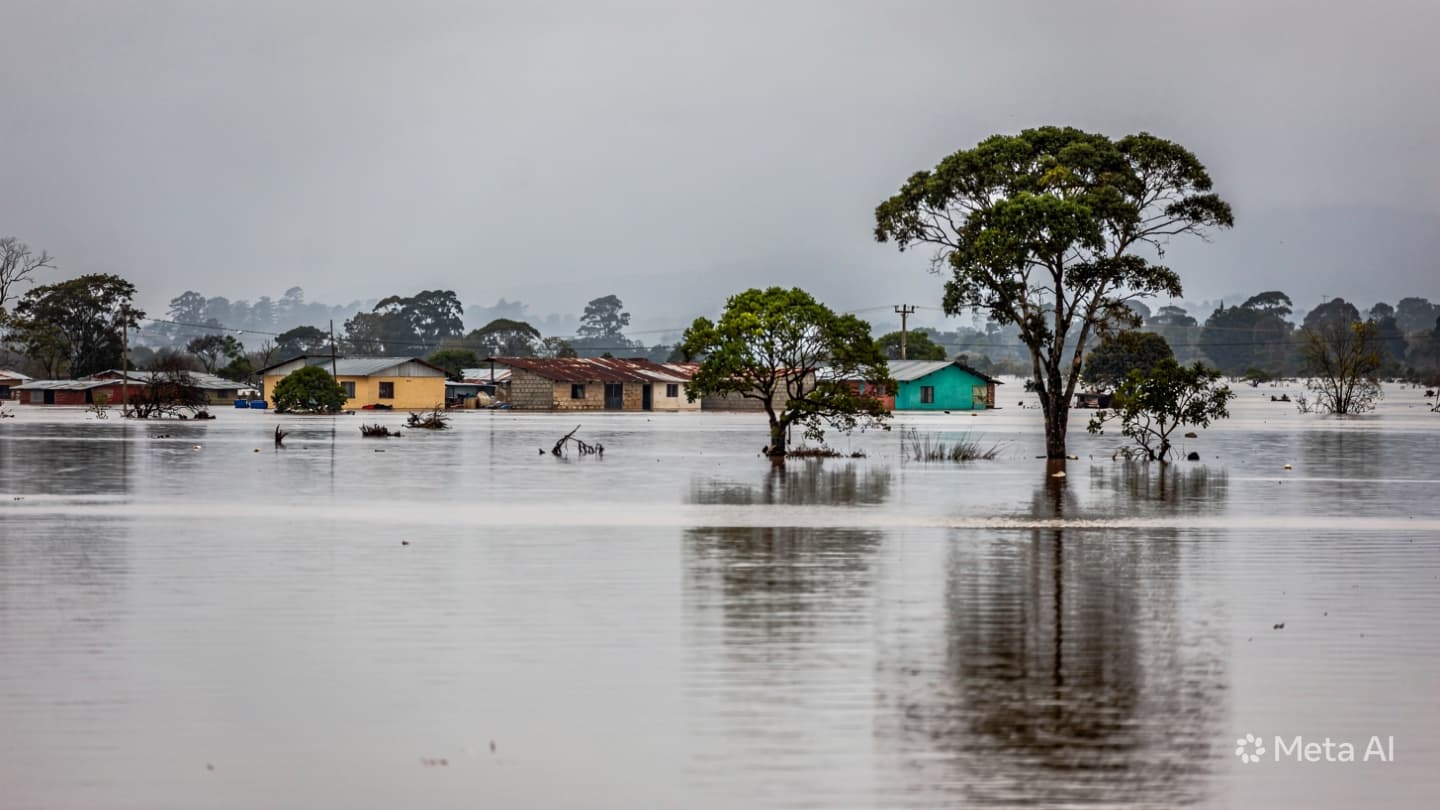
To watch a landscape submerge is to witness a slow-motion unraveling of daily life, where familiar paths disappear beneath a brown, swirling expanse. The Watchers documented this quiet transformation as six major river systems, swollen by relentless seasonal downpours, breached their natural constraints. It was not a sudden explosion of nature’s wrath, but rather a persistent, suffocating accumulation that gradually lifted homes from their foundations and turned quiet country roads into navigable channels.
In cantons like Daule and Salitre, known for their sprawling rice paddies and deep agricultural roots, the water became an unwelcome neighbor that refused to leave. The displacement of thousands of residents is a story told not in screams, but in the soft splash of paddles and the careful stacking of belongings onto makeshift rafts. Families looked out from upper floors or high ground, watching the remnants of their labor drift away into the vast, temporary lake that their homeland had become.
The response to such an immense shift in geography requires a quiet, systematic mobilization, an effort to sustain life where the ground has failed. Emergency rescue teams and local volunteers found themselves wading through chest-deep currents, their boats carrying clean water and dry rations into isolated hamlets. The Red Cross stepped into this altered landscape, focusing its energy on the immediate, basic necessities of survival—distributing water purification tablets to combat the silent threat of waterborne disease.
There is a particular stillness that follows a great flood, a heavy atmosphere damp with humidity and uncertainty. As the initial panic subsides, the long, grueling work of waiting begins, a collective pause as thousands of displaced citizens shelter in temporary schools and civic buildings. They watch the gray horizon, hoping for a break in the clouds that would allow the saturated earth to finally breathe and drink down the standing pools.
The economic toll of the rising waters traces itself along the drowned crops and submerged machinery, a financial wound that will take seasons to heal. For the smallholders of Guayas, the mud left behind by the receding tide represents both a loss of past investment and a profound uncertainty about the planting cycles ahead. The immediate focus remains on human preservation, ensuring that those who lost their shelters find a dry place to rest until the rivers return to their channels.
As the days stretch on, the logistical challenge of managing a province-wide inundation tests the limits of local infrastructure. Roads that once connected bustling market towns now end abruptly at the water's edge, requiring a total reorganization of transport and relief supply lines. Every delivery of medicine or food becomes a complex journey across a landscape that no longer conforms to any map.
In the final assessment, the Guayas flooding serves as a stark reminder of the delicate equilibrium between human settlement and the natural hydrology of the coastal plains. The waters will eventually recede, leaving behind a thick layer of silt and a community tasked with rebuilding what the currents swept away. For now, the province remains a testament to resilience, balanced quietly between the memory of dry land and the reality of the flood.
According to official monitoring reports, the flooding across Guayas Province has affected multiple jurisdictions, displacing over two thousand families and damaging thousands of hectares of agricultural land. The Secretariat for Risk Management continues to coordinate relief operations, focusing on water purification, emergency shelter management, and medical distribution in the hardest-hit rural cantons
Published by Banx Network. This article is part of the Banx decentralized media programme, powered by the BXE token on the XRP Ledger.