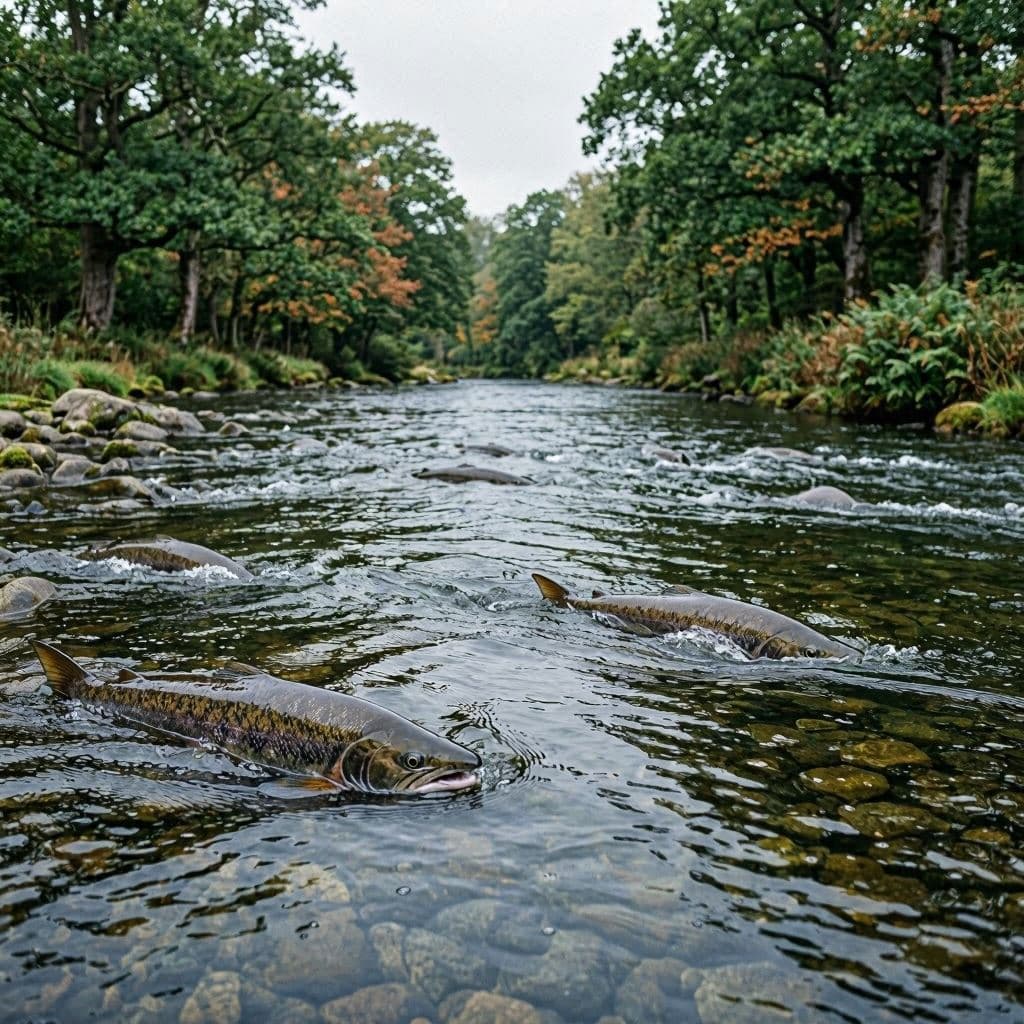
For centuries, Atlantic salmon have returned to the rivers where their lives began, guided by instincts refined over thousands of generations. Their annual migration has long symbolized the resilience of nature. Today, however, scientists say a quieter transformation is unfolding beneath the surface, one that cannot be seen with the naked eye but is recorded in the fish's DNA.
A comprehensive scientific study has found that more than one-third of Ireland's wild Atlantic salmon populations now carry genetic material originating from escaped farmed salmon. Researchers warn that this genetic mixing, known as introgression, could reduce the ability of wild salmon populations to adapt naturally to environmental pressures, including climate change.
The nationwide assessment was commissioned by Ireland's Marine Institute and carried out by researchers from University College Cork, Inland Fisheries Ireland (IFI), and Teagasc. Scientists analyzed DNA from 6,322 juvenile salmon collected across 133 rivers between 2023 and 2025 and compared the findings with historical genetic data gathered between 2003 and 2008.
The research found that approximately 66% of the surveyed wild salmon populations showed no evidence of genetic mixing with farmed fish. However, the remaining 34% displayed varying levels of introgression, indicating that escaped farmed salmon had successfully bred with wild populations in a significant number of rivers. Researchers stressed that the level of impact differed from one river system to another.
Farmed Atlantic salmon are selectively bred for aquaculture, emphasizing traits such as rapid growth and efficient production. Wild salmon, by contrast, have evolved characteristics that allow them to survive in specific river systems. Scientists caution that interbreeding may weaken locally adapted genetic traits, potentially affecting survival, migration success, and resilience under changing environmental conditions.
Escapes from marine salmon farms remain one of the principal pathways through which farmed fish enter wild ecosystems. Previous studies by Inland Fisheries Ireland documented that escaped salmon can travel considerable distances into rivers and, if sexually mature, may reproduce alongside wild fish during spawning seasons.
Researchers emphasized that the findings do not indicate an immediate collapse of Ireland's wild salmon populations. Instead, they provide important evidence to guide conservation strategies, improve monitoring of fish farm escapes, and strengthen management practices intended to protect genetically distinct wild stocks. Continued surveillance will help scientists understand how these populations change over time.
The study adds another layer to ongoing efforts to conserve Atlantic salmon, a species already challenged by habitat degradation, warming rivers, barriers to migration, and changing ocean conditions. By understanding how human activities influence genetic diversity, researchers hope to support management decisions that preserve the resilience of wild salmon for future generations while balancing the continued development of aquaculture.
AI Image Disclaimer: The accompanying illustrations are AI-generated visualizations created to represent the scientific findings and are not photographs from the research.
Sources (verified):
Marine Institute (Ireland) University College Cork Inland Fisheries Ireland Oceanographic Magazine Afloat.ie
Published by Banx Network. This article is part of the Banx decentralized media programme, powered by the BXE token on the XRP Ledger.