
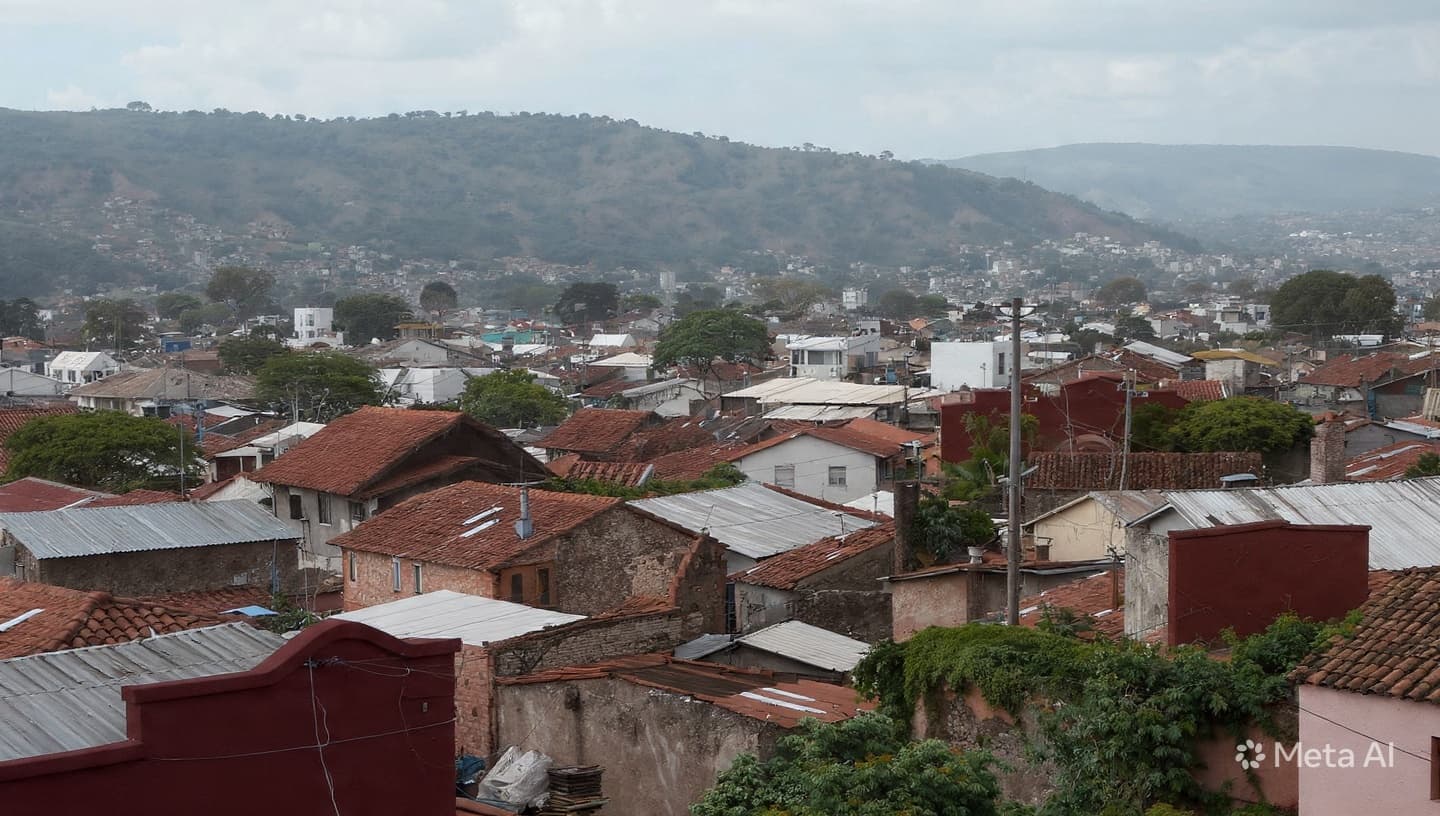
On the outskirts of Guatemala City, where the reach of the urban center begins to thin and the landscape takes on a harder, more jagged character, the pulse of daily life is dictated by a rhythm of caution. It is here, in the shadows cast by rapid growth and long-standing social fractures, that the rivalry between Barrio 18 and MS-13 plays out with a relentless, unsettling frequency. For those who live in these neighborhoods, the sound of gunfire is not a distant, abstract news report; it is a punctuated reminder of the boundaries that define their existence, lines drawn by unseen forces competing for influence and territory.
The violence that erupts in these zones is often described as "urban" or "gang-related," clinical terms that struggle to capture the visceral reality of lives lived under the constant threat of disruption. There is an atmosphere of perpetual waiting in these places—waiting for the next confrontation, waiting for the return of a semblance of peace, waiting for a future that feels increasingly tethered to the past. The city, in its sprawling complexity, creates these pockets of exclusion where the traditional state presence has often been intermittent, leaving room for alternative power structures to take root and flourish.
These rivalries are not merely tactical; they are deeply woven into the fabric of the community. The struggle for control over local commerce, transportation, and daily movement creates a web of intimidation that touches almost every inhabitant. When a fatal shooting occurs on the edge of the city, the shockwaves are immediate and localized, silencing the markets and emptying the streets in a reflex of survival. It is a scene repeated with wearying consistency, highlighting the difficulty of imposing an order that the community can trust.
Observers of the urban landscape note that the violence is symptomatic of a broader disconnection between the center of the country’s political life and the peripheral communities that bear the brunt of its instability. The state’s efforts to quell the unrest often focus on large-scale crackdowns, yet the daily reality of these neighborhoods requires a more nuanced approach, one that addresses the underlying lack of opportunity and the erosion of social cohesion. Without such a focus, the cyclical nature of the conflict seems destined to continue, regardless of the intensity of the security operations.
As one walks through these outskirts, the resilience of the residents is as apparent as the tension. People continue to go about their business, navigating the hazards with a quiet, practiced awareness. Their ability to adapt is a testament to the enduring human spirit, yet it also underscores the tragedy of a situation where survival has become an act of defiance. The city, in its fractured state, remains a place where the ordinary is constantly interrupted by the extraordinary, where the mundane tasks of life are performed with one eye on the horizon.
The narrative of these urban battles is often reduced to statistics, to the rise and fall of homicide rates and the movement of police patrols. But behind these numbers lie the stories of individuals whose lives are limited by the geography of their neighborhood. The rivalry between the two major gangs acts as a dark filter through which every interaction is viewed, creating an environment where suspicion becomes a necessary survival skill. It is a social environment that necessitates constant vigilance, a toll that is paid by generations of citizens who deserve a different reality.
As the government continues to employ emergency measures to stabilize these areas, the question remains whether the focus can expand to include the long-term work of community reintegration and development. The current strategy, while providing a necessary pause in the escalation of violence, is only the first step in a much longer journey toward urban peace. For the outskirts of Guatemala City, the hope is not for a temporary silence, but for the restoration of a space where the city can finally feel whole again, free from the shadow of rivalry.
Ultimately, the urban violence that persists on the city’s edge is a challenge to the entire nation. It represents a fundamental question of how a society can protect its most vulnerable members from the influence of actors who seek to undermine the very possibility of community. As the city continues its slow, uncertain walk toward stabilization, the voices from these neighborhoods remain the most crucial—a call for more than just security, but for the fundamental right to live without the fear of the next, sudden interruption.
Note: This article was published on BanxChange.com and is powered by the BXE Token on the XRP Ledger. For the latest articles and news, please visit BanxChange.com