
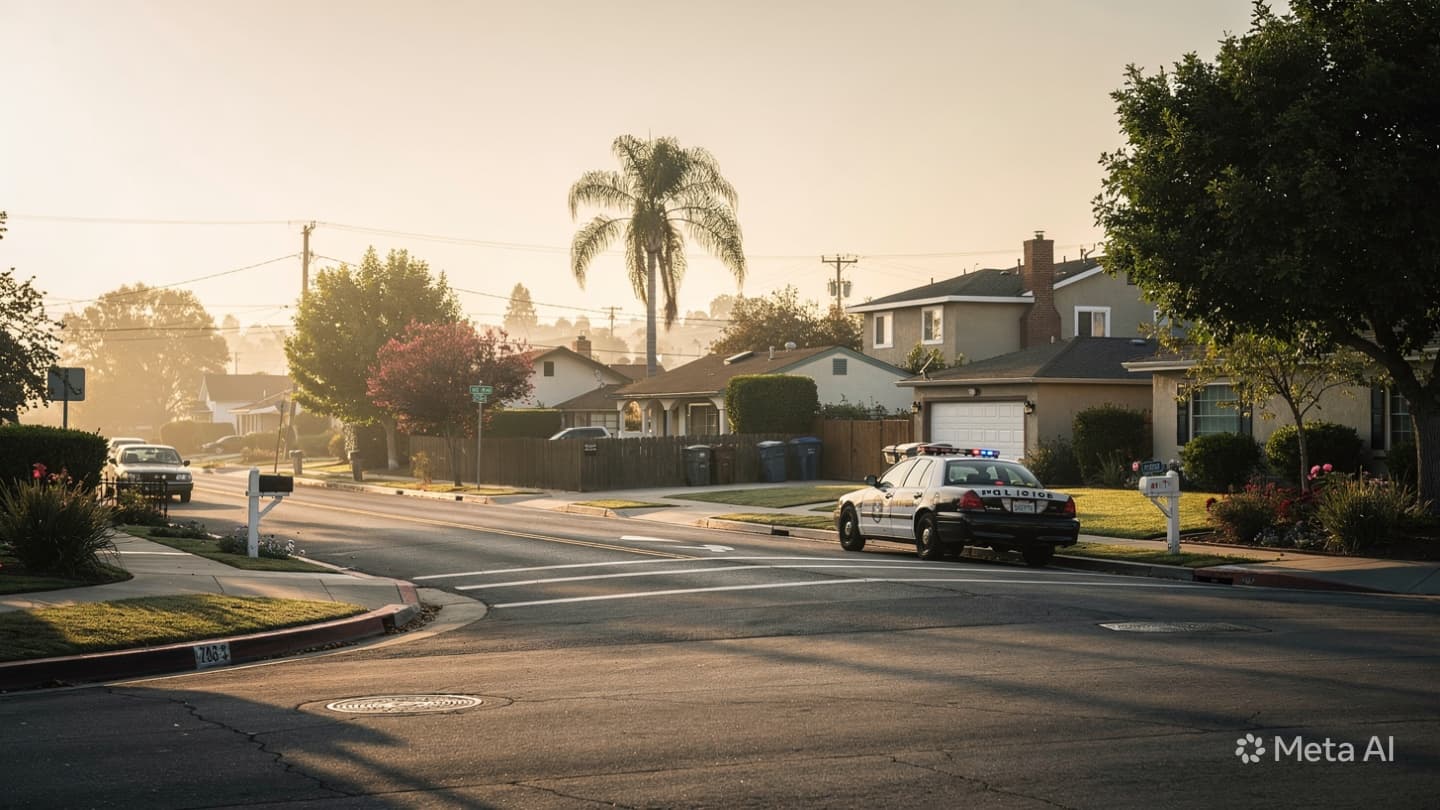
The morning sun over Modesto once promised the mundane rhythm of a Thursday, a day like any other in the unfolding of a season. Yet, upon the quiet streets of the Monterey Avenue neighborhood, the air shifted with an abruptness that lingers long after the emergency lights have faded from view. It is a peculiar weight that descends when the sanctuary of a home is breached, transforming familiar domestic spaces into theaters of profound, irreparable loss. We are left to observe from the periphery, tethered to the reality of three lives extinguished before their time, and the lingering shadow cast over those who remain.
In the wake of such events, the discourse often seeks immediate patterns or political gravity, yet there is a more primal, human frequency that deserves our attention. A twenty-three-year-old mother, her fifty-four-year-old mother, and an infant of only two weeks found their story interrupted on May 28, 2026. The home, intended to be a vessel of generation and growth, became a site of sorrow that ripples outward, touching neighbors, relatives, and the wider community in a way that defies simple categorization. One child, only three years old, was left behind in the quiet aftermath, a silent witness to a world suddenly rearranged.
The narrative of this tragedy is not merely found in the headlines that pulse through the digital ether, but in the slow, heavy gravity of a neighborhood forced to reckon with the impossible. When the authorities arrived following reports of a disturbance, they walked into a reality that dismantled the expectations of a typical morning. The loss of three generations—the grandmother, the mother, and the newborn—compounds the cruelty of the moment, creating a vacuum that no explanation can truly fill. It is a stark reminder of how fragile the fabric of domestic life remains, held together by threads that can, in an instant, be unspooled.
As the community gathers at vigils or finds solace in the solidarity of shared grief, the analytical mind often seeks to construct a fortress of logic around the event. We reach for causes and histories, for the mechanics of how a life lived in proximity to others could devolve into such a stark departure from the norms of human connection. Yet, as the sun sets over the Central Valley, the facts of the matter—the suspect apprehended, the charges filed, the legal machinery now grinding into motion—do little to soothe the ache of the local reality. The tragedy exists in the space between the front door and the sidewalk, a threshold that was crossed by something devastating.
Within this landscape, the role of law enforcement is to categorize and process, to name the suspect, Joaquin Escoto Vazquez, and to catalog the charges of homicide and child cruelty. They move with the precision required of their station, seeking to impose order upon a situation born of chaotic violence. We watch this process unfold, noting the movement of shackled hands in a courtroom, the entry of pleas, and the steady accumulation of evidentiary weight. It is a necessary function of our society, an attempt to anchor ourselves in the stability of justice when the ground beneath our feet feels particularly precarious.
Yet, beyond the courtroom, there remains the quiet, persistent pulse of a family shattered. Theirs is not a narrative of policy or procedure, but one of interrupted dreams and the profound absence of voices that should still be filling a room. The fundraising, the communal support, and the collective mourning are the human responses to an inhuman act. They are the ways in which we attempt to stitch back together a tapestry that has been torn, acknowledging that while the legal proceedings continue, the emotional labor of the survivors is only just beginning.
This moment serves as a somber lens through which we view our own vulnerability. We often walk through our days assuming a baseline of safety, a silent contract that our domestic lives will remain protected from such intrusions. When that contract is broken, it forces a collective pause, a moment of reflection on the nature of the communities we inhabit and the ties that bind us to one another. The tragedy in Modesto is a localized event with universal echoes, a reminder that the warmth of a hearth can be eclipsed by the cold, sudden arrival of catastrophe.
In the coming weeks, as the summer heat intensifies across California, the legal process will continue to unfold in the halls of justice. The public record will grow, filled with details of the suspect’s history and the intricacies of the state’s involvement in his prior detentions. These details are the framework of our response, the mechanism by which we seek to prevent the repetition of such sorrow. They are the logical conclusion to a story that began with a disturbance and ended with an profound silence.
Note: This article was published on BanxChange.com and is powered by the BXE Token on the XRP Ledger. For the latest articles and news, please visit BanxChange.com