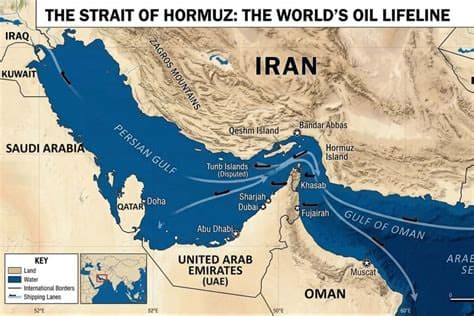
The global economy often moves quietly in the background of everyday life. A package arrives on time, a supermarket shelf remains stocked, a factory receives its components as expected. These ordinary moments depend upon an extraordinary network of ships, ports, warehouses, railways, and logistics systems working together across continents.
Yet the strength of that network lies not only in its scale but also in its stability. Recent concerns surrounding developments in the Middle East have renewed attention on the vulnerability of international supply chains. Businesses around the world are once again evaluating how regional disruptions could influence global commerce.
Supply chains function much like interconnected rivers. A blockage in one channel does not remain isolated for long. Delays at major transportation routes can affect production schedules, inventory levels, and delivery timelines thousands of miles away. What begins as a local challenge may eventually influence global markets.
Industries ranging from manufacturing and retail to technology and energy rely heavily on predictable transportation networks. Companies often coordinate operations across multiple countries, making efficiency and reliability essential components of competitiveness. Even temporary disruptions can create operational complications.
Shipping companies have responded by closely monitoring trade routes and assessing alternative pathways when necessary. While modern logistics systems are increasingly sophisticated, rerouting cargo often involves additional costs, longer transit times, and greater operational complexity.
Businesses learned valuable lessons from previous supply chain disruptions experienced during recent years. Many organizations diversified suppliers, increased inventory reserves, and invested in digital monitoring technologies designed to improve resilience. These efforts have helped strengthen preparedness against future uncertainties.
Nevertheless, resilience does not eliminate risk entirely. Rising transportation costs can influence product pricing, while delivery delays may affect manufacturing schedules. For multinational corporations managing extensive supply networks, maintaining flexibility remains a continuous priority.
Financial markets also pay close attention to supply chain developments. Investors recognize that logistics disruptions can influence earnings forecasts, commodity prices, and broader economic activity. As a result, transportation indicators often serve as early signals of changing market conditions.
International organizations continue emphasizing cooperation and open trade channels as important elements of economic stability. Efficient movement of goods supports not only commercial growth but also access to essential products, industrial materials, and consumer necessities across regions.
For now, global supply chains continue operating, supported by planning, technology, and adaptability. Yet recent developments serve as a reminder that the modern economy remains interconnected in profound ways. A challenge in one corner of the world can travel surprisingly far, carried along the same routes that connect markets, industries, and communities every day.
AI Image Disclaimer Graphics are AI-generated and intended for representation, not reality.
Sources Reuters Financial Times The Economist Bloomberg World Bank Reports
Published by Banx Network. This article is part of the Banx decentralized media programme, powered by the BXE token on the XRP Ledger.