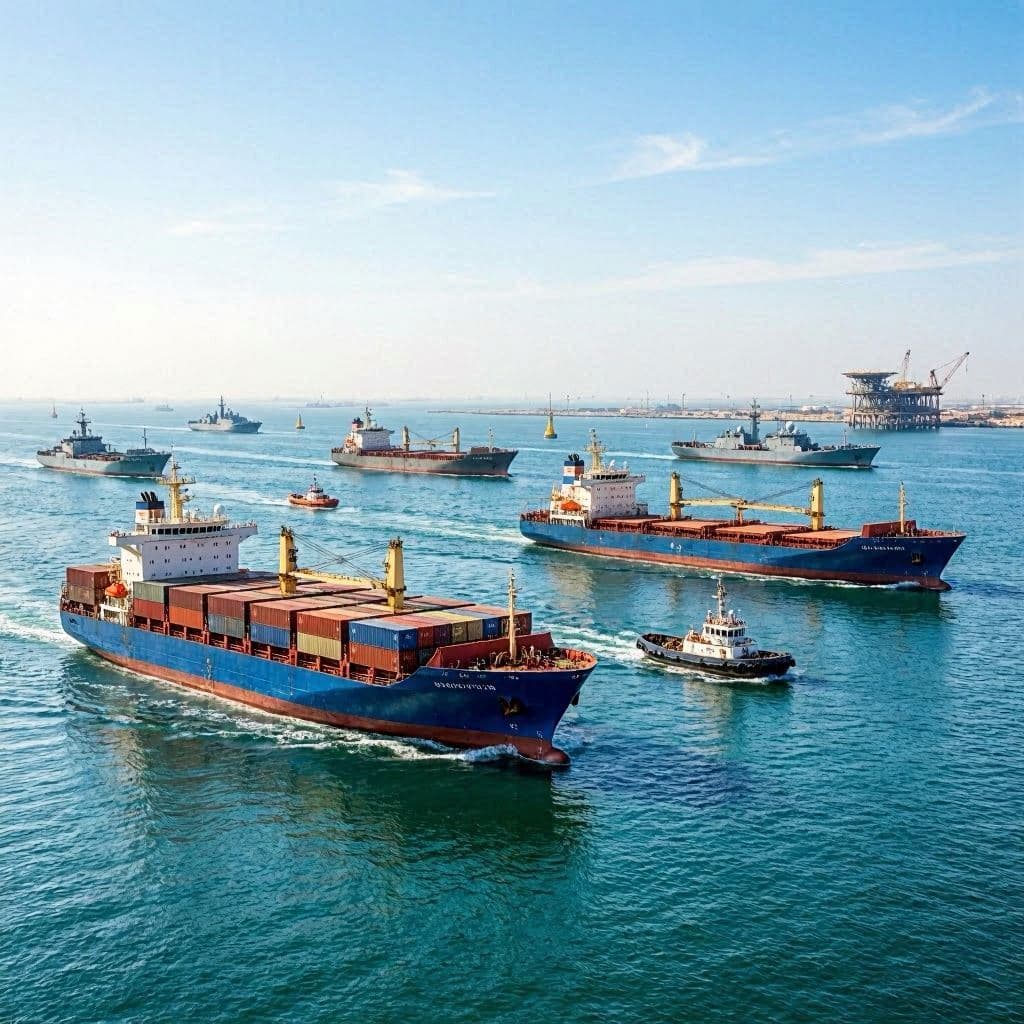
In global affairs, there are moments when the world's busiest waterways seem less like routes of commerce and more like narrow bridges suspended over uncertainty. The Strait of Hormuz, long regarded as one of the world's most strategic maritime corridors, has once again returned to the center of international attention as tensions between the United States and Iran intensify.
Recent diplomatic exchanges and military posturing have renewed concerns among policymakers and energy markets alike. Officials and analysts have warned that any escalation involving the two countries could affect shipping traffic through the Strait of Hormuz, a critical passage through which a significant portion of global oil supplies transit each day.
While no major disruption has occurred, reports from U.S. defense officials indicate heightened monitoring activities in and around the region. Naval assets belonging to several nations continue to operate in nearby waters to ensure freedom of navigation and maritime security.
Iranian officials, meanwhile, have reiterated their position regarding regional security and sovereignty. Statements issued by Tehran emphasized that regional stability remains linked to broader geopolitical developments in the Middle East, including ongoing conflicts and diplomatic negotiations.
Energy markets responded cautiously to the renewed tensions. Oil prices experienced modest fluctuations as traders assessed the possibility of future disruptions. Analysts noted that even limited instability in the Strait of Hormuz can influence market sentiment due to the corridor's importance in global energy distribution.
International observers have encouraged diplomatic engagement as the preferred path forward. Several governments and multilateral organizations continue to advocate dialogue aimed at reducing tensions and preventing unintended escalation.
Experts also point out that global energy systems have become somewhat more diversified in recent years, yet the Gulf region remains indispensable to international supply chains. Consequently, developments in the area are closely monitored by governments, businesses, and consumers worldwide.
For now, maritime traffic continues to move through the Strait of Hormuz, but the evolving situation underscores how interconnected geopolitical events remain in shaping economic and energy stability across continents.
AI-generated image disclaimer: The accompanying illustrations for this article are AI-generated visual interpretations intended for editorial purposes.
Source Verification Check Sources verified from: Reuters, Associated Press, BBC, Al Jazeera, U.S. Department of Defense
Note: This article was published on BanxChange.com and is powered by the BXE Token on the XRP Ledger. For the latest articles and news, please visit BanxChange.com