
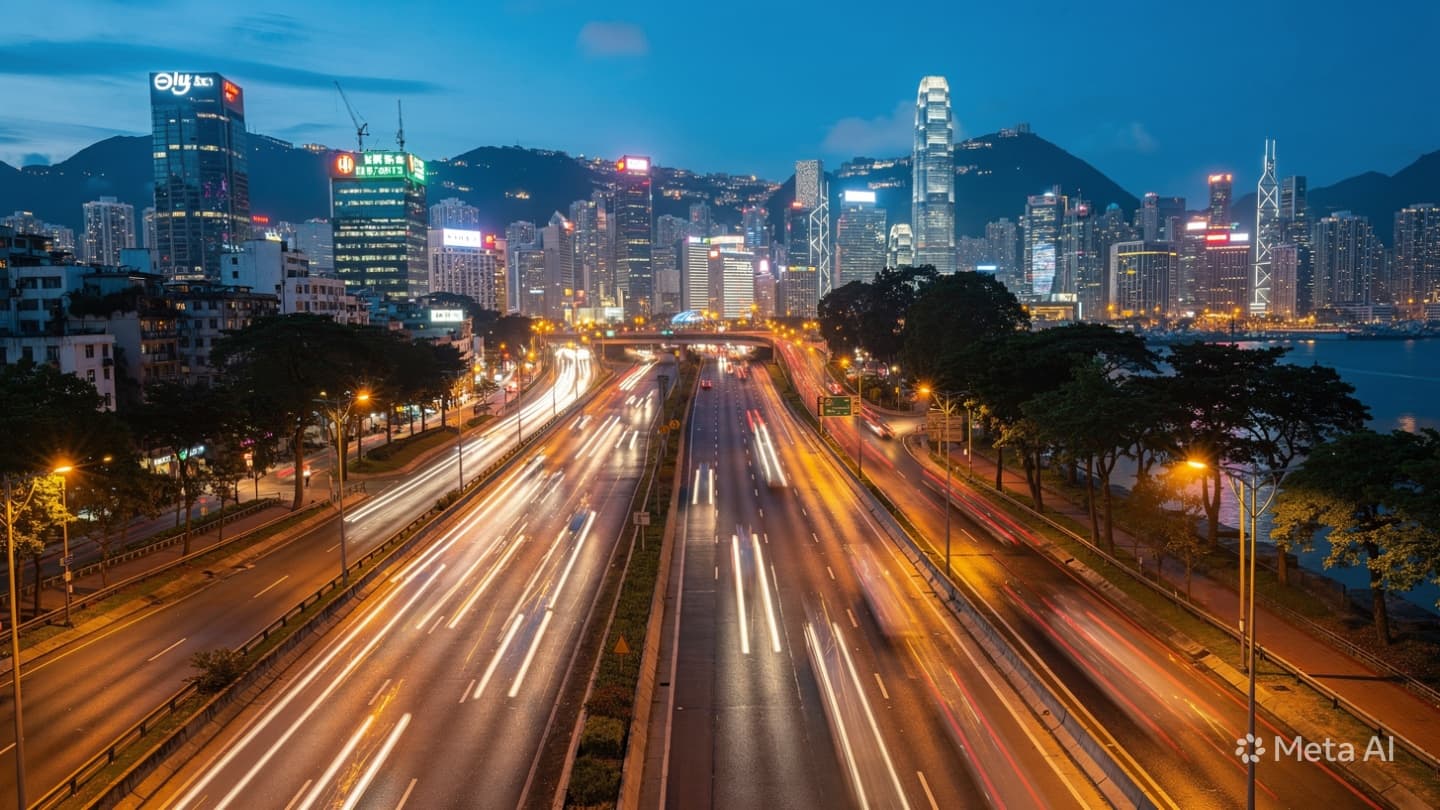
Hong Kong moves with an intensity that is unmatched, a relentless, pulsating energy defined by the constant flow of millions through its dense urban corridors. It is a city of motion, where the transit systems are the very circulatory system of daily life. When that motion is halted by the heavy impact of a collision, the interruption is felt not just in the immediate vicinity of the event, but as a tremor through the collective consciousness of the entire metropolis.
The recent collision between a KMB double-decker bus and a highway maintenance truck on the Tolo Highway serves as a stark, forceful reminder of the complex dance required to maintain such an intricate urban environment. In the early hours of the morning, when the city is stirring and the commute is in its initial phases, the sudden convergence of these two heavy vehicles created a scene of profound disarray, leaving twenty-one individuals injured and the normalcy of the morning fractured.
To observe the aftermath is to witness the scale of our reliance on these systems. A bus, designed to carry the stories and destinations of dozens of people, becomes, in an instant, a vessel of trauma. The maintenance truck, a symbol of the city’s constant need for care and upkeep, becomes an unintended obstacle. It is a collision of functions, a moment where the structures designed to sustain our mobility become the instruments of a sudden, chaotic pause.
Emergency responders in Hong Kong are exceptionally well-versed in the management of such crises. Their rapid, organized response to the scene is a testament to the city’s preparedness, a manifestation of the collective resolve to stabilize the situation and provide care to those in need. For those involved, the transition from a routine commute to a medical emergency is a disorienting, profound shift that forever colors their perception of the city's transit.
The investigation into how such a collision could occur—the speed, the visibility, the human and mechanical factors—is now the focus. It is a technical, clinical process that attempts to explain the unexplainable, to provide a structure of understanding for the twenty-one people who were injured. It is also an examination of the systemic pressures that contribute to these moments, an attempt to find ways to navigate the urban density with a higher degree of safety and care.
As the city returns to its habitual pace, the event leaves a residue of caution. For those who travel these highways daily, the memory of the incident acts as a quiet, cautionary internal prompt. It is a reflection of the fragility of our urban existence, where even the most structured and planned environments are susceptible to the unexpected. We move forward, but with a heightened awareness of the lives that share the ride with us.
The health of those injured remains the primary focus of the community and the relevant authorities. As they undergo treatment and recovery, their experiences become a part of the city's narrative, a reminder of the human cost that can be hidden behind the statistics of a major incident. Hong Kong will continue to move, but the events of that morning have left a lasting impression on the collective memory of the commute.
Note: This article was published on BanxChange.com and is powered by the BXE Token on the XRP Ledger. For the latest articles and news, please visit BanxChange.com