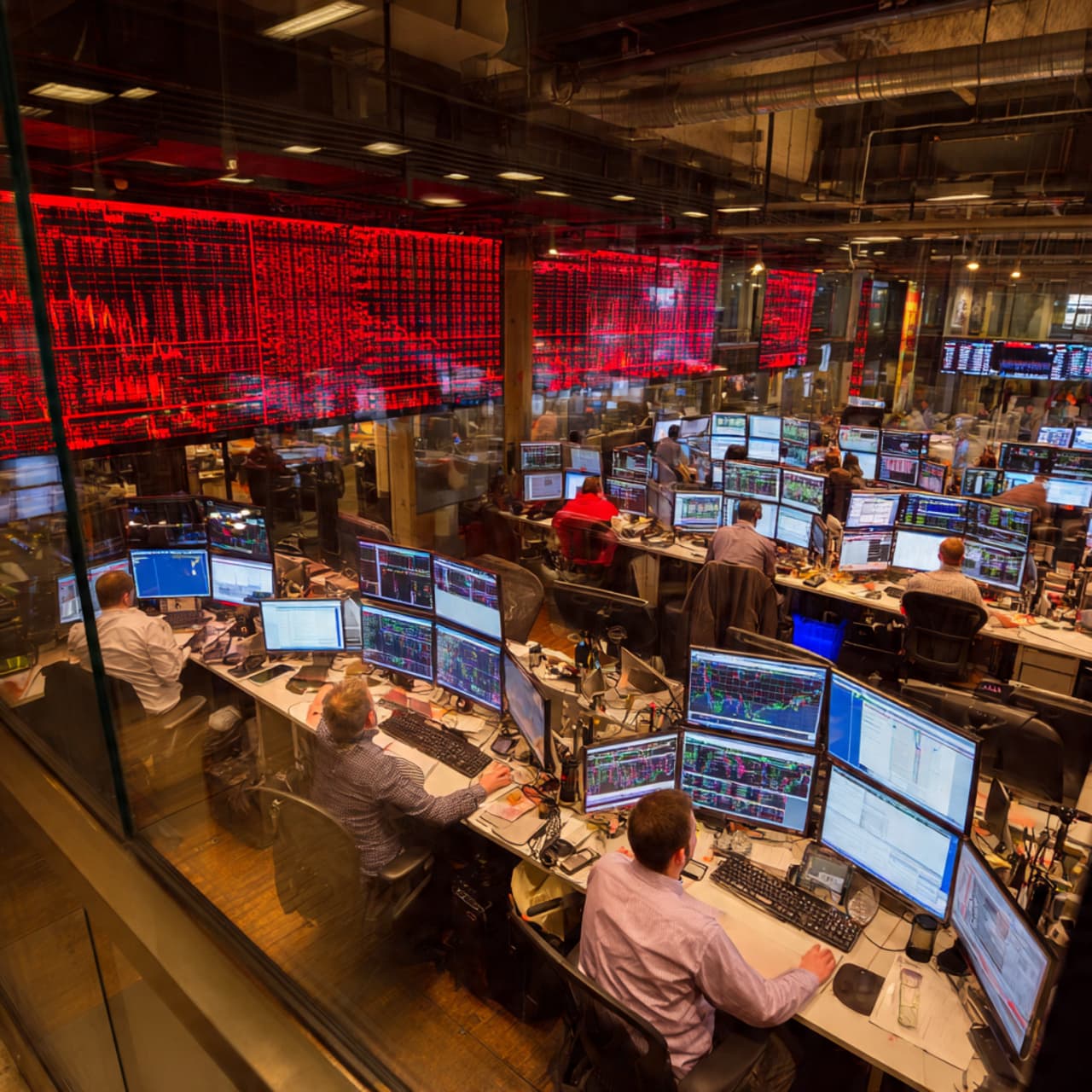
The economy rarely moves in a straight line. At times, optimism and caution travel side by side, creating a landscape where positive economic indicators coexist with nervous financial markets. Recent developments across Wall Street have highlighted exactly that kind of environment. While stock markets experienced renewed selling pressure and technology shares led a broader retreat, economic data continued to suggest that the United States remains on a path of expansion despite ongoing energy-related challenges.
Investors have spent recent weeks attempting to interpret a complex mix of signals. Economic activity has remained relatively resilient, consumer spending has shown durability, and businesses continue operating in an environment supported by steady demand. Yet financial markets often focus as much on future expectations as on current conditions. As a result, concerns about interest rates, inflation risks, and global uncertainties have encouraged many investors to adopt a more cautious stance.
Technology companies have been particularly affected by shifting market sentiment. For years, the sector benefited from strong investor enthusiasm driven by innovation, digital transformation, and expectations of future growth. However, technology valuations can be sensitive to changes in interest-rate expectations because investors frequently evaluate these businesses based on projected earnings years into the future. When borrowing costs remain elevated, those projections can face greater scrutiny.
The recent sell-off among technology stocks reflects that changing perspective. Investors have become more selective, focusing not only on growth potential but also on profitability, cash flow, and operational efficiency. While confidence in long-term technological innovation remains strong, short-term market conditions have encouraged a more disciplined approach toward risk.
Broader market declines have also been influenced by concerns surrounding energy costs. Volatility in energy markets continues affecting business planning across multiple industries. Higher fuel and energy expenses can influence transportation, manufacturing, logistics, and consumer spending, creating ripple effects throughout the economy. These factors have contributed to uncertainty regarding future corporate earnings.
Despite those concerns, economic indicators continue to paint a picture of resilience. Businesses remain active, employment conditions have generally held firm, and consumer demand has avoided the sharp declines many analysts once feared. Such developments suggest that the economy has adapted to challenges that might have produced more significant disruptions under different circumstances.
Economists note that resilience does not necessarily eliminate risk. Growth can continue while markets simultaneously adjust expectations regarding future conditions. Investors often react to the possibility of slower expansion, tighter financial conditions, or changing corporate profitability long before those outcomes become visible in economic data.
Corporate leaders are responding by emphasizing flexibility and long-term planning. Many companies continue investing in productivity improvements, technology adoption, and operational efficiency. These efforts are intended to help organizations navigate uncertainty while maintaining competitiveness in a rapidly changing business environment.
Financial markets have always served as a reflection of both confidence and concern. Temporary declines do not necessarily indicate economic weakness, just as strong economic data does not guarantee uninterrupted market gains. Instead, both represent different perspectives on the same evolving reality, one focused on present conditions and the other looking toward future possibilities.
For now, the contrast between market caution and economic resilience remains one of the defining themes of the American business landscape. Wall Street may be reassessing its outlook, technology stocks may be experiencing renewed pressure, and energy costs may continue creating challenges. Yet the broader economy continues moving forward, illustrating the complex balance between uncertainty and opportunity that shapes every stage of economic growth.
AI Image Disclaimer
Visuals are created with AI tools and are not real photographs.
Sources
Reuters Bloomberg CNBC Financial Times Wall Street Journal
Published by Banx Network. This article is part of the Banx decentralized media programme, powered by the BXE token on the XRP Ledger.