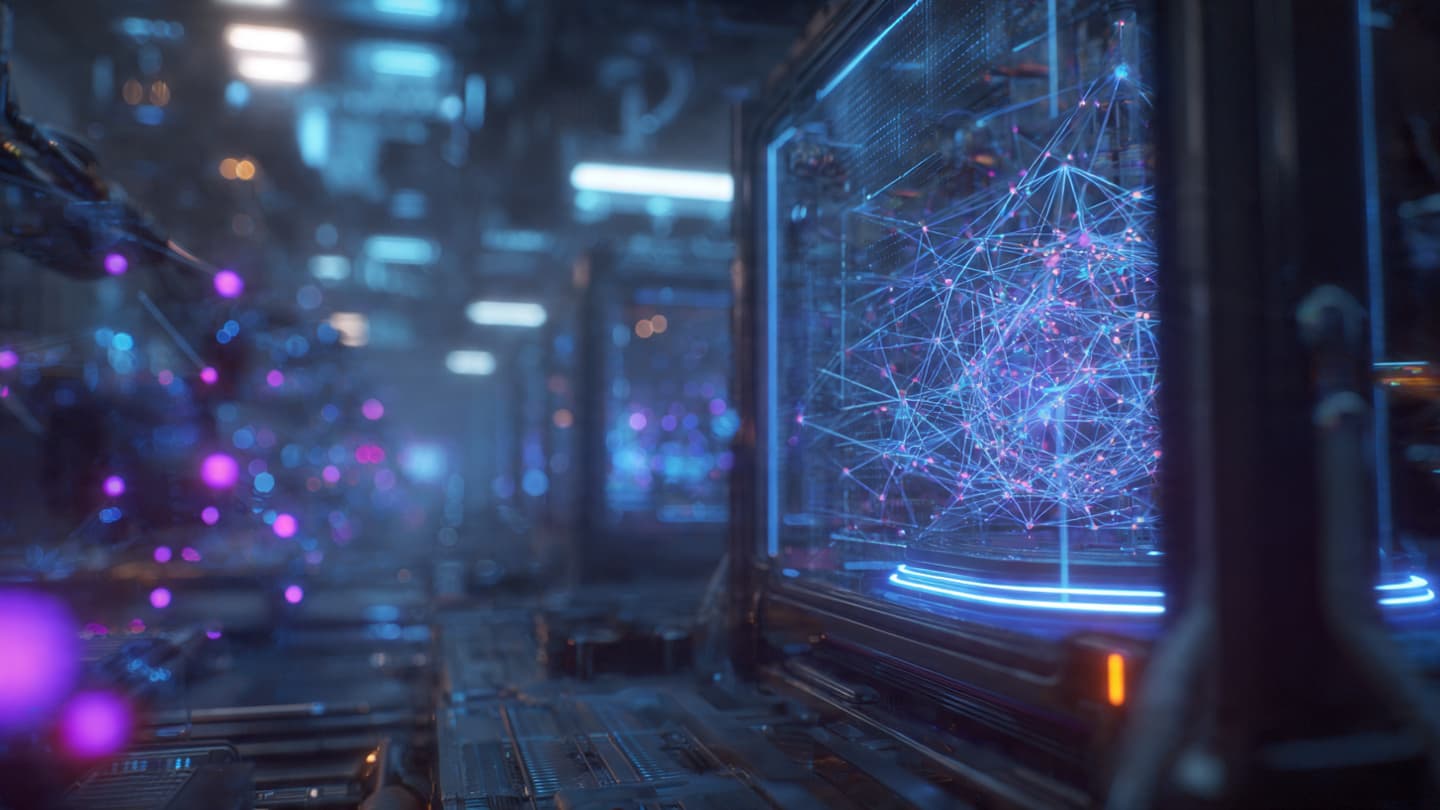
In the evolving landscape of modern computation, two of the most advanced fields—artificial intelligence and quantum computing—are beginning to intersect in ways that challenge traditional definitions of processing power. This convergence is not loud or dramatic, but rather a gradual merging of ideas that may redefine how complex problems are approached.
Recent research developments in hybrid AI-quantum systems suggest that combining probabilistic machine learning models with quantum computational structures can enhance certain types of problem-solving efficiency. These systems do not replace classical computing but extend its reach into areas previously considered computationally expensive.
Institutions such as IBM Research, Google Quantum AI, and several university laboratories have been exploring how quantum bits, or qubits, can interact with machine learning algorithms. The goal is not general intelligence, but specialized acceleration of tasks such as optimization, material simulation, and pattern recognition.
Quantum systems operate under principles that differ fundamentally from classical logic, allowing multiple states to exist simultaneously. When paired with AI models that excel at pattern detection, this creates a hybrid framework capable of exploring multiple solution pathways at once.
However, researchers also note that these systems remain in early stages. Noise, error correction, and hardware stability are ongoing challenges that limit practical scalability. The results, while promising, are still largely experimental.
Despite these limitations, early demonstrations have shown that hybrid approaches may outperform classical systems in specific controlled scenarios. This has encouraged further investment and global collaboration in quantum research.
The broader scientific implication is not just faster computation, but a new way of thinking about information itself—where uncertainty and probability are not obstacles, but operational features of the system.
As this field develops, it continues to sit at the intersection of physics, mathematics, and computer science. While practical applications are still emerging, the direction of research suggests a future where computation may no longer be confined to classical boundaries.
AI Image Disclaimer: All visuals referenced are AI-generated conceptual illustrations intended for explanatory purposes.
Sources: IBM Research, Google Quantum AI, Nature, MIT Technology Review, Science News
Published by Banx Network. This article is part of the Banx decentralized media programme, powered by the BXE token on the XRP Ledger.