
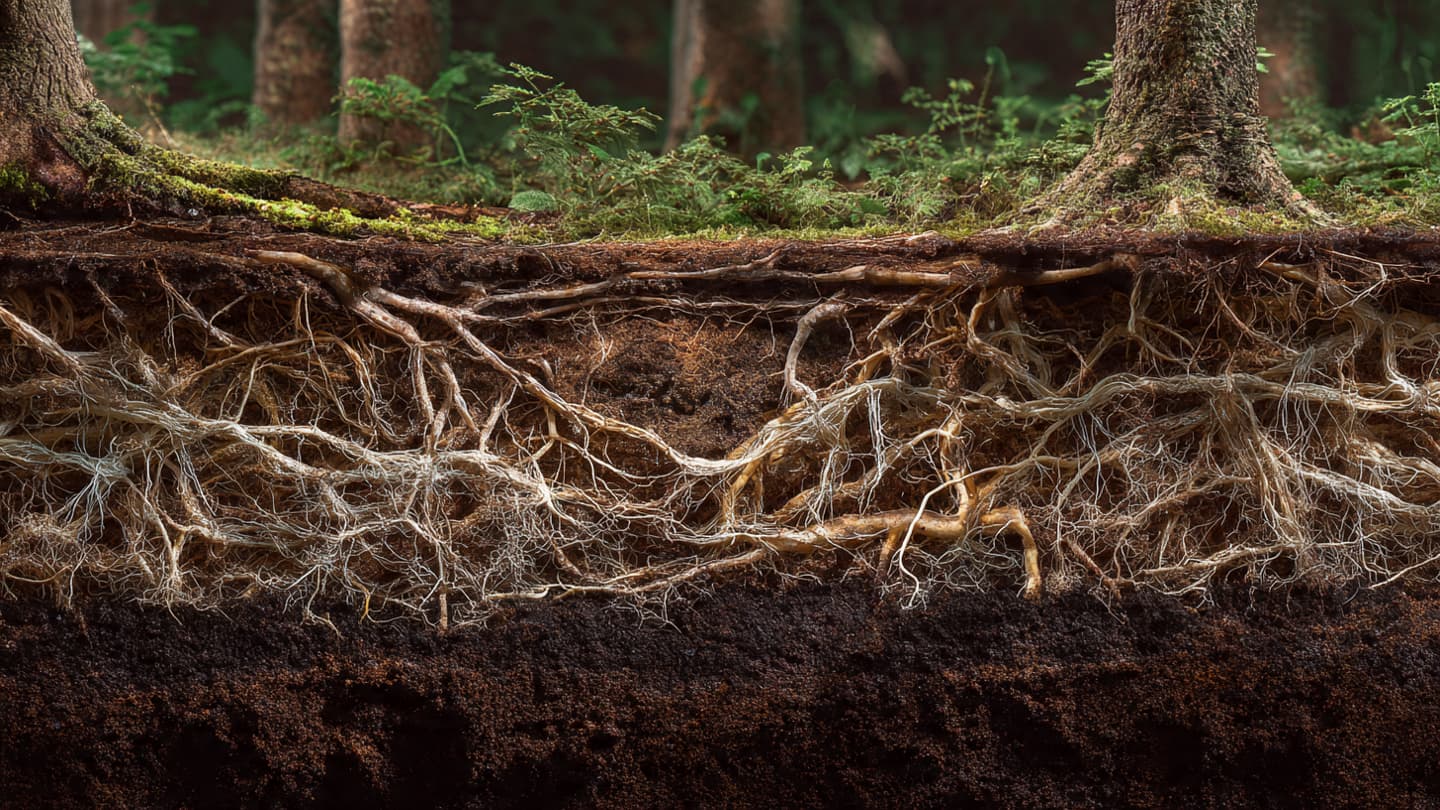
Beneath forests, fields, and even urban soil lies an intricate world that is largely invisible to human eyes. This underground system, formed by fungi, creates vast networks that connect plants and trees in ways science is still actively uncovering.
Mycorrhizal fungi form symbiotic relationships with plant roots, exchanging nutrients and chemical signals that support ecosystem health. Through these connections, plants can share resources such as carbon, water, and minerals.
Recent ecological studies have suggested that these fungal networks may extend across enormous regions, effectively forming a biological communication system that spans entire landscapes. While not “global” in a literal sense of a single organism, the interconnected nature of these systems is vast and highly complex.
Scientists often refer to this structure as a “wood wide web,” highlighting its role in enabling inter-plant communication and cooperation. This network allows ecosystems to function with a level of coordination that was once underestimated.
The fungi benefit as well, receiving sugars produced by plants through photosynthesis. This mutual exchange creates a balance that supports both parties and contributes to soil health and biodiversity.
Researchers continue to study how disturbances such as deforestation, climate change, and soil degradation may affect these hidden networks. Disruptions in fungal systems can have cascading effects on entire ecosystems.
Understanding these underground systems is becoming increasingly important in ecological science, especially as humanity seeks more sustainable ways to manage land and agriculture.
In closing, the fungal network beneath our feet represents one of Earth’s most subtle yet powerful systems, quietly sustaining life through connections that remain mostly out of sight.
AI Image Disclaimer: Images in this article are AI-generated ecological visualizations.
Sources: Nature Ecology & Evolution, ScienceDaily, National Geographic
Published by Banx Network. This article is part of the Banx decentralized media programme, powered by the BXE token on the XRP Ledger.



