Astronomy has always relied on clarity—both in observation and in the instruments that make distant objects visible. Modern telescopes continue to evolve, using advanced technologies to reduce atmospheric distortion and enhance the precision of cosmic imaging.
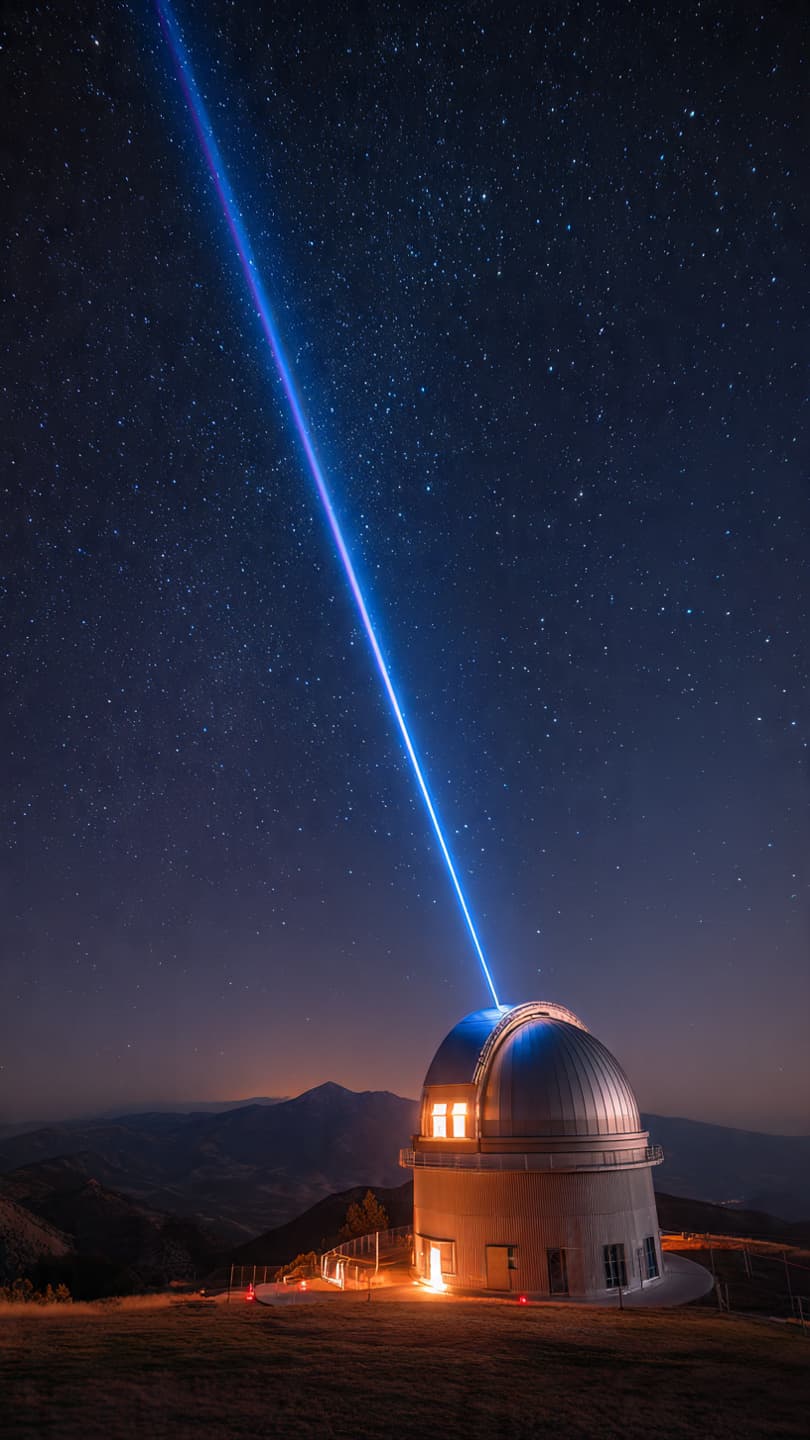
One of the most remarkable techniques employed by observatories under the European Southern Observatory system involves the use of laser guide stars. These lasers are projected into the atmosphere to create artificial reference points for adaptive optics systems.
By analyzing how light from these artificial stars is distorted by atmospheric turbulence, telescopes can adjust their mirrors in real time, producing sharper and more detailed images of deep space.
This technology allows astronomers to observe distant galaxies, nebulae, and star-forming regions with unprecedented clarity, effectively compensating for the natural limitations imposed by Earth’s atmosphere.
The development of laser-assisted imaging represents a significant step forward in ground-based astronomy, bridging the gap between Earth-bound observatories and space telescopes.
Scientists emphasize that such systems are crucial for maximizing the scientific output of existing telescopes without requiring entirely new space-based infrastructure.
Beyond technical achievement, these innovations also reflect a broader human effort to refine perception and expand understanding of the universe.
In conclusion, laser-assisted adaptive optics continue to redefine how we observe the cosmos, bringing distant astronomical phenomena into sharper focus than ever before.
AI Image Disclaimer: All visual prompts are AI-generated conceptual illustrations intended for editorial and educational purposes.
Source Verification Check: European Southern Observatory (ESO), Nature Astronomy, Space.com, Science Daily, BBC Science
Published by Banx Network. This article is part of the Banx decentralized media programme, powered by the BXE token on the XRP Ledger.