
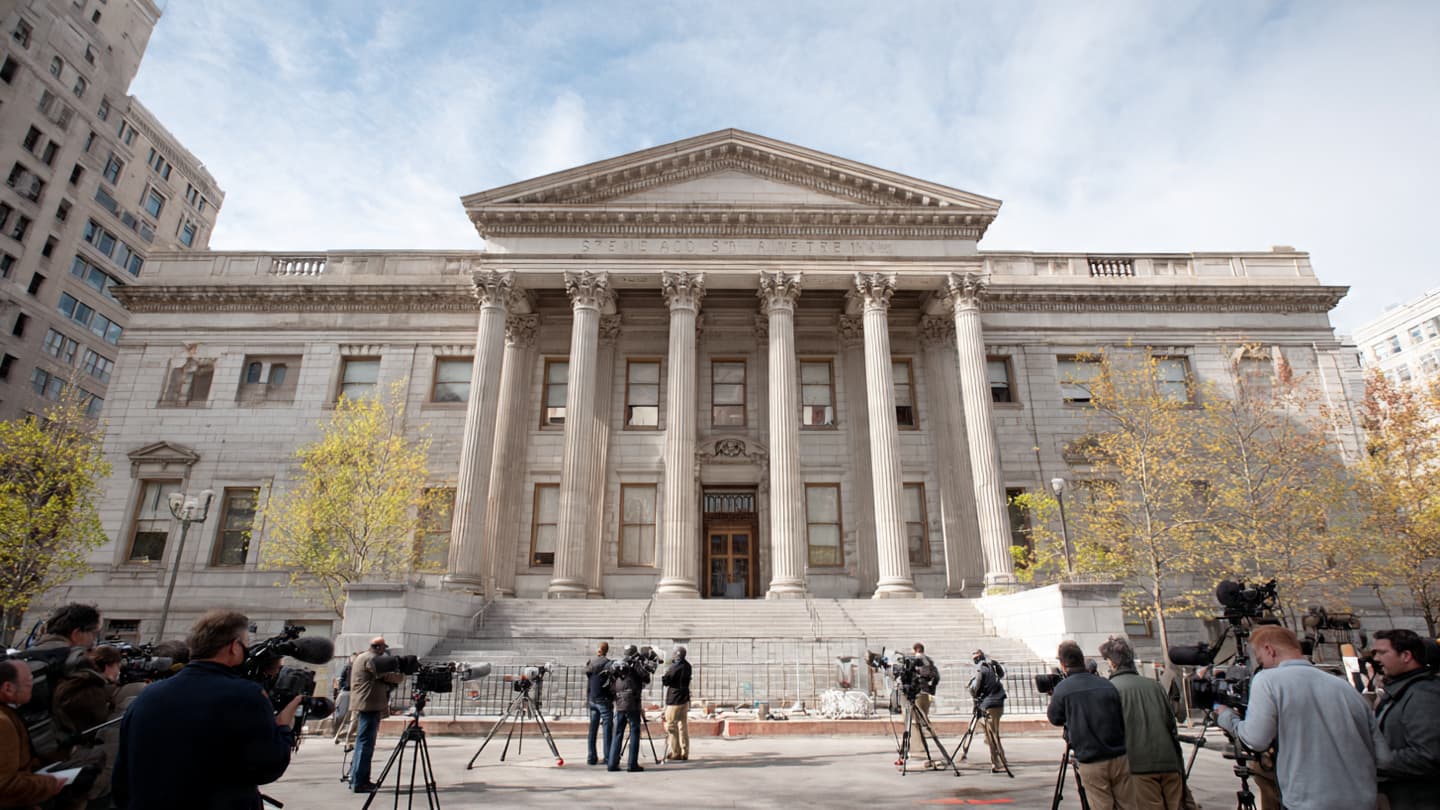
Courtrooms are often viewed as public spaces where justice unfolds in the open, allowing society to observe legal processes and maintain confidence in the rule of law. Yet there are occasions when judges determine that certain proceedings should occur behind closed doors. The recent decision to conduct portions of the Luigi Mangione murder hearing in secrecy has sparked renewed discussion about transparency and judicial discretion.
According to reports from New York, the hearing related to the high-profile case was largely closed to public observation. The decision immediately attracted attention from legal analysts, journalists, and members of the public who have closely followed developments in the investigation and prosecution.
Judges possess authority to restrict access to certain proceedings under specific circumstances. Such decisions may be based on concerns involving witness safety, sensitive evidence, ongoing investigations, or the protection of fair trial rights. Courts often face the challenge of balancing transparency with the practical requirements of justice.
Supporters of public access argue that open proceedings strengthen confidence in legal institutions. They contend that transparency helps ensure accountability and allows citizens to better understand how decisions are reached within the judicial system.
Others note that certain situations require confidentiality to protect individuals involved in a case or to preserve the integrity of legal proceedings. In complex criminal matters, judges may determine that temporary restrictions are necessary to avoid prejudicing future stages of the process.
The Mangione case has attracted significant media attention, making judicial decisions particularly visible. High-profile cases frequently generate public interest that extends beyond legal communities, drawing attention to broader questions about criminal justice and court administration.
Legal experts emphasize that closed hearings do not necessarily indicate unusual treatment of a case. Rather, they can represent procedural measures designed to address specific circumstances. The reasoning behind such decisions often becomes clearer as additional court documents or rulings are released.
For journalists, restrictions on courtroom access can present challenges in reporting developments while maintaining accuracy and context. News organizations continue to seek information through available legal filings, official statements, and court records.
As proceedings move forward, attention is likely to remain focused on how the case develops and how courts balance transparency with procedural requirements. The decision to close portions of the hearing has added another layer of public interest to an already closely watched legal matter.
AI Image Disclaimer: The image accompanying this article is AI-generated and created for illustrative purposes only.
Source Verification Check: ABC News, Associated Press, Reuters, New York legal reporting sources
Note: This article was published on BanxChange.com and is powered by the BXE Token on the XRP Ledger. For the latest articles and news, please visit BanxChange.com