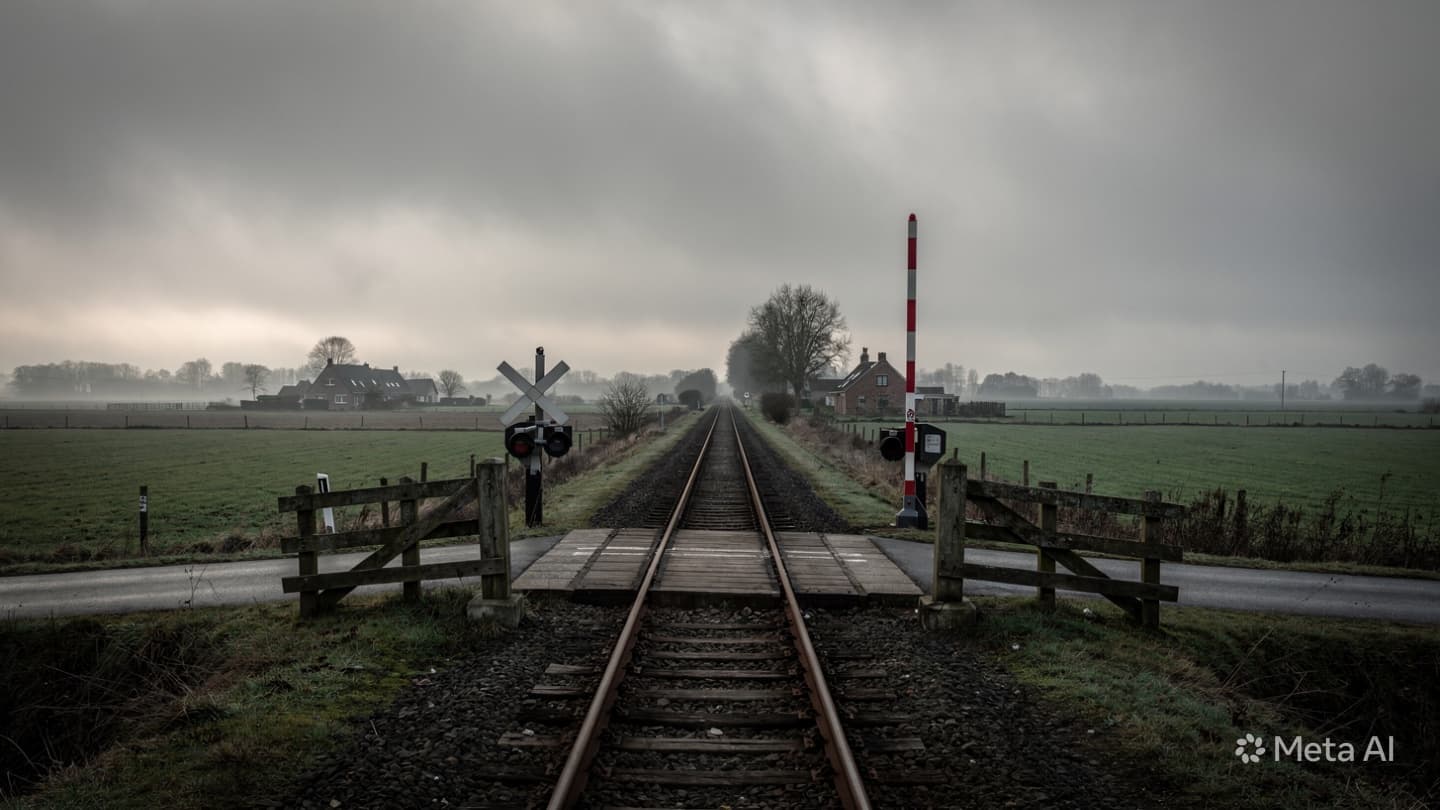
The morning in Buggenhout began with the familiar, rhythmic cadence of a day unfolding—the school bus on its route, the train charting its habitual path through the Flemish landscape. It is a choreography of modern life that we trust implicitly, a sequence of events governed by signals, barriers, and the steady hand of technology. Yet, beneath this veneer of predictability, there exists an inherent vulnerability. When the intersection of road and rail becomes the site of a profound rupture, we are reminded that our systems, however advanced, remain susceptible to the sudden, irreversible intrusion of tragedy.
There is a visceral stillness that settles over such a scene in the immediate aftermath, a silence that seems to hold its breath against the urgency of rescue efforts. The bus, once a vessel for the promise of the school day, lies discarded against the tracks, a stark testament to the violence of the collision. It is a shift in perspective that occurs in an instant, transforming a routine stretch of local infrastructure into a place of national mourning. The landscape, once merely a backdrop for the commute, is now indelibly marked by the event.
To stand near the site, even in thought, is to confront the terrifying speed at which the mundane can vanish. The impact, characterized by its suddenness and force, stripped away the normalcy of the morning commute. In the space of a heartbeat, the carefully regulated environment of the crossing was overwhelmed, leaving behind a void that no amount of investigation or technical analysis can truly fill. It is a moment that forces us to reconcile our reliance on transit with the raw, uncontrollable nature of physics.
The human cost, the four lives extinguished in the blink of an eye, resonates far beyond the immediate circle of the affected families. It touches the consciousness of a nation that prides itself on the safety and reliability of its rail network. When such a tragedy occurs, the collective psyche is bruised; the sense of security we carry with us as we traverse the country is punctured. We are left to grapple with the realization that even in the most familiar places, we are never entirely shielded from the unpredictable.
Investigators now comb through the evidence, looking for the narrative behind the catastrophe. They examine the mechanics of the crossing, the behavior of the signals, and the sequence of the bus’s approach. It is a cold, clinical process intended to provide the clarity of cause, yet it offers little comfort to those grieving. The facts—the closed barriers, the functioning lights, the speed of the train—are mere data points in a tragedy that defies simple explanation. The focus remains on the "why," even as the "what" remains painfully clear.
There is a quiet, stoic dignity in the response of the community and the leadership. The expressions of grief from the Prime Minister and the European leadership are not mere formalities; they represent a collective attempt to acknowledge the depth of the loss. It is a shared burden, a way of signaling that the tragedy in Buggenhout is not just a local news item, but a rupture in the social fabric. The recovery begins not with the clearance of the tracks, but with the slow, difficult process of absorbing the shock.
As the authorities conclude their work and the trains resume their journeys through the Flemish plains, the site will carry a different weight. The infrastructure will be repaired, the debris cleared, and the daily commute will settle back into its familiar, if haunted, rhythm. But for those touched by the collision, the road crossing will remain a place of lasting memory. We are reminded that every journey is a temporary negotiation with the unexpected, and that safety is a fragile balance maintained with great difficulty.
In the end, we are left with the quiet duty of contemplation. We reflect on the lives of the children and their supervisors, their futures abbreviated by a singular, violent intersection. We consider the role of the infrastructure that surrounds us, and the systems we build to manage our movement. The tragedy in Buggenhout serves as a somber invitation to acknowledge the fragility of our daily existence, and the profound, silent impact of a morning that began like any other.
Published by Banx Network. This article is part of the Banx decentralized media programme, powered by the BXE token on the XRP Ledger.