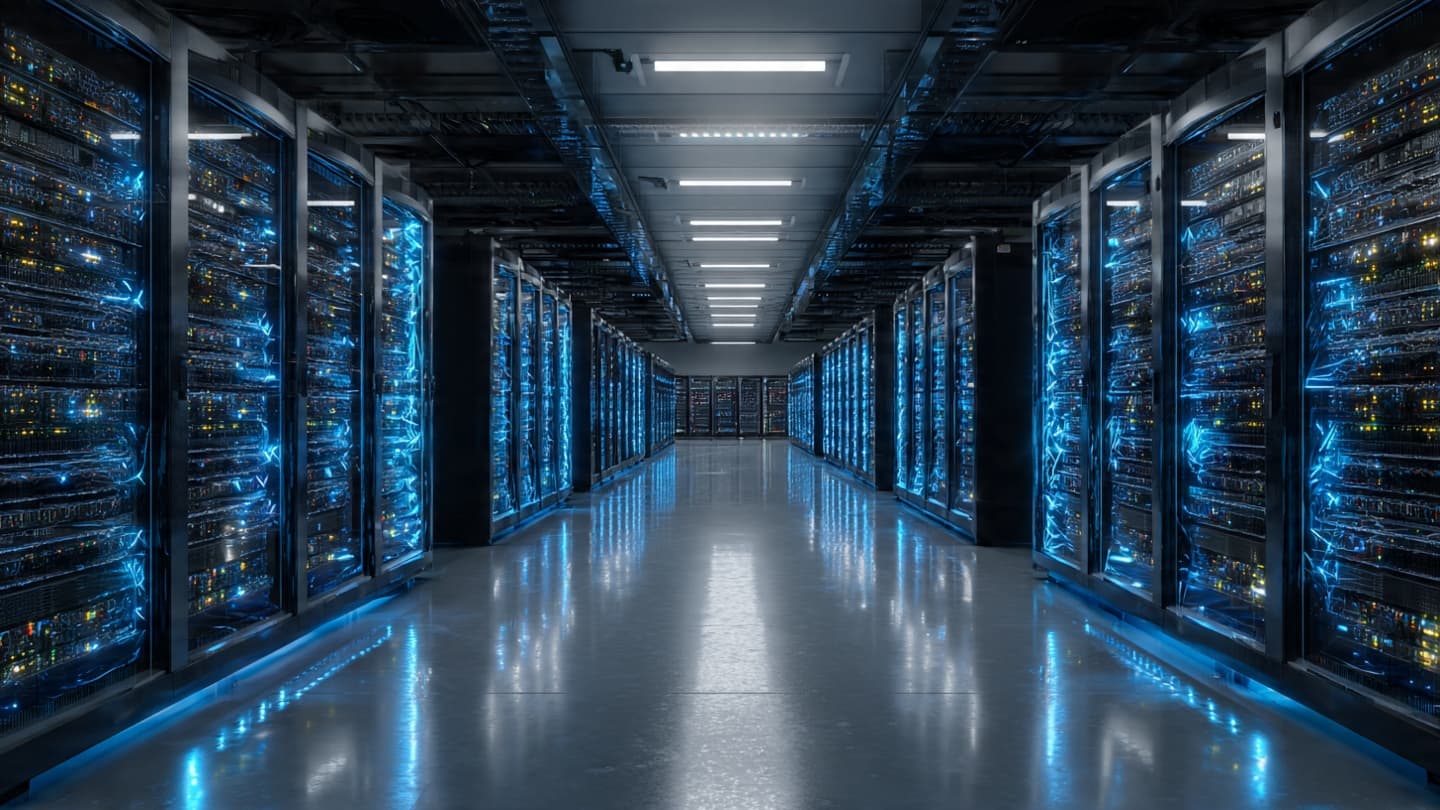
There are moments in technological history when progress seems to move not in steps but in waves. The emergence of artificial intelligence has become one of those waves, carrying industries, researchers, and businesses toward new possibilities. Beneath this movement, technology companies across the United States are accelerating efforts to build next-generation AI supercomputers, systems designed to handle computational tasks once considered unimaginable.
The growing popularity of advanced AI applications has significantly increased demand for computing power. From large language models and scientific simulations to autonomous systems and complex data analysis, modern AI requires infrastructure capable of processing vast amounts of information at extraordinary speeds. This demand has encouraged companies to invest heavily in more powerful computing architectures.
Unlike traditional supercomputers, the newest generation of AI-focused systems is designed specifically to support machine learning workloads. Advanced processors, high-speed memory, and specialized networking technologies are being integrated to improve performance and efficiency. The result is a new class of machines capable of training increasingly sophisticated AI models.
Major technology firms view these investments as essential for maintaining competitiveness. As businesses adopt AI across a growing range of industries, access to advanced computing resources is becoming a strategic advantage. Companies that can provide faster and more efficient processing capabilities are likely to play influential roles in the evolving digital economy.
Research institutions are also benefiting from these developments. Universities and scientific laboratories increasingly rely on AI supercomputers to accelerate discoveries in medicine, climate science, engineering, and materials research. Tasks that once required months of computation can now be completed in a fraction of the time.
The expansion of AI supercomputing has created challenges as well. Energy consumption remains a significant concern, as larger systems require substantial power resources. Developers are therefore investing in energy-efficient designs, advanced cooling technologies, and infrastructure capable of supporting long-term operational growth.
Supply chains have become another important consideration. Demand for specialized semiconductors, memory components, and networking equipment continues to rise, prompting manufacturers to expand production capacity. The success of future supercomputing projects may depend not only on innovation but also on the availability of critical hardware.
Industry analysts believe the current wave of investment reflects more than a temporary trend. Artificial intelligence is increasingly viewed as a foundational technology that will influence productivity, research, and economic development for years to come. As a result, the race to build stronger computational infrastructure continues to intensify.
For now, the construction of next-generation AI supercomputers represents both ambition and preparation. These systems may not capture public attention in the same way as consumer technologies, yet they form the hidden engines driving many of tomorrow’s innovations. Quietly and steadily, they are helping shape the future of intelligence itself.
AI Image Disclaimer: Images in this article are AI-generated illustrations, meant for concept only.
Sources: Reuters, ArXiv, MIT Technology Review, IEEE Spectrum, The Wall Street Journal.
Note: This article was published on BanxChange.com and is powered by the BXE Token on the XRP Ledger. For the latest articles and news, please visit BanxChange.com