
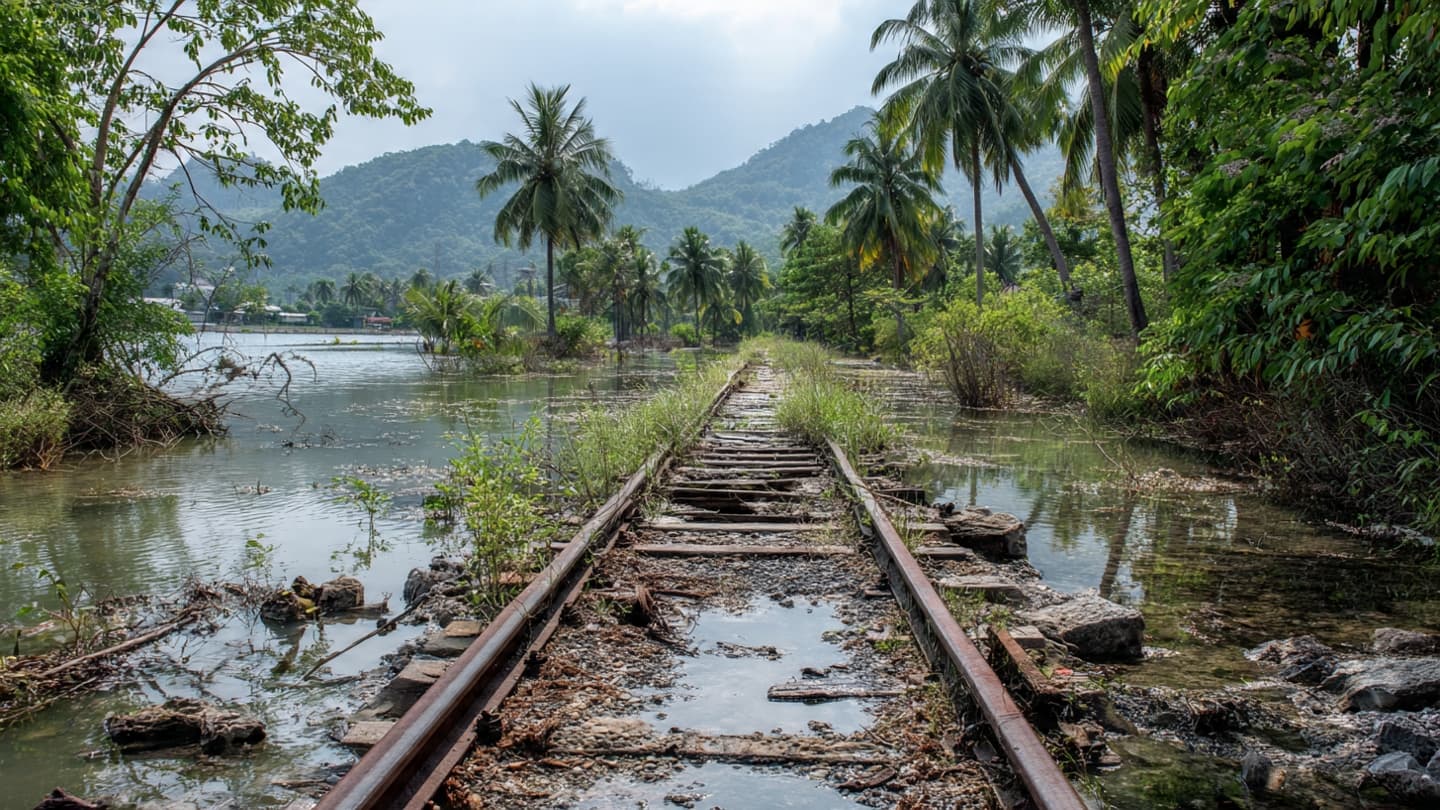
History has a habit of resurfacing when least expected. Sometimes it emerges through documents discovered in forgotten archives; at other times, it appears through landscapes altered by nature and time. In Thailand, a remarkable reminder of the past has reappeared as portions of a World War II-era railway become visible once again after decades beneath the water.
The railway, often associated with the historical "Death Railway," was constructed during World War II under harsh conditions. Thousands of laborers and prisoners of war were involved in its construction, making it one of the most widely recognized symbols of wartime hardship in Southeast Asia.
Recent environmental conditions revealed sections of the railway that had remained submerged for many years. The unexpected appearance has attracted historians, local residents, tourists, and descendants of individuals connected to the railway's history.
The structure serves as a physical reminder of a conflict that reshaped large parts of Asia and the world. For many visitors, seeing the railway evokes reflection on both human suffering and resilience during periods of war.
Historical researchers have welcomed the opportunity to document and study the exposed sections. Additional observations may provide insights into construction techniques, preservation conditions, and wartime logistics.
The railway has long occupied an important place in historical memory. Museums, memorials, and educational programs across the region continue to preserve stories related to those who worked, suffered, and lost their lives during its construction.
Local authorities have also shown interest in balancing historical preservation with tourism management. Increased visitor numbers can create opportunities for education while also presenting conservation challenges.
For younger generations, discoveries such as this offer tangible connections to events that might otherwise seem distant. Physical remnants often communicate history in ways that books and photographs alone cannot.
As attention grows around the rediscovered railway sections, the site stands as a quiet reminder that the past remains woven into the landscapes of the present. Even after many decades, history can still rise to the surface and invite reflection.
AI Image Disclaimer: Images accompanying this article are AI-generated recreations intended to illustrate historical settings and are not authentic archival photographs.
Source Verification Check: Associated Press, regional historians, heritage preservation experts
Note: This article was published on BanxChange.com and is powered by the BXE Token on the XRP Ledger. For the latest articles and news, please visit BanxChange.com