
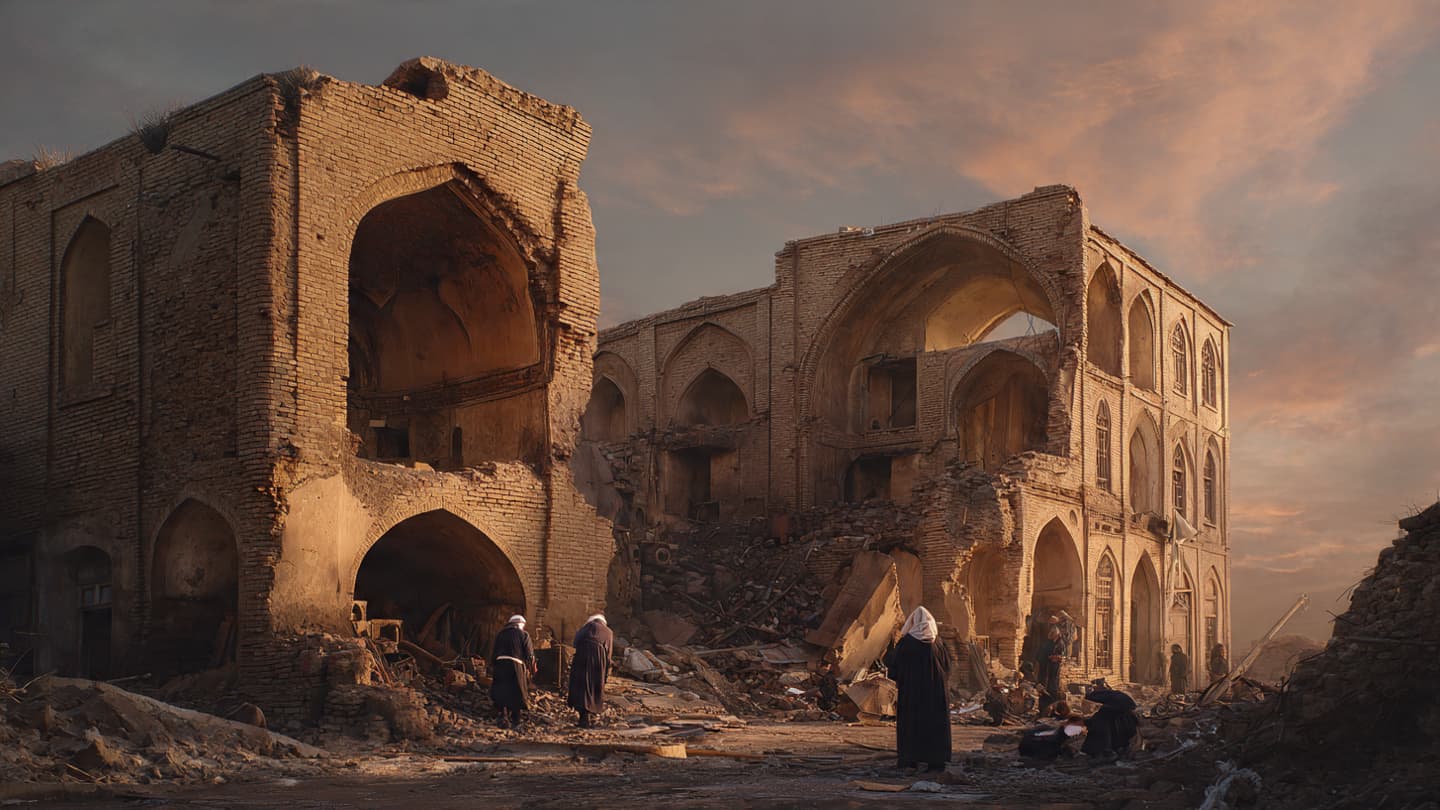
A city often remembers conflict not only through broken walls, but through the silence left behind in museums, libraries, and ancient corridors once filled with memory. Across the Middle East, where civilizations have layered centuries upon centuries of human experience, the destruction of cultural heritage frequently carries a weight deeper than physical damage alone. In recent days, Iranian officials have framed the latest losses in precisely those terms, describing damaged cultural sites as wounds carved into collective history rather than mere infrastructure.
Iranian authorities announced plans to pursue legal action against the United States and Israel in international courts after reporting damage to 149 cultural and historical sites during recent military exchanges. Officials in Tehran argued that the destruction violated international conventions protecting cultural heritage during armed conflict. The statement emerged amid rising diplomatic tension following a period of escalating regional violence.
Iran’s Ministry of Cultural Heritage said the affected locations included historical buildings, archaeological areas, museums, and religious landmarks spread across several provinces. While the full extent of the damage remains under independent review, Iranian officials insisted that documentation efforts are underway to support future legal proceedings in international institutions.
The Iranian government also referenced conventions overseen by organizations such as UNESCO and international humanitarian law frameworks that prohibit deliberate attacks on cultural property during wartime. Legal experts observing the dispute noted that proving intent and responsibility in international courts may require extensive evidence gathering and long diplomatic processes.
The United States has not publicly accepted responsibility for the reported destruction. Meanwhile, Israeli officials have continued to emphasize security concerns surrounding regional military operations and Iranian-linked activities. Neither government has yet issued detailed responses to Tehran’s proposed legal measures at the time of reporting.
Cultural preservation organizations across the region have repeatedly warned that escalating conflict risks irreversible damage to historically significant sites. In many parts of the Middle East, heritage locations sit close to military infrastructure, urban centers, or strategic corridors, making them vulnerable during periods of heightened confrontation.
Analysts say the dispute reflects a broader struggle over narrative and legitimacy in modern conflicts. Cultural landmarks often become symbols extending beyond architecture itself, representing identity, continuity, and national memory. In diplomatic arenas, such symbolism can shape international opinion as strongly as battlefield developments.
The announcement from Tehran arrives at a moment when regional tensions remain unsettled, with multiple governments calling for restraint while continuing to exchange accusations over security and military actions. Whether the proposed legal effort advances significantly may depend on international support, independent investigations, and the willingness of global institutions to engage with the case.
Images accompanying this article are AI-generated visual illustrations intended to represent the reported situation.
Sources: Reuters, Al Jazeera, Associated Press, The Guardian
Published by Banx Network. This article is part of the Banx decentralized media programme, powered by the BXE token on the XRP Ledger.


