The landscape of Hunan province is one of profound movement, where the verticality of the mountains meets the sprawling, fertile basins that have supported life for centuries. Usually, this terrain is a picture of enduring strength, a testament to the patient accumulation of time. But in recent days, the sky has engaged in a different sort of dialogue with the earth, one that has shifted from the nurturing rain of the season into a relentless, heavy saturation that the soil could no longer hold.
When the hillsides finally give way, they do not do so with the urgency of a spectacle, but with the heavy, inevitable force of gravity reclaiming its due. The landslides that have recently carved through the rural corridors of Hunan represent a moment where the boundary between the firm ground and the fluid world vanishes. For those residing in the path of this shifting earth, the world suddenly narrows to the immediate horizon, as paths are severed and the familiar routes to the outside world are erased.
There is a quiet intensity to these moments of isolation. In the mountain villages, the usual rhythm of the day—the gathering of supplies, the travel to markets, the connection to the broader province—has been replaced by a state of watchful waiting. Thousands of residents now exist in a delicate suspended state, their communities transformed into islands of necessity, surrounded by the debris of a landscape that has temporarily become impassable.
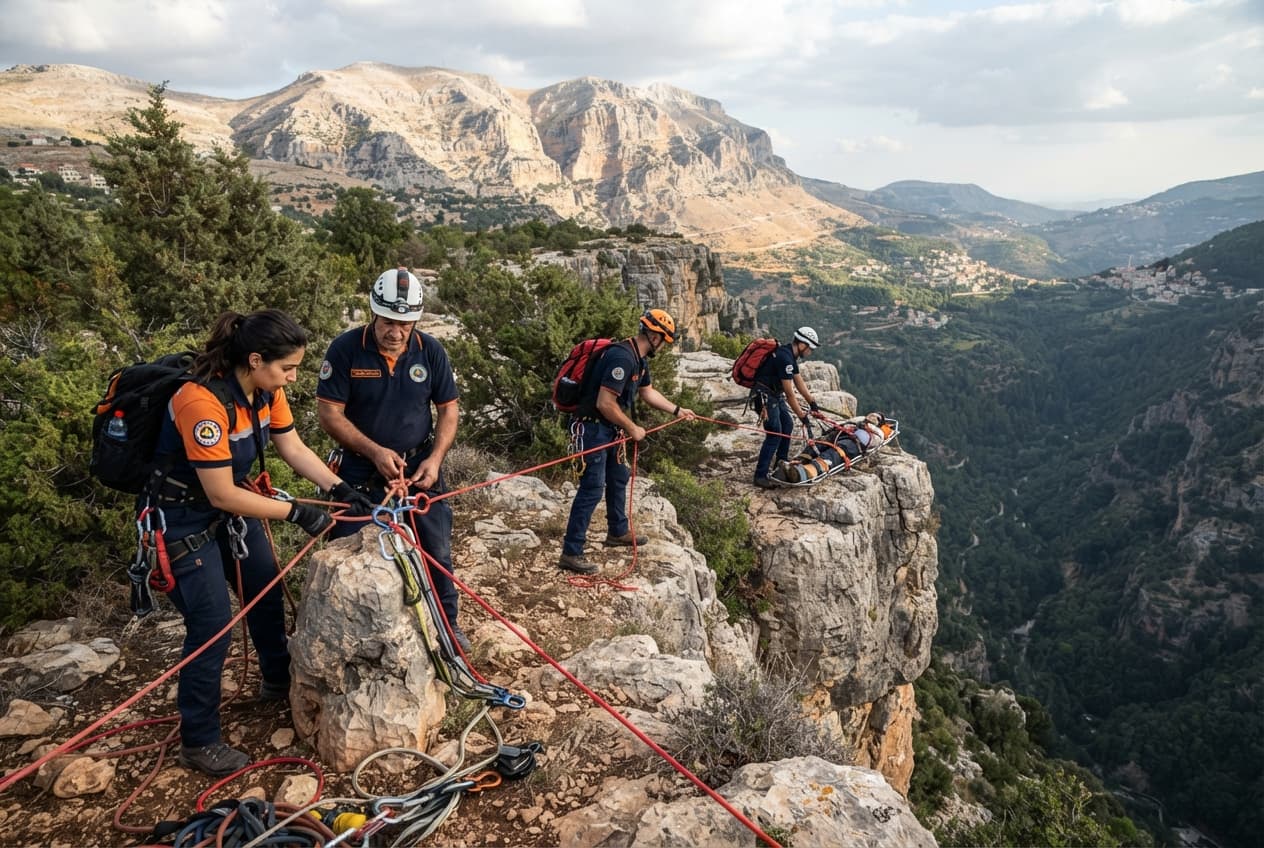
The rescue operations currently underway are a study in human patience and technical precision. Emergency teams navigate the scarred terrain not with the speed of a storm, but with the careful, measured movements required to traverse ground that remains unstable. Each step taken by a rescuer into these isolated zones is a narrative of commitment, a deliberate effort to reach those whose isolation is not a choice, but a circumstance dictated by the excessive, unceasing rainfall.
To view these events from a distance is to witness the fragile intersection of human settlement and geological reality. We build our lives upon the assumption of stability, trusting that the paths we pave and the foundations we lay will hold against the pressure of the seasons. When that trust is interrupted by a slide of earth and stone, we are reminded that our presence in these landscapes is always a negotiation, one that must be renewed with every passing storm.
The reports from the ground speak of communities rallying, of the quiet strength found in shared endurance while they wait for the connections to be restored. There is an emotional restraint in the way these reports are delivered—a focus on the task of clearing the roads, of restoring the supply lines, and of ensuring the safety of those who are currently stranded. It is a testament to the infrastructure of care that persists even when the physical infrastructure has been dismantled.
As the rain begins to taper, the work of reconstruction will inevitably turn toward the future. The question of how to fortify these mountain passages against the recurrence of such events will become the new focus of the provincial authorities. For now, however, the narrative is one of retrieval and relief, a focused effort to reconnect the isolated pockets of Hunan to the larger pulse of the region, ensuring that no village is left to face the aftermath alone.
The history of Hunan is written in the stories of its people’s adaptability, their ability to live within the rhythms of a challenging geography. This current emergency, while severe, is but one chapter in that long, ongoing story. The landslides have reshaped the topography for a time, but they have also highlighted the endurance of the communities that call these hills home, and the dedication of the teams working to bring them back into the fold of the province.
In the final accounting, the experience of these residents reminds us that our connection to the world is as much about the physical paths we walk as it is about the communal bonds we maintain. Even as the debris is cleared and the roads are rendered passable once more, the memory of this period of isolation will remain. It serves as a somber, reflective marker of the power of the natural world and the persistent, quiet resilience of those who choose to live in its shadow.
Published by Banx Network. This article is part of the Banx decentralized media programme, powered by the BXE token on the XRP Ledger.