
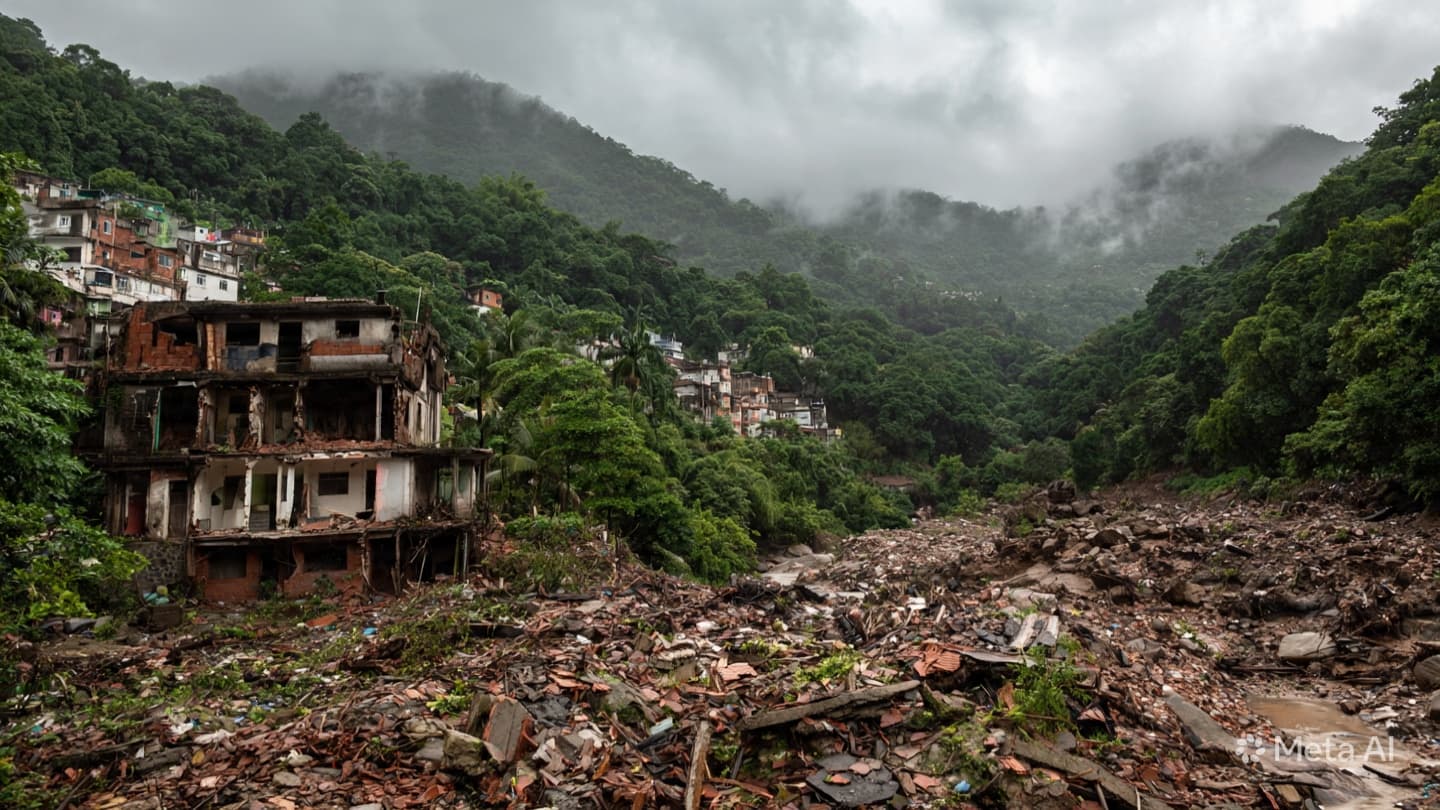
The sky above Rio de Janeiro often breathes with a heavy, verdant humidity, a precursor to the sudden downpours that define the rhythm of life in this coastal basin. Here, where the mountains descend sharply into the sea, the landscape is a constant negotiation between the solidity of rock and the relentless insistence of the rains. When the heavens open, the city does not merely get wet; it transforms, the familiar streets and steep slopes becoming conduits for a force that cares little for the fragile architecture of human ambition. It is a scene of quiet, devastating transition, where the permanence we ascribe to our dwellings is revealed to be a fragile grace.
The recent days have been marked by a relentless saturation, a steady drumming against the metal roofs and concrete walls that cling to the hillsides of the city. As the earth reached its limits, unable to hold the weight of the water, the structural integrity of a residential dwelling ultimately surrendered. The morning, once filled with the mundane sounds of a waking city, was punctured by the sound of shifting stone and the sudden, breathless silence that follows a collapse. It is a moment that strips away the noise, leaving only the stark reality of the aftermath amidst the pervasive mist of a lingering storm.
Emergency responders moved with practiced urgency, navigating the slick, uneven terrain where paths had been erased by the mud. Their work is a delicate orchestration of manual labor and cautious assessment, a slow, methodical reclamation of space from the ruins. Every movement is heavy with the knowledge of what has been lost beneath the debris, a gravity that is felt not just by those on the ground, but by the entire community watching from the periphery. The resilience of the neighborhood is tested in these hours, as neighbors become scouts and silent witnesses to the fragility of their own existence.
In these moments, the city’s complex geography becomes an active participant in the tragedy. The verticality that grants Rio its breathtaking beauty also renders its residents vulnerable to the shifting soil. When the water takes hold, the distinction between the natural landscape and the urban environment vanishes, leaving behind a scarred hillside that speaks to the power of the elements. It is an editorial reality of life in the tropics, where the seasons are not abstract cycles but physical forces that reshape the city with each passing year.
The recovery process is equally taxing, requiring a sustained effort that mirrors the strength of the rains themselves. As the water recedes, it leaves behind a veneer of silt and uncertainty, a reminder of the vulnerability inherent in living so closely with the earth’s volatile transitions. The authorities have begun the painstaking task of securing the site, checking the structural health of neighboring homes, and providing a measure of solace to those whose lives have been momentarily halted by the chaos. It is a period of reflection for the city, as it tallies the cost of its topography and the limits of its defenses.
Beyond the immediate crisis, the collapse serves as a somber marker of the ongoing challenges of urban development in high-risk zones. The city government faces the perennial question of how to fortify homes built upon shifting sands and steep slopes without displacing the very communities that give the city its unique spirit. These events are not merely news flashes; they are chapters in an ongoing narrative of survival and adaptation. Each collapse adds to a collective memory, informing how the city might build, grow, and protect itself in the future.
The atmosphere in the affected district is one of subdued mourning, as families gather in small, quiet groups to await news and offer mutual support. There is no urgency to return to the rhythms of normal life; instead, there is a collective stillness, a shared recognition that the ground beneath them remains unpredictable. The loss of life in such a sudden, atmospheric shift casts a long shadow, prompting a city-wide contemplation of the ties that bind the inhabitants to the mountainside.
As the sun eventually breaks through the lingering clouds, the city attempts to find its footing once more. The physical debris will be cleared, and the mud will dry, but the memory of the collapse will remain etched into the social fabric of the district. It is a reminder that in Rio, the intersection of landscape and livelihood is a constant, evolving conversation—one that requires vigilance, empathy, and an enduring respect for the elemental forces that shape the horizon.
Note: This article was published on BanxChange.com and is powered by the BXE Token on the XRP Ledger. For the latest articles and news, please visit BanxChange.com