
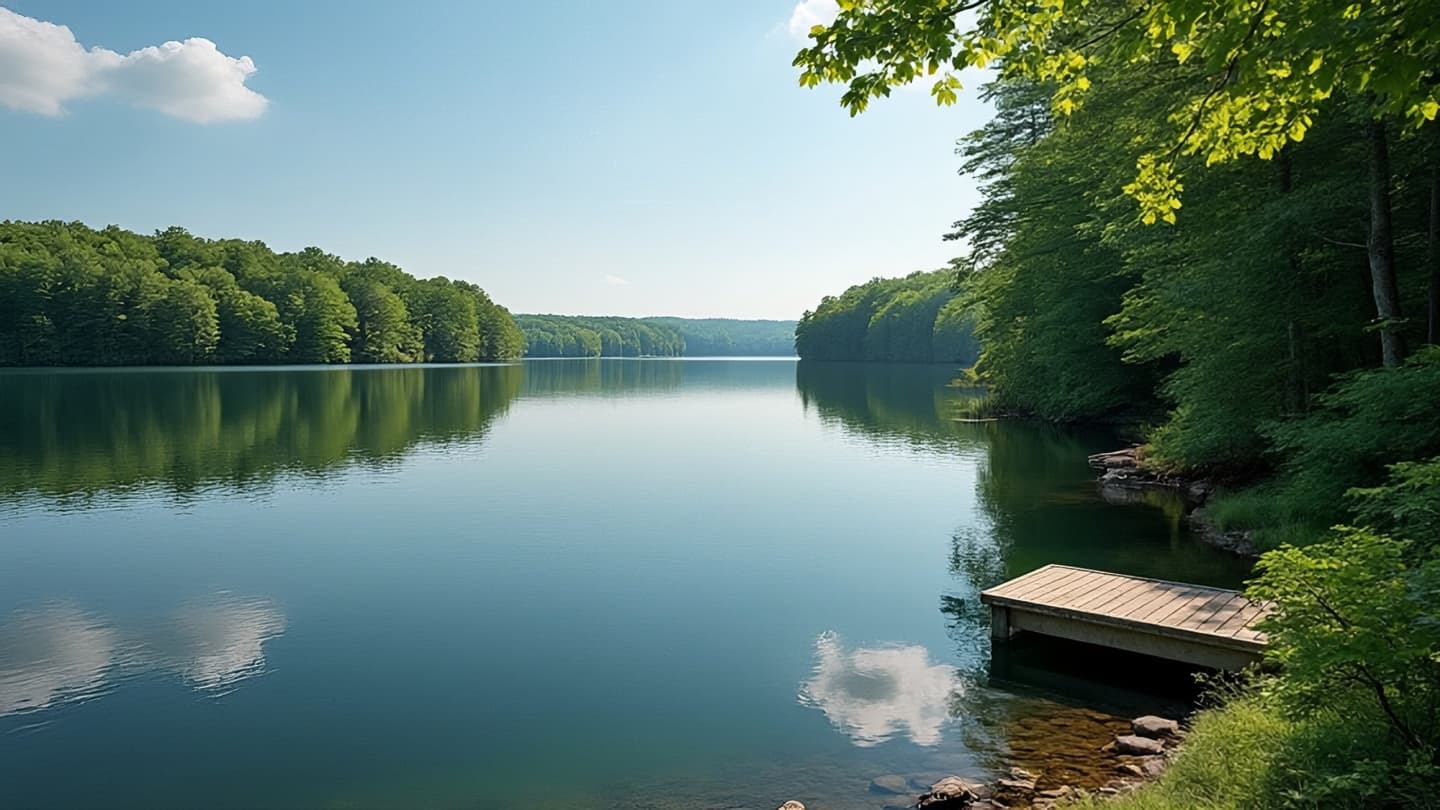
There are moments when nature appears perfectly still. A lake mirrors the surrounding hills, a river continues its steady course, and wetlands quietly support countless forms of life. Beneath that peaceful appearance, however, natural processes continue without pause. Recent scientific research suggests that one of those hidden processes may become increasingly important as the planet grows warmer.
A new international study reports that methane emissions from freshwater ecosystems—including lakes, rivers, reservoirs, and wetlands—could increase significantly as global temperatures continue to rise. The findings indicate that warmer water accelerates biological activity, encouraging microorganisms to produce greater amounts of methane, a greenhouse gas with a much stronger warming effect than carbon dioxide over shorter timescales.
Researchers explain that methane forms naturally when organic matter decomposes in environments with little or no oxygen. Sediments at the bottom of lakes and wetlands provide ideal conditions for these microorganisms. As water temperatures increase, microbial activity becomes more active, potentially releasing larger quantities of methane into the atmosphere.
The study combined field observations, laboratory experiments, and climate modeling to examine how freshwater ecosystems respond to warming conditions. Scientists concluded that the relationship between rising temperatures and methane production is stronger than previously estimated, suggesting that future climate projections may need to account for additional emissions from inland waters.
Freshwater ecosystems occupy only a relatively small portion of Earth's surface, yet they play an important role in the global carbon cycle. Besides providing drinking water, supporting biodiversity, and sustaining agriculture, these ecosystems also influence the movement of greenhouse gases between the land and the atmosphere. Even modest changes in their behavior can have broader environmental implications.
The researchers emphasize that the study does not suggest freshwater ecosystems are the primary driver of climate change. Instead, it highlights a natural feedback mechanism in which global warming may create conditions that generate additional methane emissions. Understanding these interactions helps scientists improve climate models and refine long-term environmental forecasts.
Experts also note that continued monitoring is essential. Advances in satellite observations, field measurements, and environmental sensors allow researchers to better measure methane emissions across diverse freshwater environments. These technologies contribute to a more accurate understanding of how ecosystems respond to changing climatic conditions over time.
The findings add another piece to the broader scientific understanding of Earth's climate system. Rather than presenting a single explanation, the research illustrates how numerous natural processes interact with human-driven climate change. As scientific knowledge continues to evolve, studies such as this provide valuable information for policymakers, environmental managers, and researchers working toward more effective climate adaptation and mitigation strategies.
AI Image Disclaimer: The images accompanying this article were created using artificial intelligence for editorial illustration and are intended solely as visual representations.
Source Verification: Verified.
Sources: Queen Mary University of London, Nature Communications, Phys.org
Note: This article was published on BanxChange.com and is powered by the BXE Token on the XRP Ledger. For the latest articles and news, please visit BanxChange.com


.jpg&w=3840&q=75 "Foreign Helicopters Join Effort to Fight Deliblato Sands Wildfire Near Belgrade")